
Carronades and Long Guns
by John
USS Constitution and the American heavy frigates outclassed British frigates in the 1812-1814 war between USA and Britain.
The British were in a very long and costly war with Napoleon’s France, had won every significant naval battle to date, and were probably feeling a little bit complacent about their naval superiority.
The British were therefore rather shocked out of their complacency when their ships lost almost every encounter with the American frigates in the 1812 -1814 war. There were several reasons for the losses.
American frigates (including USS Constitution) were newer, heavier, had thicker wooden sides made of “live” American oak, had larger crews, who were all volunteers, and they had more powerful guns, and more of them on each ship. To mention a few of the reasons.
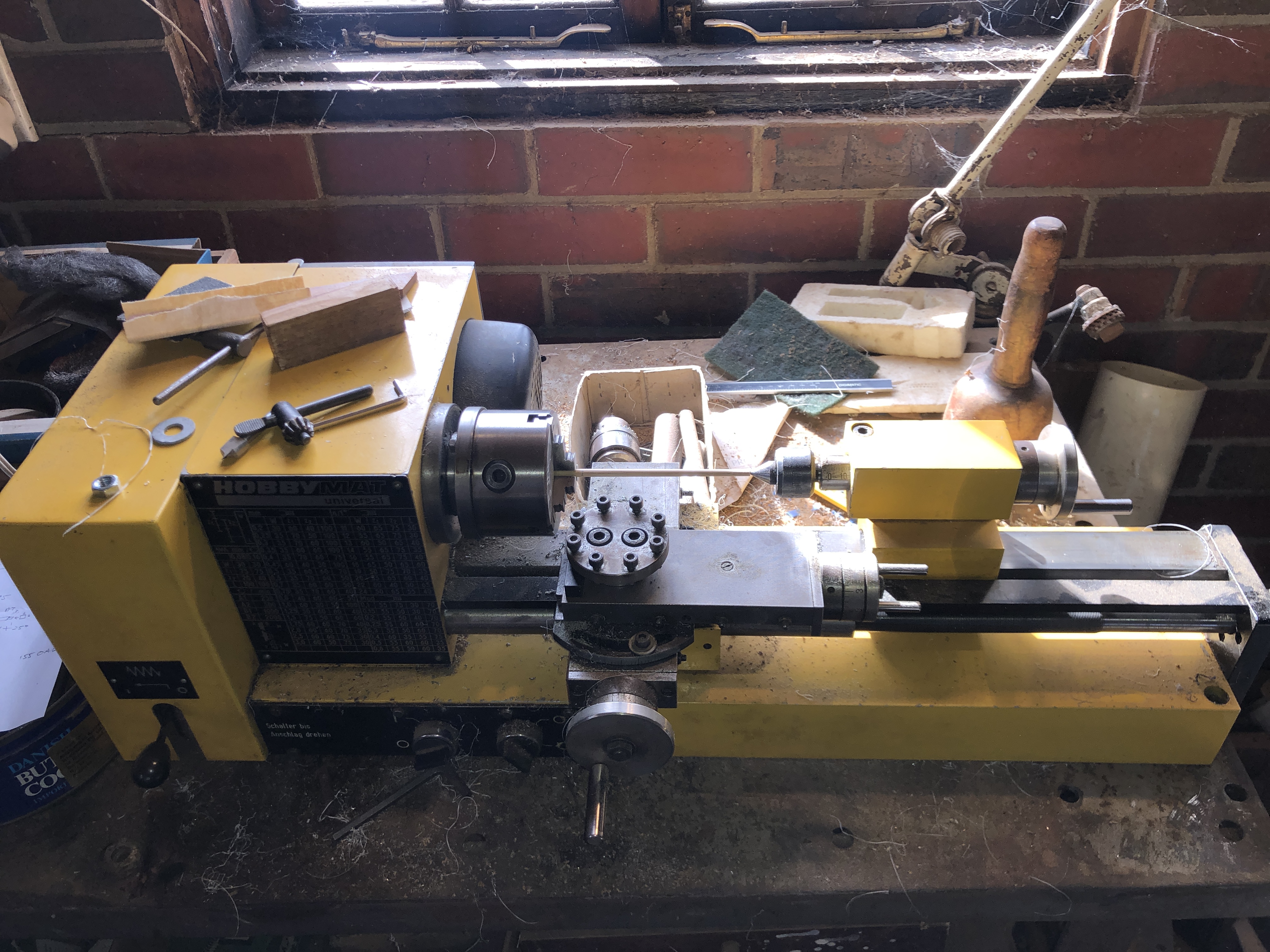
In my model of the USS Constitution there are 54 guns. 32 long guns and 22 carronades. In older posts I have detailed making models of a 24 pounder long gun and a 32 pounder carronade. Photo below.

So last week I assembled the top deck (the “spar” deck), long guns (2 of them) and carronades (22 of them).

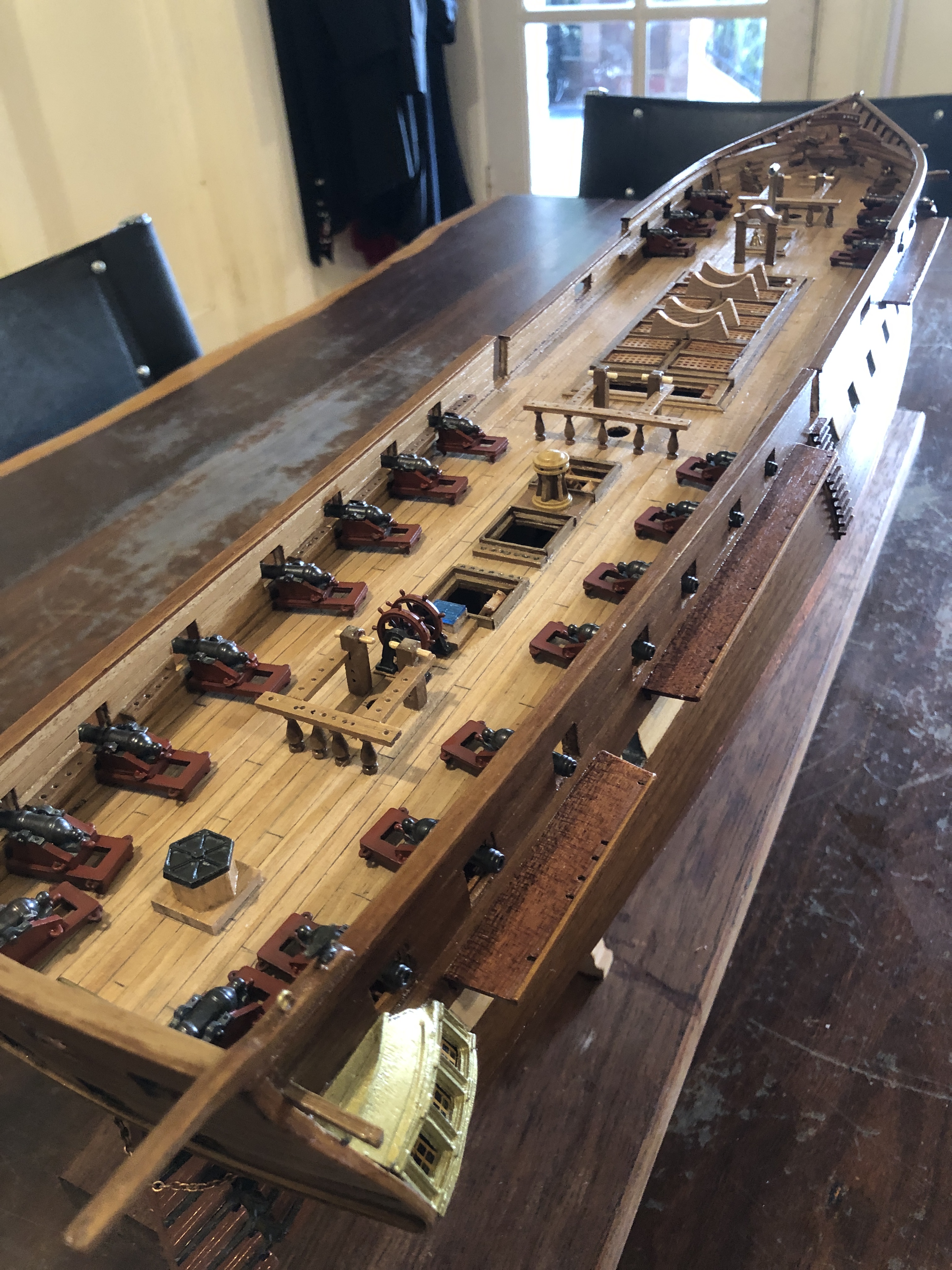
In 1797 all of the guns would have been mounted on wooden carriages. The guns in the Mamoli kit were cast metal, including the carriages. So I painted the carriages dark red, to look a bit more like wood, and because they were probably painted red in 1797.
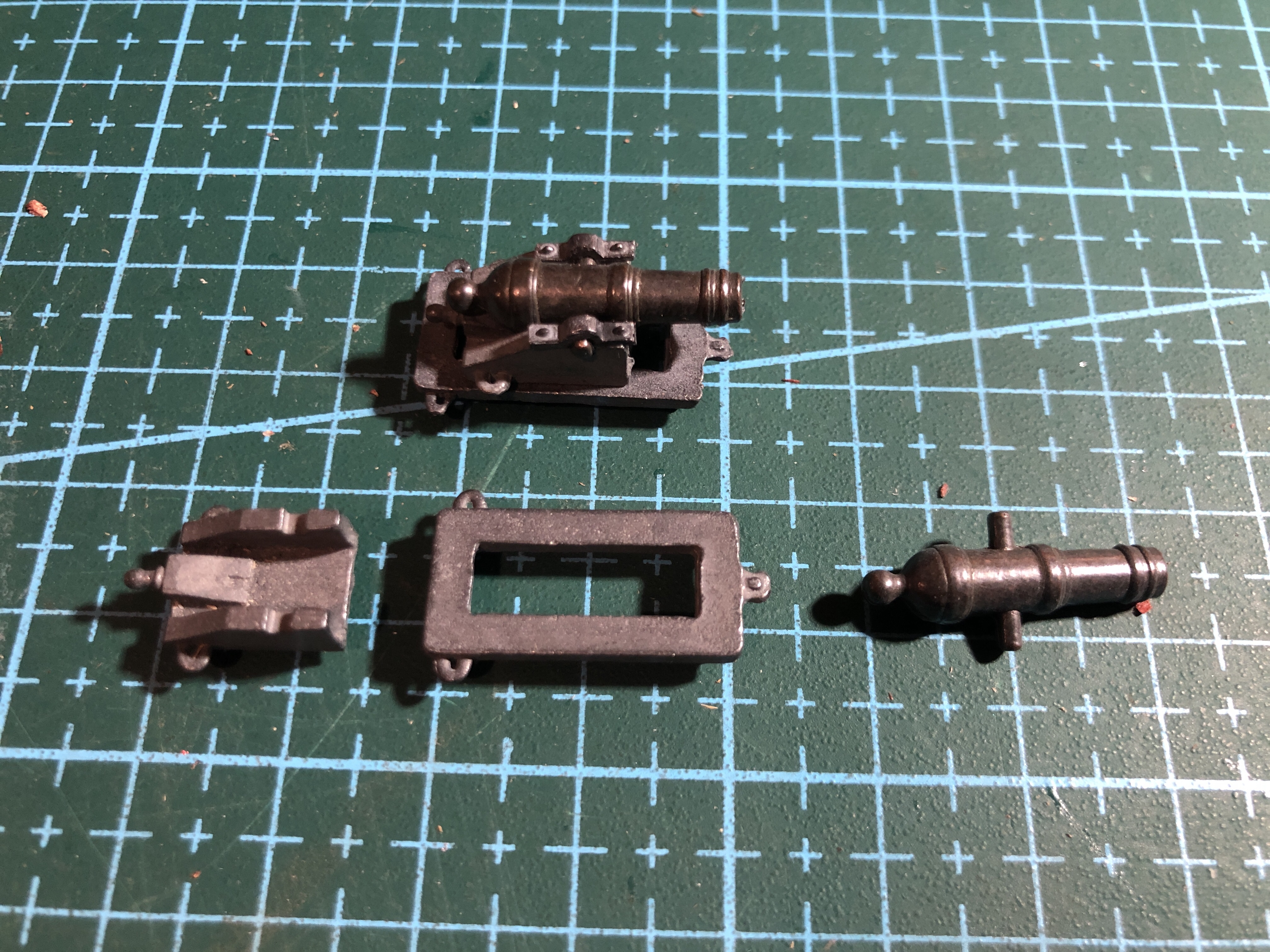

There are another 30 long guns on the gun deck below, but I have yet to deal with them.
Oh, and BTW, the guns in the above photo are not yet attached. Just sitting there for the shot.
 johnsmachines
Old Ironsides is looking fabulous!
LikeLike
Amazing, considering all of my beginner’s mistakes. But yes, and thank you!
LikeLike
Looking great John, brings back memories of Boston and a tour over the ship.
LikeLike
It’s on my list!
LikeLike
Finally thought I should sign-up instead of emailing you privately.
Always look to check your posts and as usual well impressed with your modeling prowess and looking forward to the next.
John B
LikeLike
Thanks John. Always appreciate the feedback. John
LikeLike
Going gangbusters on this project John. Great stuff.
LikeLike
Did you know: In the heyday of sailing ships, all war ships and many freighters carried iron cannons. Those cannons fired round iron cannon balls. It was necessary to keep a good supply near the cannon. However, how to prevent them from rolling about the deck? The best storage method devised was a square-based pyramid with one ball on top, resting on four resting on nine, which rested on sixteen. Thus, a supply of 30 cannon balls could be stacked in a small area right next to the cannon. There was only one problem…how to prevent the bottom layer from sliding or rolling from under the others. The solution was a metal plate called a ‘Monkey’ with 16 round indentations. However, if this plate were made of iron, the iron balls would quickly rust to it. The solution to the rusting problem was to make ‘Brass Monkeys.’ Few landlubbers realize that brass contracts much more and much faster than iron when chilled. Consequently, when the temperature dropped too far, the brass indentations would shrink so much that the iron cannonballs would come right off the monkey; Thus, it was quite literally, ‘Cold enough to freeze the balls off a brass monkey.’ (All this time, you thought that was an improper expression, didn’t you?)
LikeLiked by 1 person
Great info. I will use that in a talk.
LikeLike