
A Rusty Old Bayonet
by John
An older member of our model engineering group brought in this old bayonet for advice on what, if any, rust removal method could be used. It had been given to him by an elderly neighbour who had no interest in keeping it after her husband had died.
It was found on a high shelf when a garden shed due for demolition was being cleared of old stuff which was going to land fill.
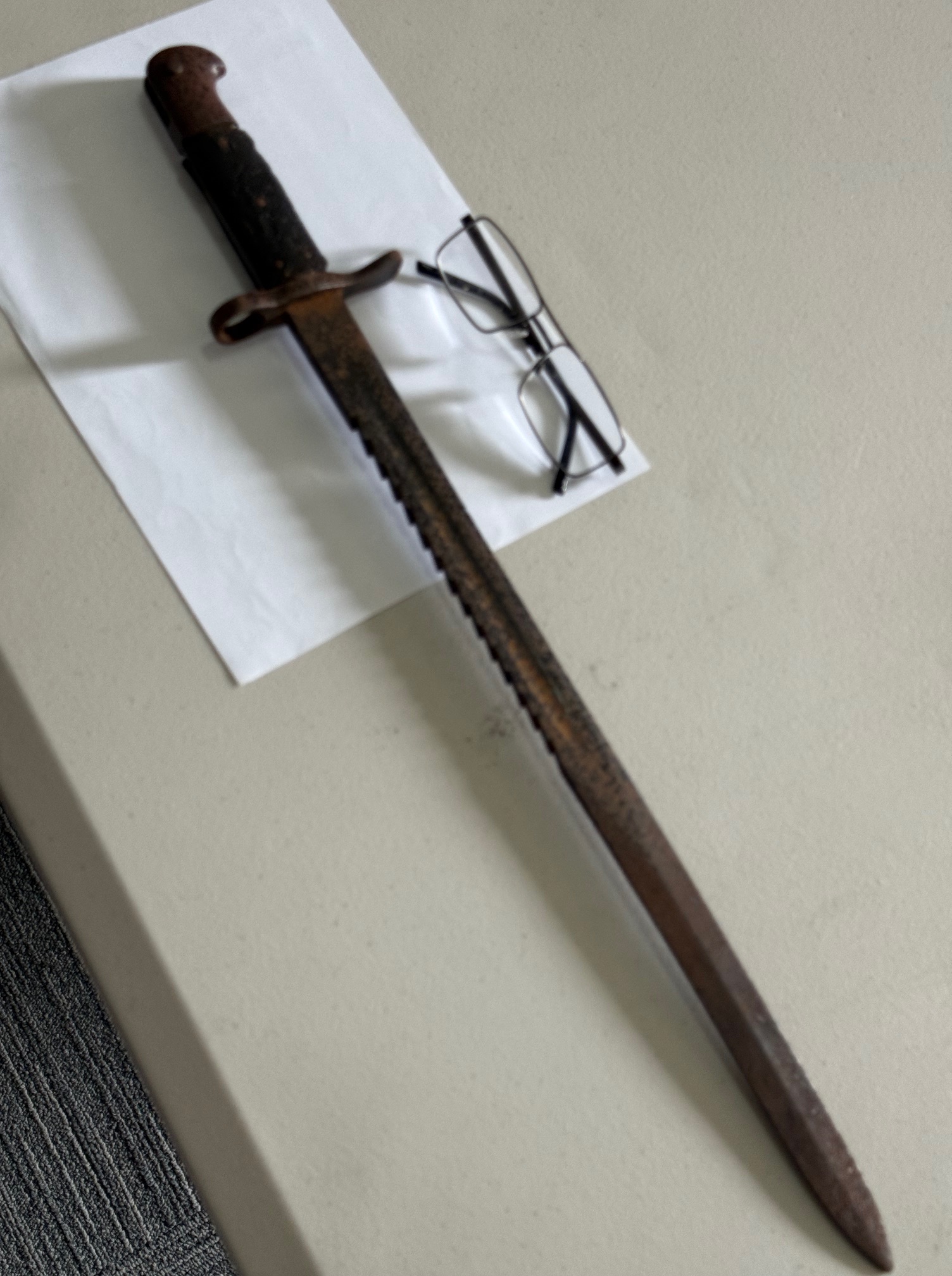
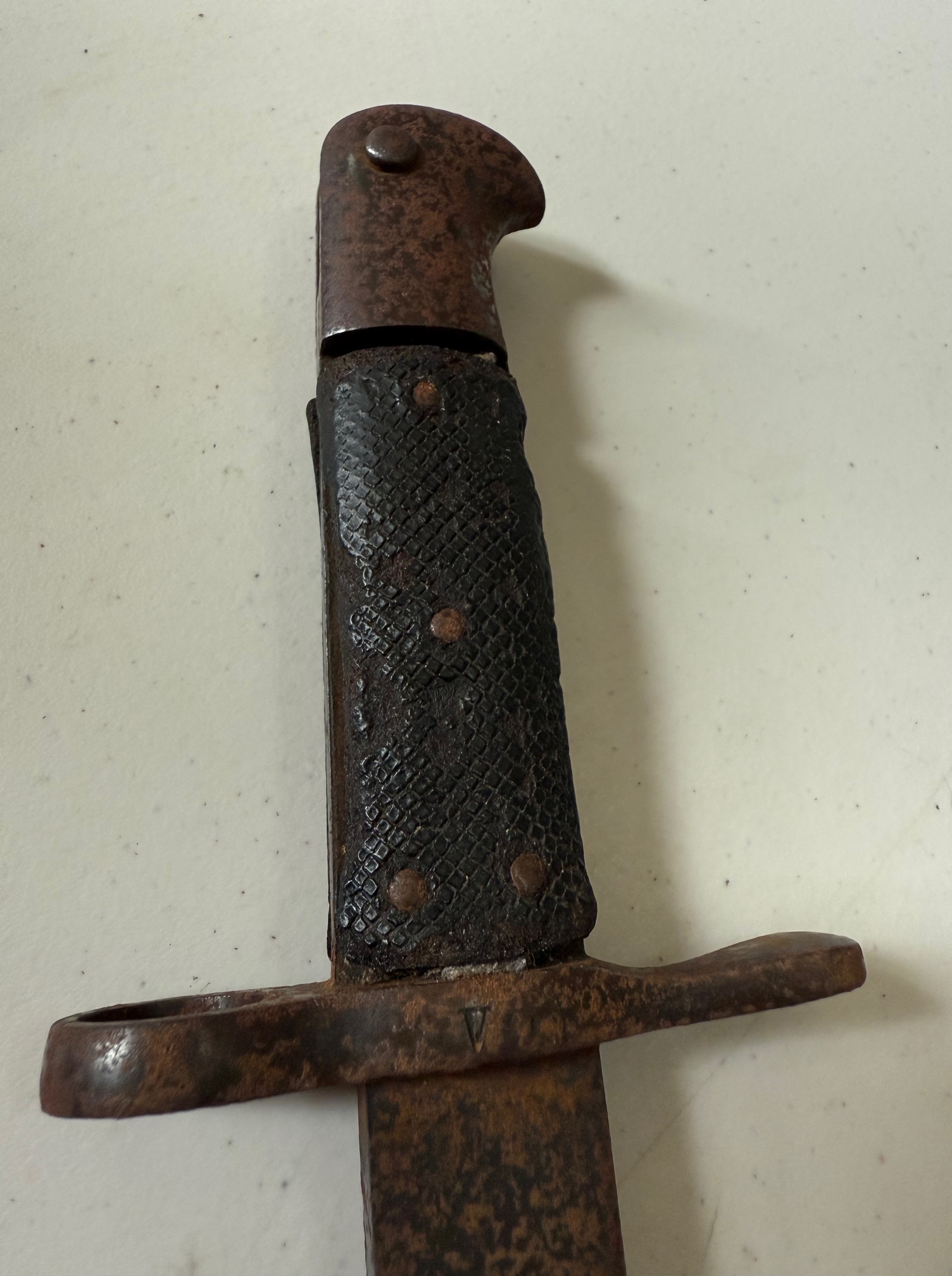
The engineering group was interested, and there were various opinions about its age and country of origin.
The AI was consulted, and the initial AI opinion was that it was of German origin, probably WW1. But the AI asked if there were any markings, and extra close up photos were sent, including the second one above.
The AI immediately responded, emphatically stating that it was not of German origin, but British. A pattern commonly used in the Australian army. Made from 1909 – 1918. During WW1 the Germans had complained that it was a cruel and inhumane weapon because of the aggressive serrations.
Then the current custodian was questioned about its history. It seems that the recent owner, now deceased, had inherited it from his father, who was Sir Harry Chauvel!!! SIR HARRY CHAUVEL. The general in command of the AIF in Palestine in WW1. The general who led his thirsty, exhausted cavalry troops against the heavily defended, strategically important town of Beersheba, and took it against German led Turkish troops.
The Turks expected the Australians to dismount and attack on foot as infantry, as they had done many times previously. But the need for water was urgent for the Australian troops and their horses, and the only water was in the Beersheba town wells. So they attacked as a cavalry charge. Against many machine gun emplacements. The Turkish machine gunners had been instructed to set their sights for an infantry attack from many hundreds of meters. But the horse mounted Australians covered the ground quickly, and the machine guns were aimed too high. So the strategically important town was taken, and the precious wells were prevented from being blown up.
Sir Harry Chauvel ranks with Sir John Monash as Australia’s most famous army commanders. And the cavalry charge at Beersheba as one of Australia’s most famous military victories.
Family information from one of Sir Harry Chauvel’s grandson’s, is that the bayonet was used at the Chauvel’s, Richmond, Victoria terrace home as a fire poker. And that the bayonet had belonged to Sir Harry Chauvel.
(And may even have been at the world’s last great cavalry charge, at Beersheba.)
This post was uploaded before the notification that further uploads would not be possible. I was hoping for some more information from the current bayonet custodian, but in view of the impending site shutdown, I have decided to post it now.
p.s. no rust removal will be attempted.
Wikipedia contributors. (2025, November 8). Harry Chauvel. In Wikipedia, The Free Encyclopedia. Retrieved 07:05, January 24, 2026, from https://en.wikipedia.org/w/index.php?title=Harry_Chauvel&oldid=1321004025
 johnsmachines
Another Gem from the weekly meeting! Never ceases to amaze what happens to come to light
LikeLike
Yes indeed!
LikeLike