
New Toy. A Diode Laser Cutter.
I paid a commercial laser cutting company $aud320 to cut out the bulkheads and false keel for my 1:72 74 gun ship HMS Bellerophon. I had Amati/Victory Models kit company plans and instructions and they were pretty good! I did not feel too guilty about using the instructions and plans, because they were for my own use, with no intention to on-sell them. And I get no financial advantage from using them or from these posts. In fact, it is a financial loss. Financially it would have made more sense to buy the Amati kit, but I wanted the challenge of making the components myself, as an intermediate step between using a kit and making an Admiralty style model totally from scratch.
So I had a local scanning service copy the plans, and generate pdf files, and thick paper copies.
But the laser cutter required dxf vector files to do the cutting of the marine ply. And, I could not locate any 5mm plywood for the laser cutter, so had had accept that the pieces were cut in 6mm plywood. I did not know enough about the plans to know how that 5mm to 6mm shift would impact on the plans, and still do not. And I wanted marine ply, not just any old plywood.
So, I searched the net, and found a service that would convert one pdf plan to dxf/dwg PER day, free! It is named “Auto PDF TO DWG FOR FREE”. And If you can cope with the one conversion per day conversion it is quite good. However, some tidying up is required, and for that I used AutoCAD 2024 Hobbyist version. But later I found that the Lightburn software did a better job, and that is what I will continue to use.
Now, if you are a regular reader of this blog you will know that I was not entirely satisfied with the commercial cutouts of bulkheads etc. The cost was not insubstantial. And it looked as though quite a few small spot fires had been extinguished during the laser cutting. And I was going to require several more sessions of laser cut parts.
I spoke about this situation at one of our GSMEE Model Engineering Society Meetings. There is ALWAYS someone who knows a lot about any engineering situation. And sure enough, Brendon had just purchased a diode 40 watt laser cutter. Although not a newbie to laser cutting, since he had owned a CO2 laser machine for several years, he thought that maybe I should consider the machine he had just taken delivery of.
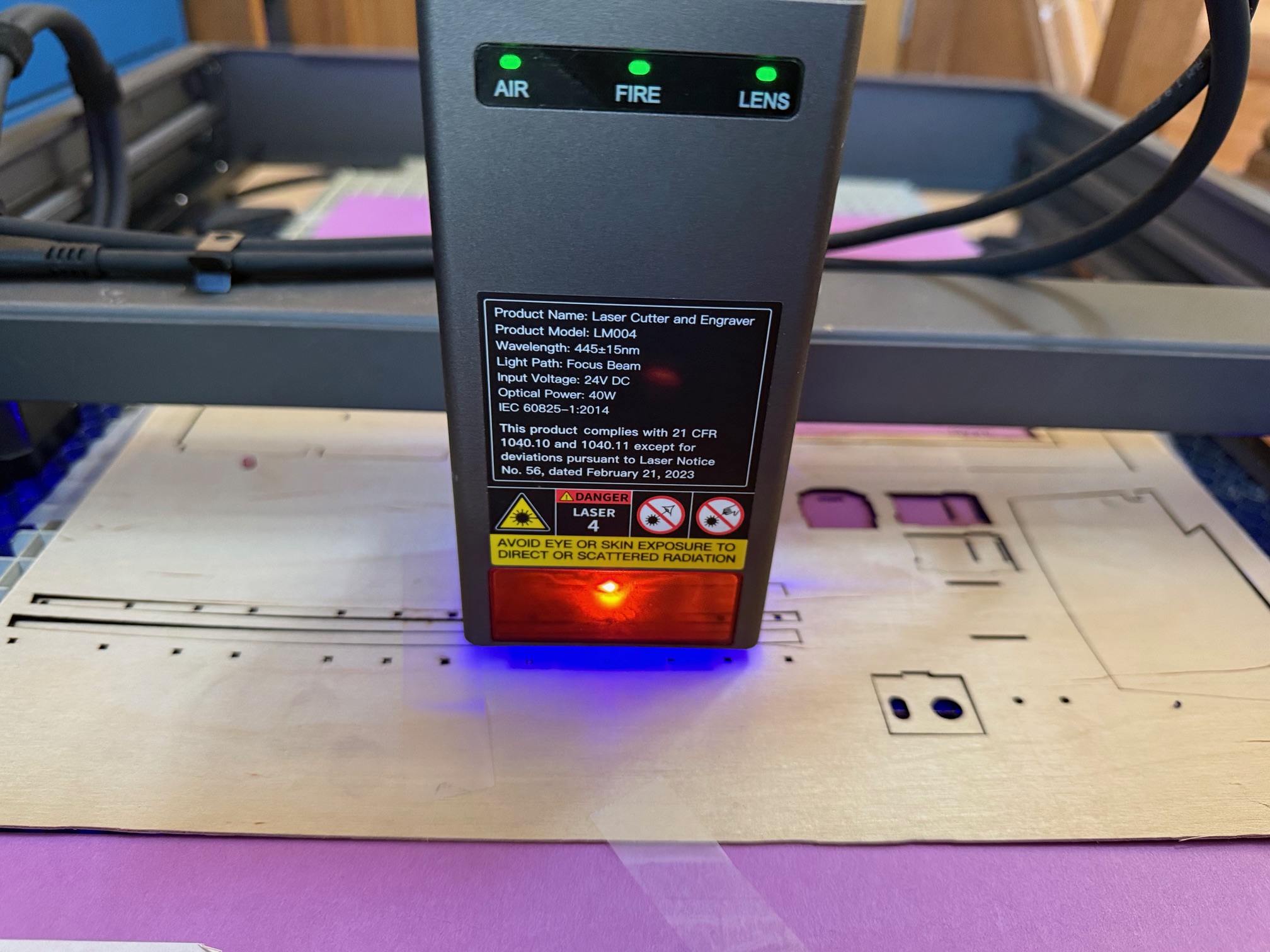
I did. And I had a session with Brendon and he cut out some model ships parts for me from 3mm plywood AND 0.25mm brass sheet. I was VERY impressed, And surprised at the cost of the machine… just over $aud1000. I was not quite convinced though, and sat on the information for 1-2 weeks. But then the company dropped the price to $aud909. Presumably because a new model is about to be released. So I ordered one for myself, and waited impatiently for it to arrive.
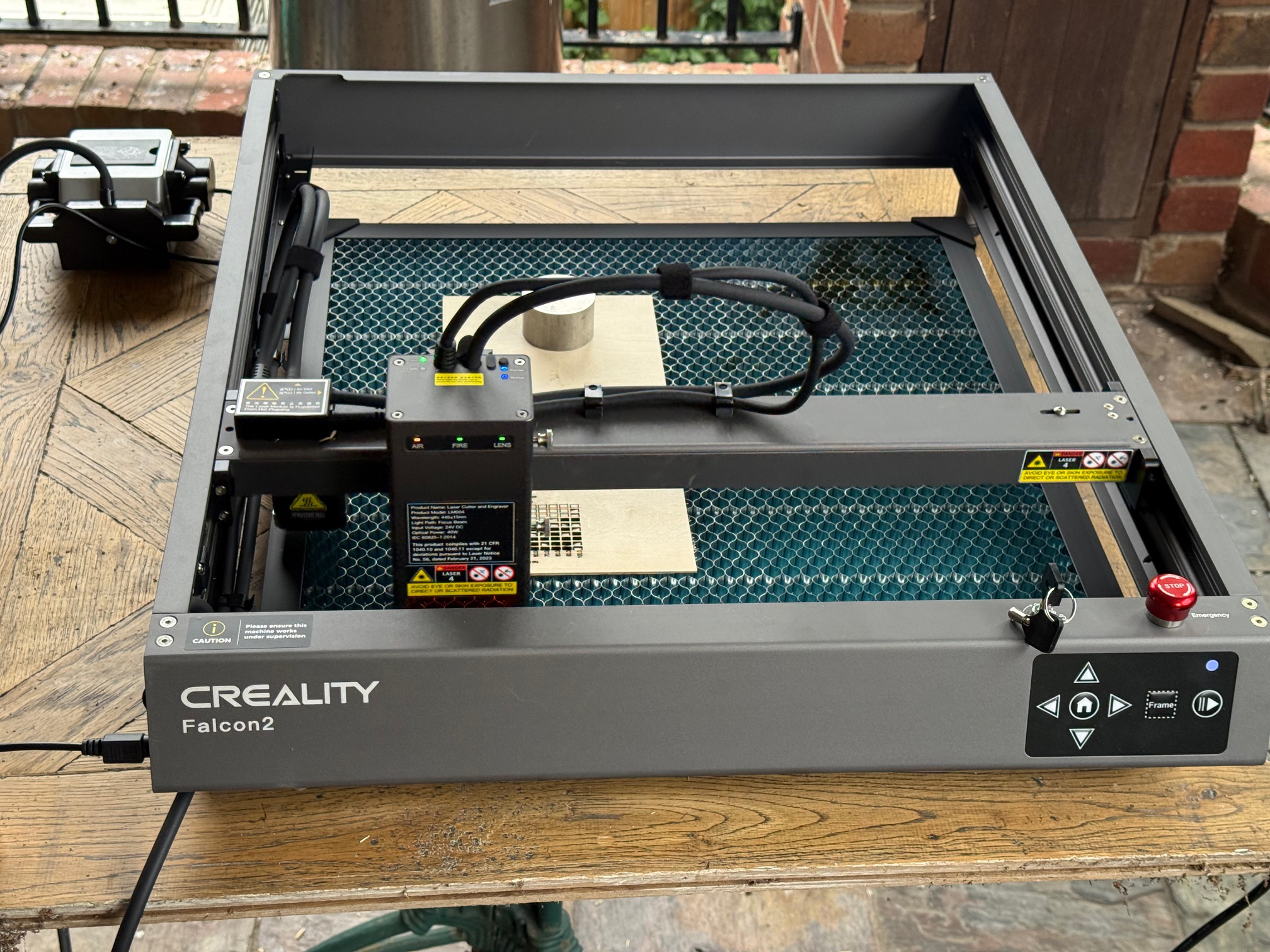
It arrived in just over a week. Superbly packaged, and easy to put together. It is a 40 watt laser and will handle sheets up to 400 x 415mm. It did have its own operating software, but recommended using Lightburn software, which is free to explore and use for 30 days. It came highly recommended by Brendan, and also Stuart from GSMEE. And also many users on the net. I am still using the free version of Lightburn, but will pay for the full version when the trial period is about to finish (about $aud150). For this machine the core version of Lightburn (great name choice hey?) is adequate. The full Pro version is really only required for more sophisticated machines like Stuart’s fiber laser.
Despite having used CNC machines now for a decade (CNC Mills x2, CNC lathes x2, rotary axis x1) I found the software a bit of a trial, and a steep learning curve. Fortunately there were 2 of us doing the learning, with me the more junior. But we have been making progress steadily.
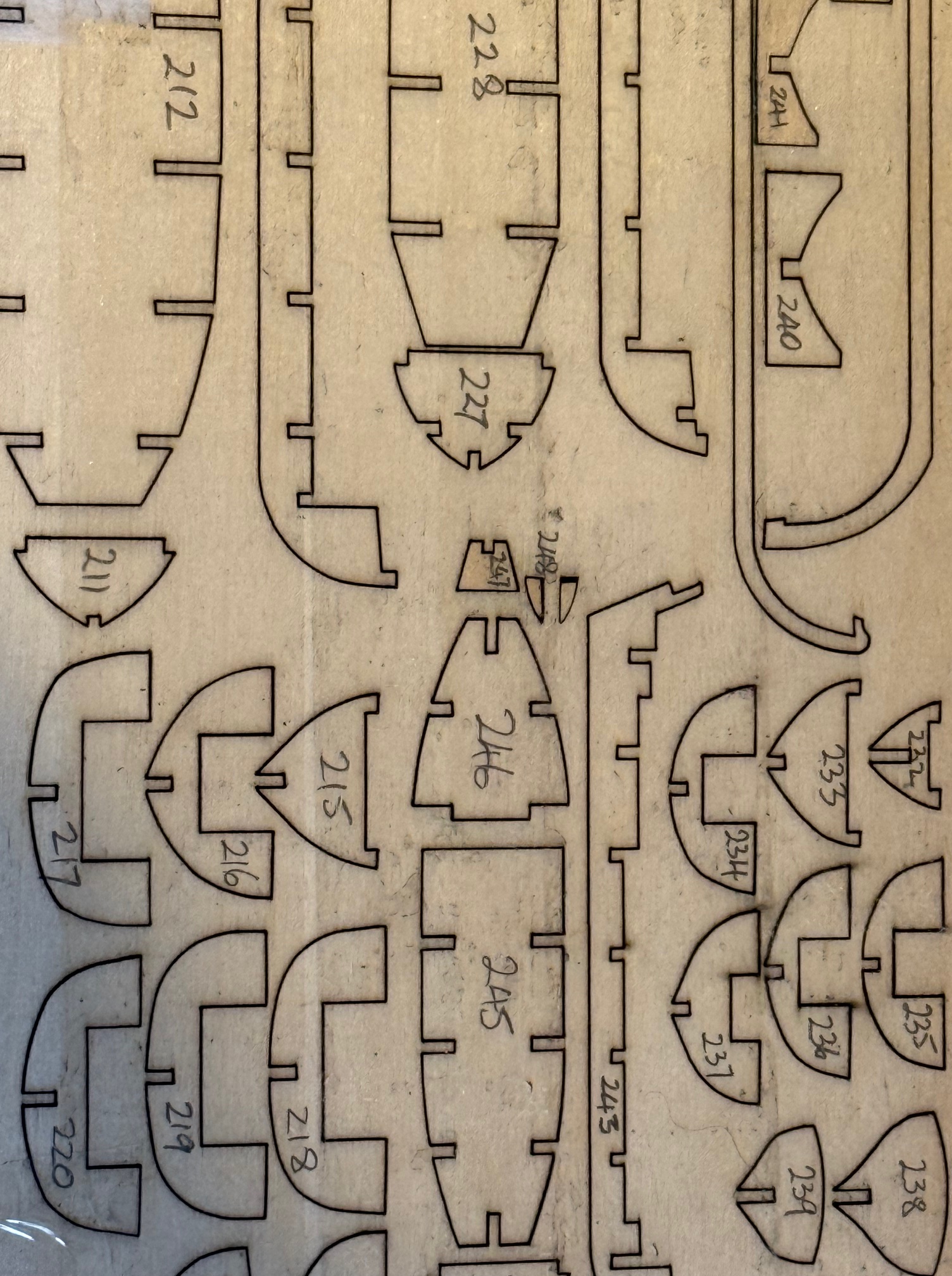
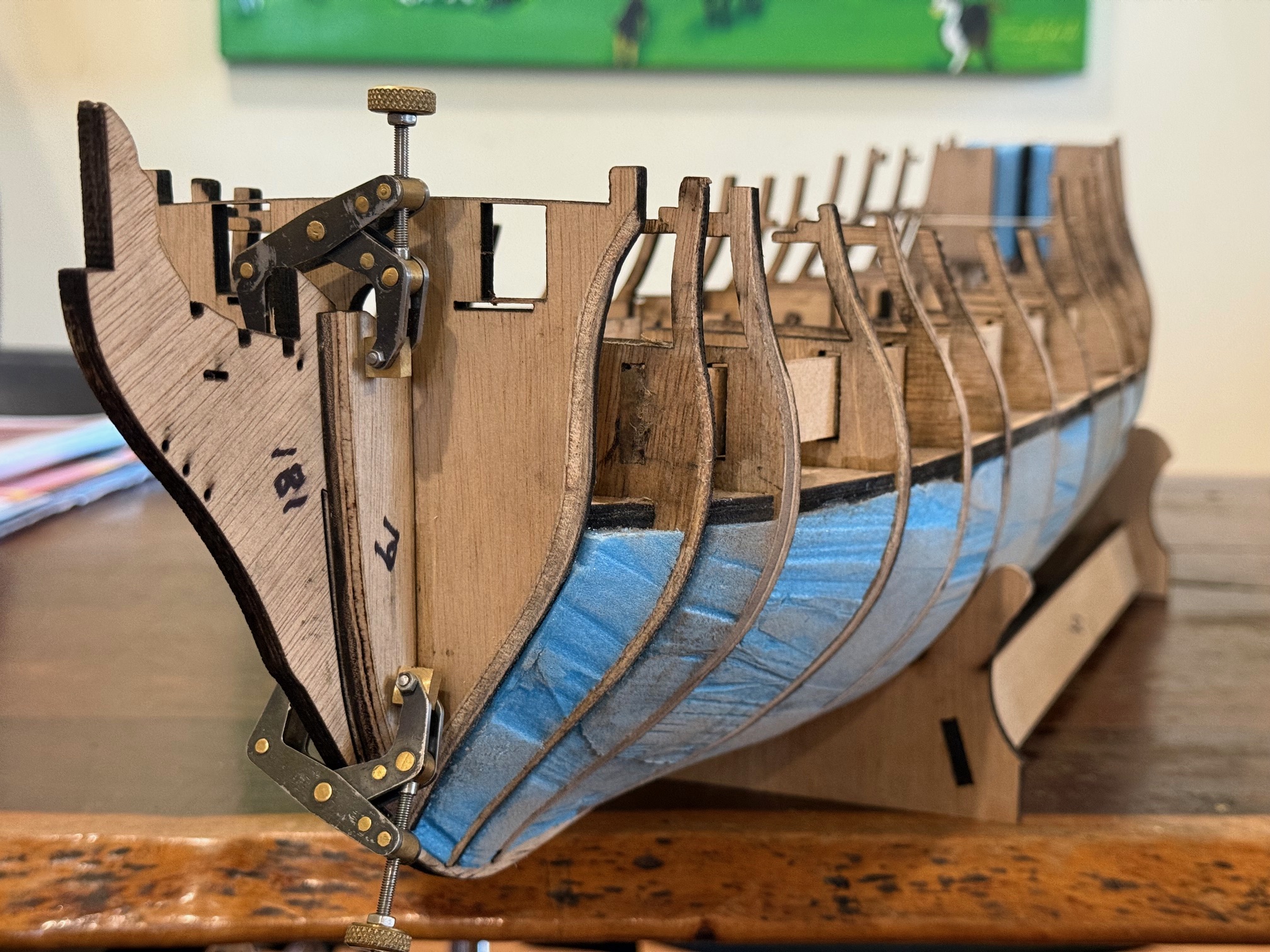
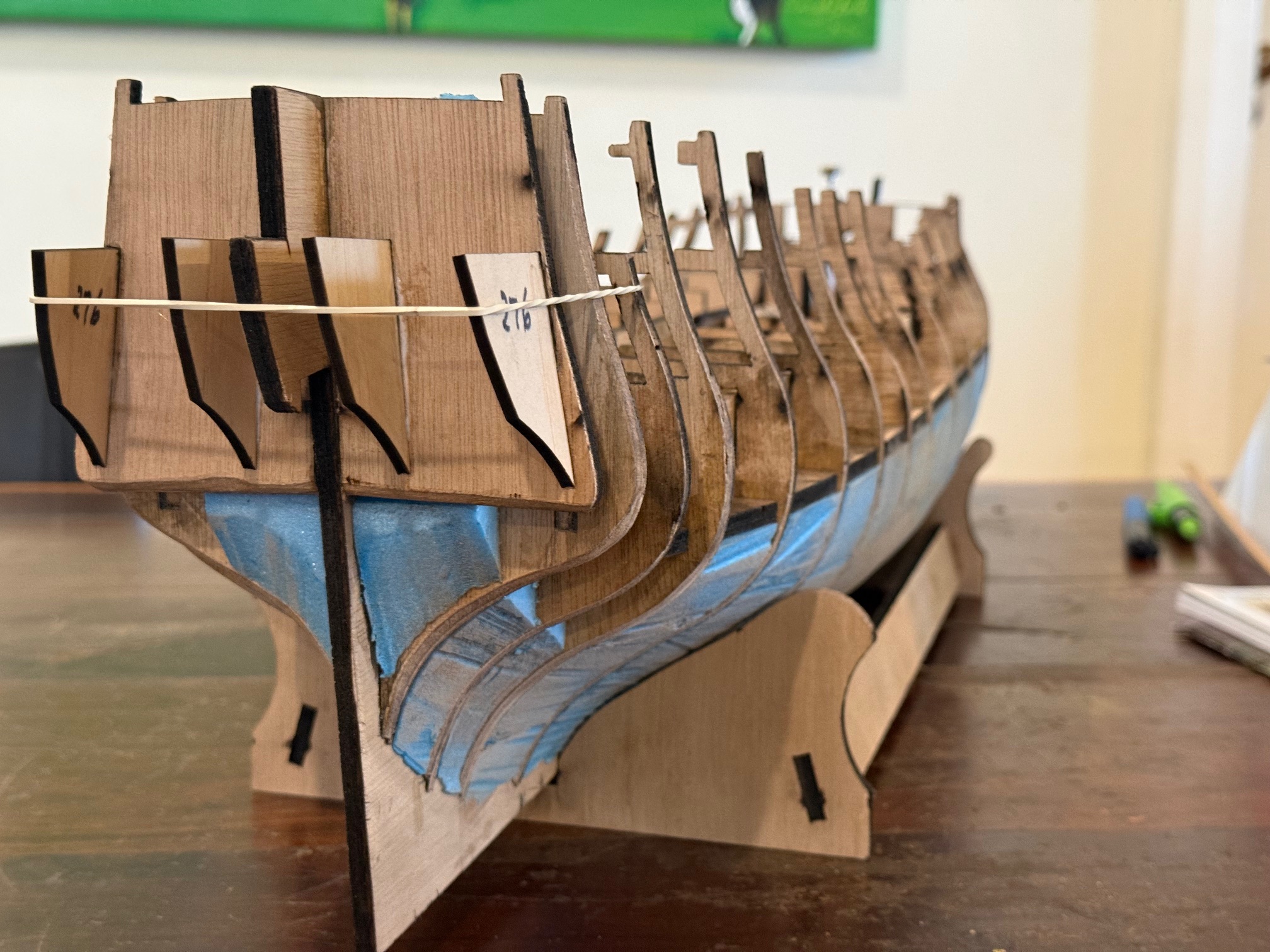
I have produced about 200 wooden parts for my 1:72 Bellerophon. And apart from the the frustrations of using a new technology, and paying through the nose for very expensive (read “overpriced”) modellers thin plywood, I am gradually coming to grips with the software and the laser cutter.
It is an open machine, with no smoke scavenging, and I quickly realised that it should not be used indoors. So I now use it on the house back veranda. It is quick, cutting about 100 parts in under 30 minutes. And very accurate. The laser kerf is about 0.3mm wide at 40 watts. We did try the 20 watt setting but surprisingly it showed no difference in the kerf width.
It can operate using the laptop computer or saving the dxf file to a chip and running that. It is not a tool for total beginners! The learning curve is considerable and even for an experienced CNC machinist, it is frustrating. But I am winning.
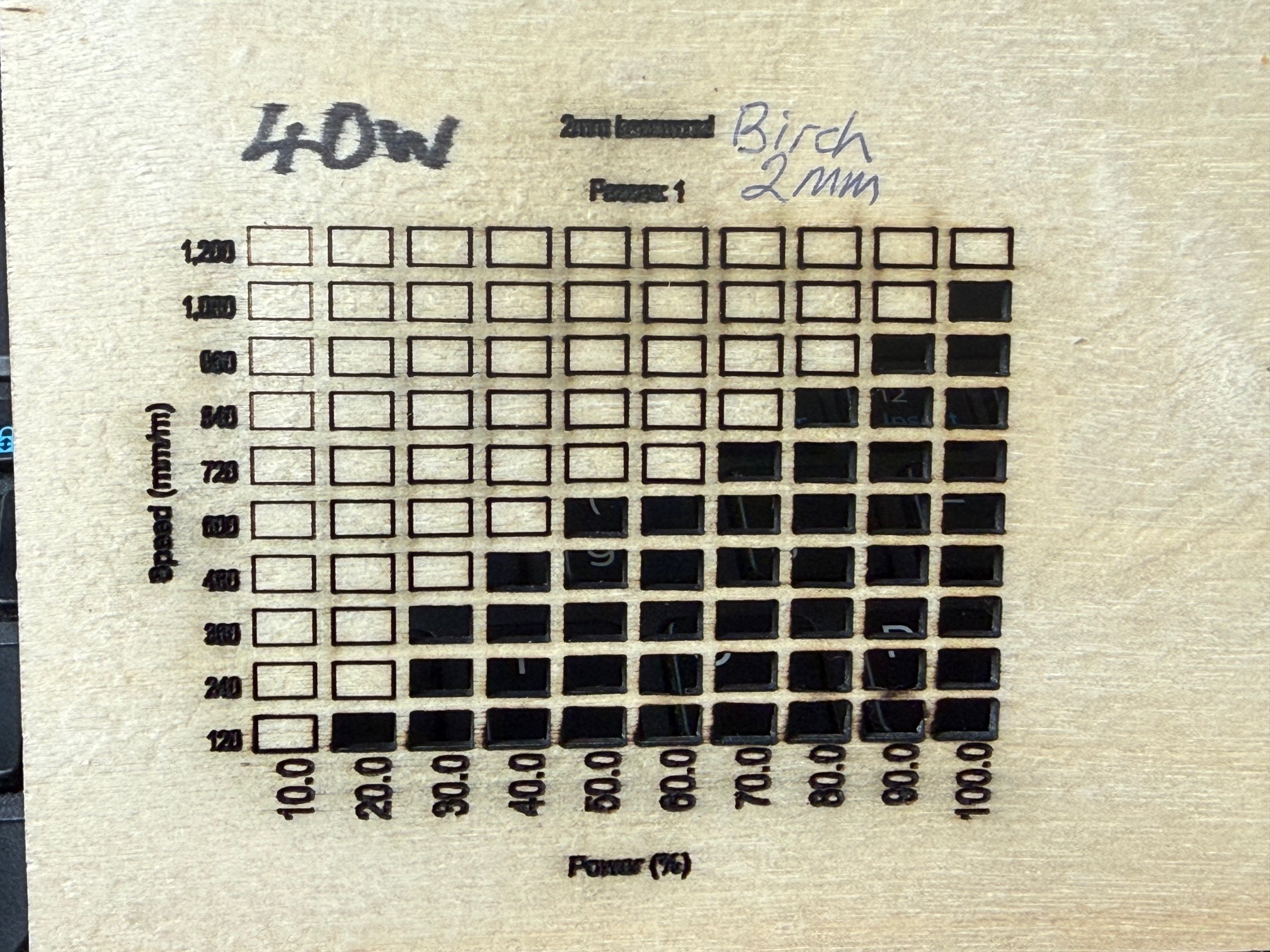
The power percentage used of 40 or 20 watts, and the speed of movement of the laser head are tested on the chosen material, in this case 2mm thick birch plywood. The best settings are those on the top left of the black section. I settled on 600mm/min and 50% of 40 watts.
SWMBO agreed to my purchase of this machine because (a) it was my birthday and (b) because she wants to use it. As well as cutting out parts from wood, plastic, perspex, and very thin metal sheet, it will also engrave pictures, text etc. on wood, glass, ceramics.


 johnsmachines