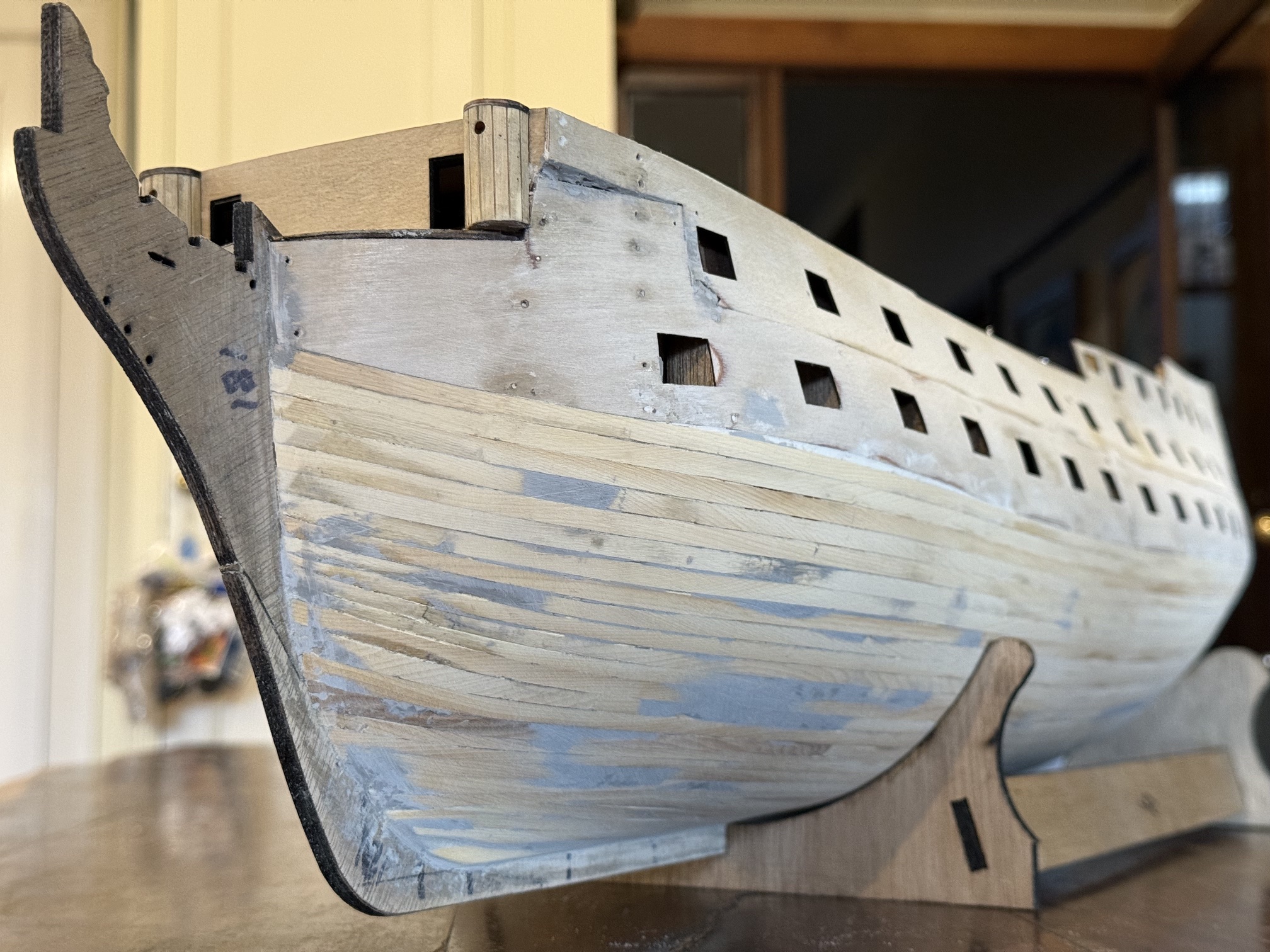
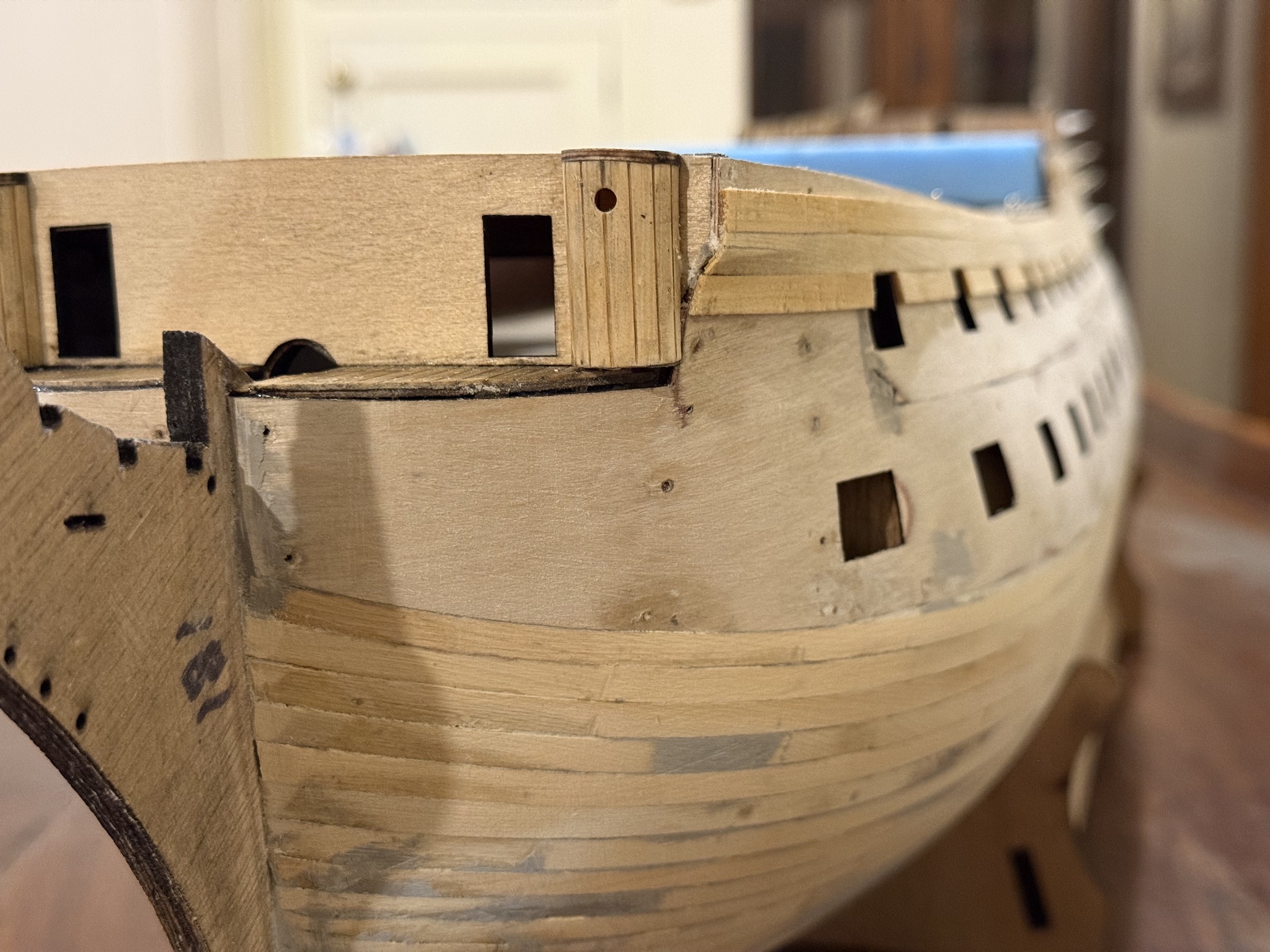
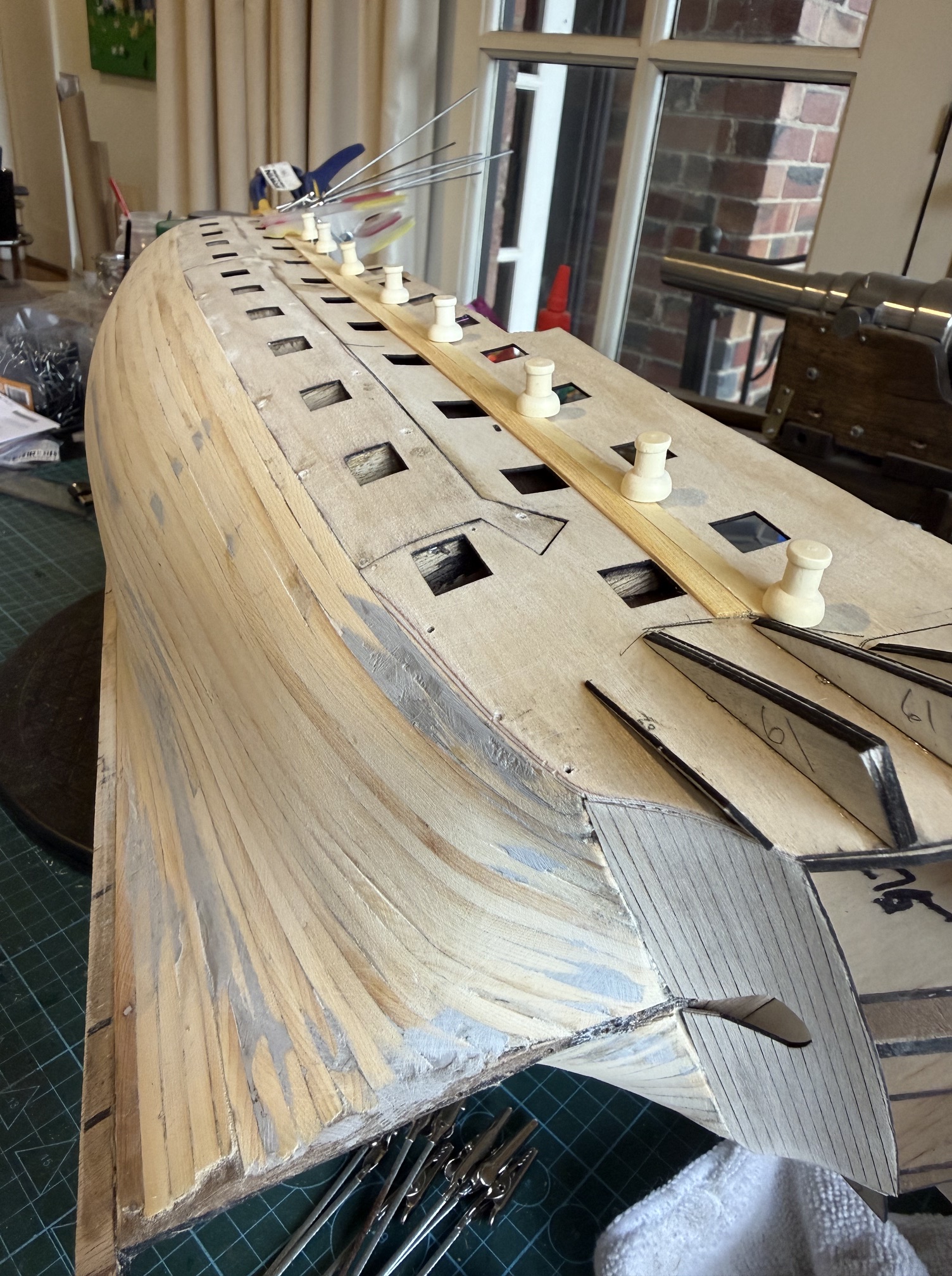
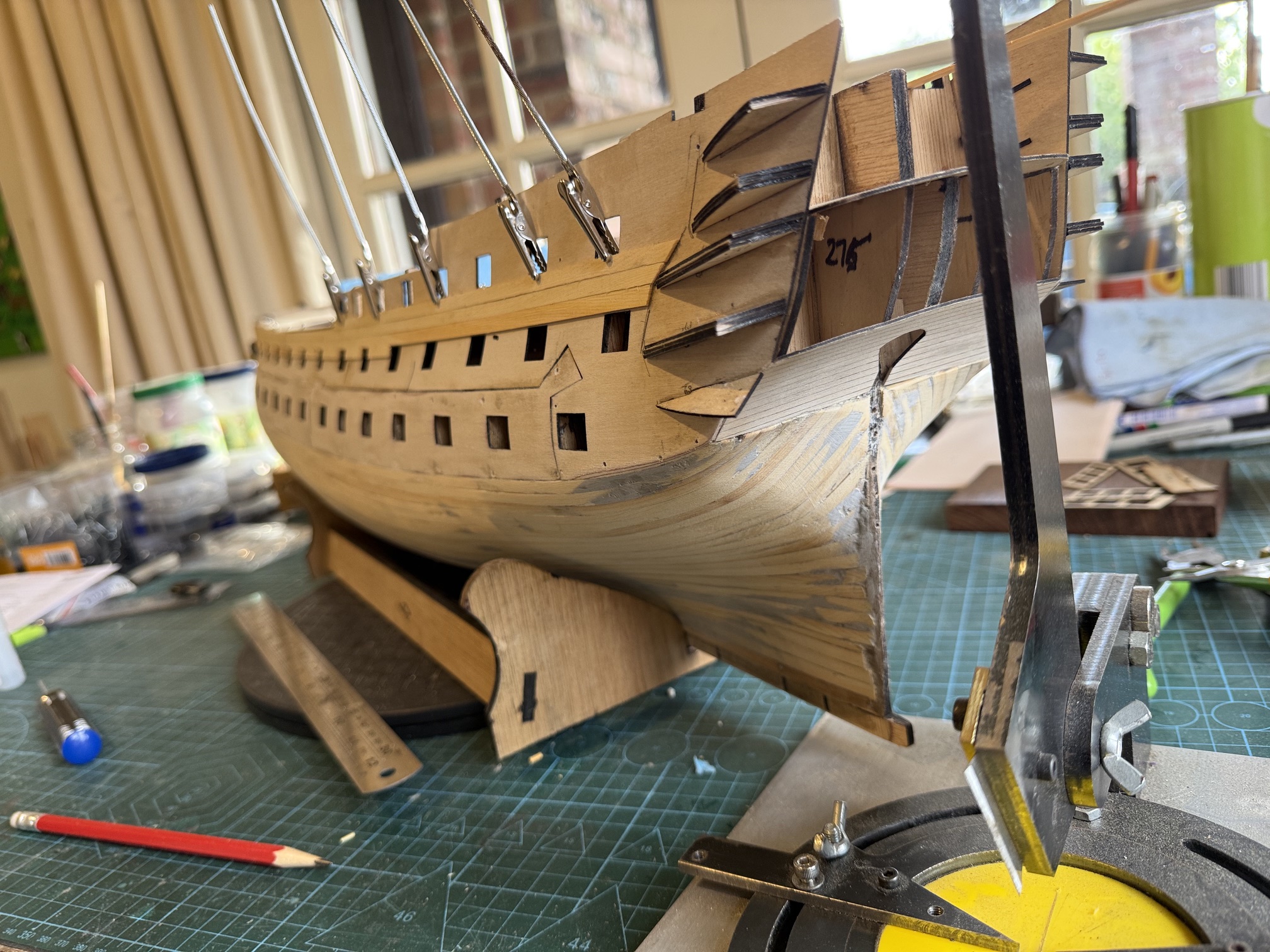
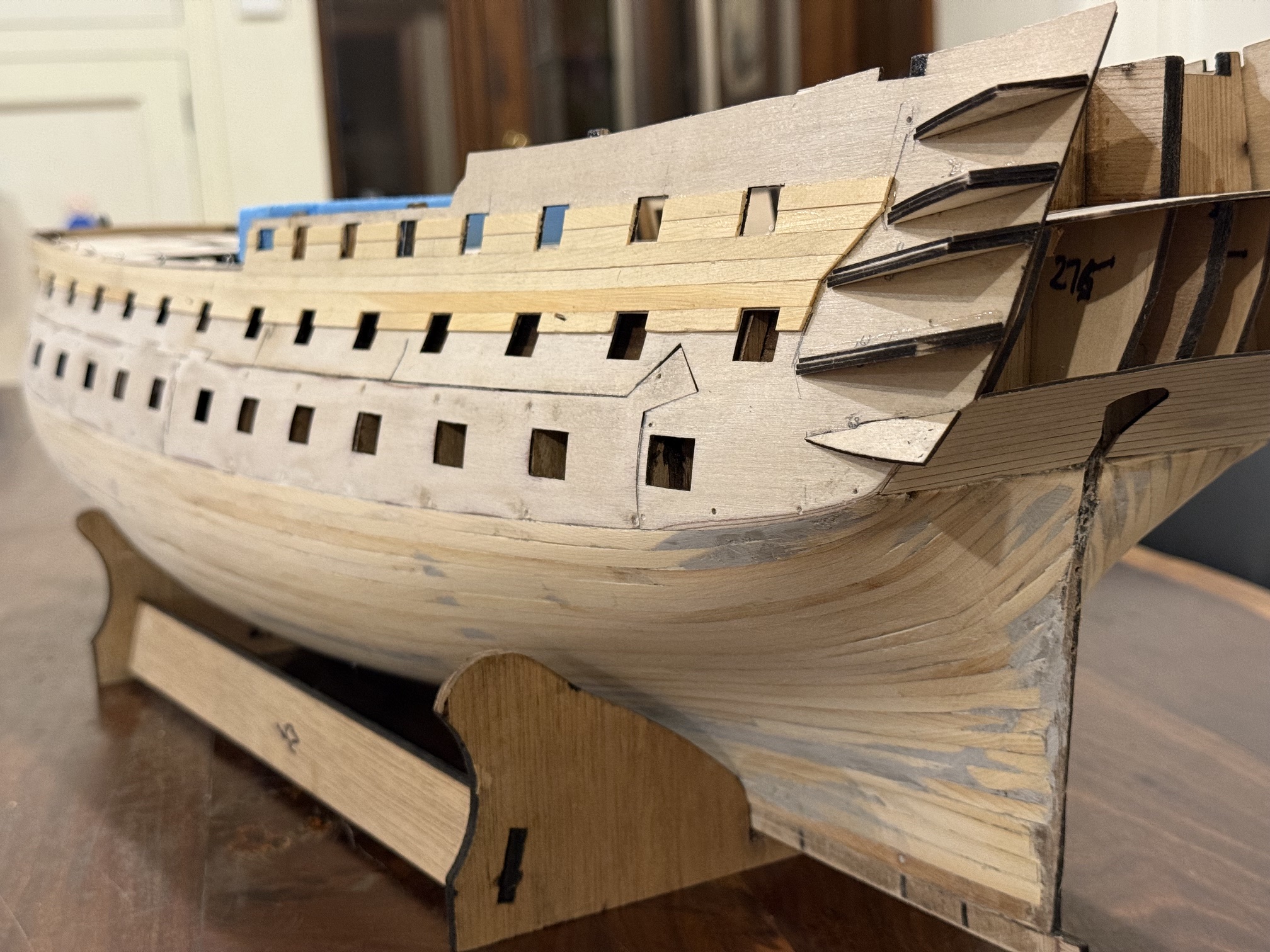
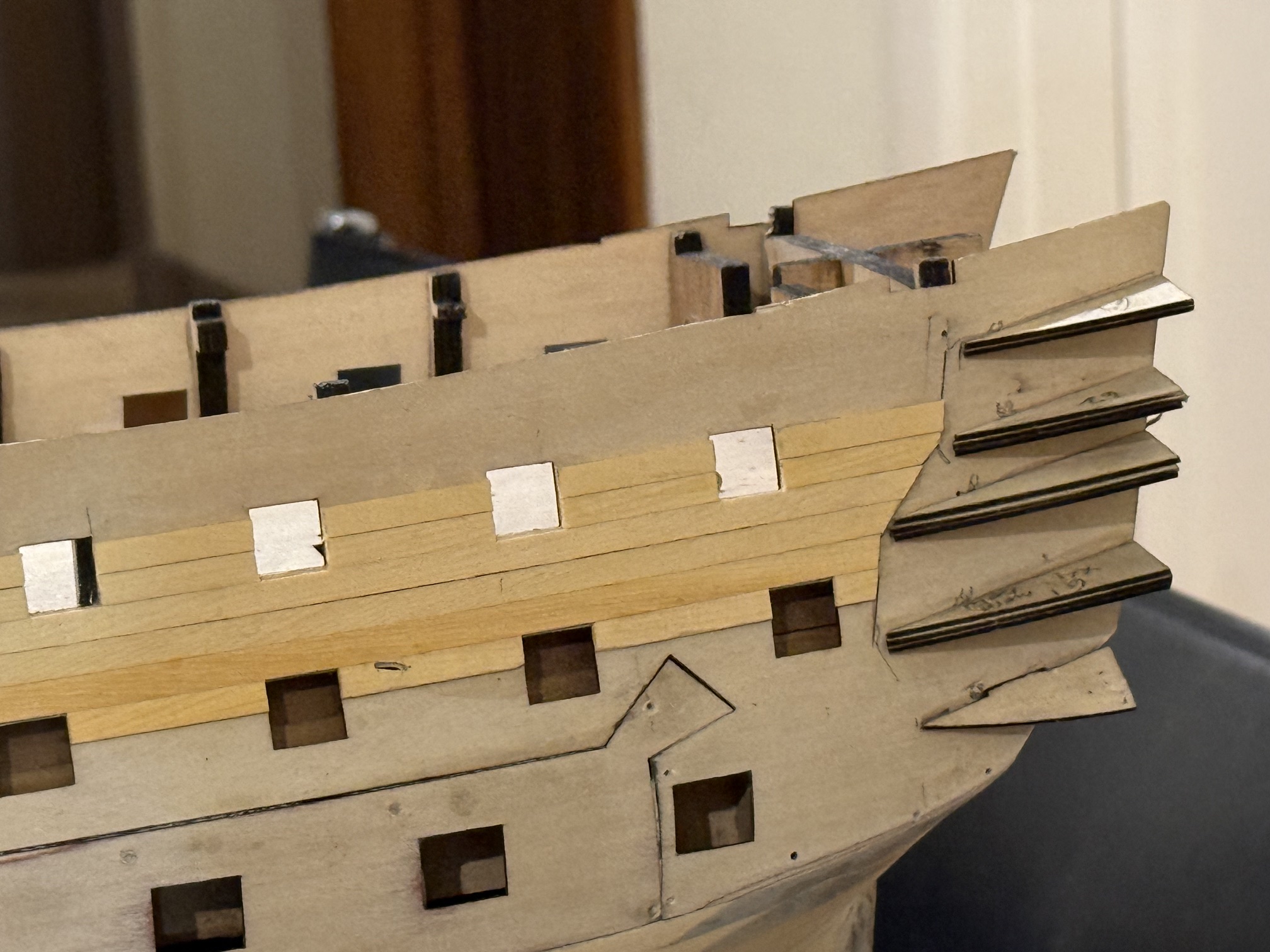
Bellerophon. 2nd Planking Underway.
I finished the first layer of planking the Bellerophon hull a week or 2 ago.
Today I commenced gluing on the 2nd layer of hull planks.
The interval was taken up with other stuff. A visit by a relative who was in our region and was keen to catch up with his Geelong rels. He is a very interesting person and highly respected member of the younger generation (well, everyone are members of a younger generation these days..) and we always enjoy his company. He is an officer in Australia’s military, 5 tours of duty to Afghanistan, and other foreign assignments, and a growing young family. Plus we share a love of woodworking and furniture making. So we talked almost non stop for the couple of days here.
And I have been considering options about 2nd layer planking.
The plans which I have been using are based on 2 layers of planking, but my first layer was so curvaceous and smooth that I did considering not adding a second layer. (see previous posts). But some of the early build details were definitely based on the 2 layer method, and eventually I gave in and fully committed to 2 layers.
Having made the 2 layer decision I gave considerable thought to which wood to use. The second layer planks are thinner (1mm thick) , tend to be fully covered by paint or copper, and do need to manage some sharp bends and twists. The plans call for black walnut, which is probably imported from USA. I used walnut on my USS Constitution model, and it is reasonably flexible and quite attractive. I have a few sticks left over from Constitution, and I was tempted to buy some more.
But meanwhile I have been using Tasmanian Huon pine for the first layer on Bellerophon, and it is just superb. Incredibly flexible, tight grained, and smells lovely when machined. Plus I have some left over from the first layer. To use it for the second layer I will need to machine 90-100 more “planks” of 1mmx5mm x 900mm, by sawing, and drum sanding thicknessing. That takes time. I have spent a couple of half days so far, with about 50% of the material prepared.
And I have started applying the second layer planks. Photos follow. The second layer planks are so far being installed onto the plywood ship sides, which are mostly gently curved and smooth. But the process is slow because every plank will be visible, and therefore filler will be avoided as far as possible. That means that every plank will be dry fitted and adjusted before being finally glued in place. Also, use of screw in clamps with resulting holes, is to be avoided unless the holes can be covered with the planking.
Regarding glue. Where possible I am using PVA glue, but sometimes CA glue is used where fingers must be used to hold the pieces in position.
Pictures of the progress to date are following.