
Noise Proofing A Room facing a Noisy Road.
When I moved to Geelong about 50 years ago, it was a nice, quiet, industrial, provincial city of about 100,000 inhabitants.
We bought a cheap, small, weatherboard house in the suburbs, but my career as an obstetrician/gynaecologist necessitated moving closer to the hospital. So I bought a house about 100m from the hospital, on a road which was designated as “arterial”.
Despite being on an arterial road, the traffic was light, and the location was quiet. We spent a lot of time, effort, and money “doing up” the house. We did most of the work ourselves, and in the process developed skills and interests. In fact, my wife really caught the bug, and went back to university in addition to having and raising a family, and became a qualified architect, which she continues to this day.
But, with time and population increase, currently 250,000 – 300,000, the quiet arterial road became a very busy road. And a very noisy one. Particularly due to trucks. Monster B double behemoths, concrete trucks, delivery trucks. It became impossible to sleep after 6am, and interruptions to overnight sleep due to passing trucks and modified motor bikes were frequent.
I considered various methods of reducing the noise.
The local council had blocked various other streets to trucks and funneled them down our road. Appeals to the council were ignored. We really liked our house and did not want to move.
Our bedroom was closest to the arterial road. It had lovely lead light windows, and we did not wish to remove them. So, to cut the story short, I installed some 10mm thick polycarbonate screens to the inside face of the windows. I had the supplier cut the screens to size, and I installed them. I tried magnetic self adhesive tape to hold the screens in position, but that was not adequately strong, so I used screws.
There were 4 double hung windows, and from memory the whole job cost about $AUD1000.
From the exterior the screens are invisible. From the inside they are just not noticeable.
And they reduced the noise to imperceptible levels. We simply do not hear the traffic at all now. And the room is significantly warmer in winter, and cooler in summer. effectively we now have double glazed windows, at a fraction of the cost.
That was all about 10 years ago.
Recently we met our new neighbors. A lovely young couple who were very excited to buy the house next door, which is almost 140 years old. They love the house, the neighborhood, the location, the closeness to the hospital, the beach, the shops. And we were delighted to meet them.
BUT. They were dismayed at the noise from the road. “How do you cope, how do you sleep?!!”
So, I told them what I had done, successfully, with the polycarbonate.
A couple of weeks later I was helping my neighbour install similar screens on his bedroom. Some pics follow.
The panels were each a solid 2 person lift. He had chosen acrylic panels rather than polycarbonate. The acrylic material was slightly more liable to scratching, slightly less transparent, and less strong than the polycarbonate, but about half the price. He chose 15mm thick panels. I imagine that they will be even more effective for noise reduction, due to the massive thickness.


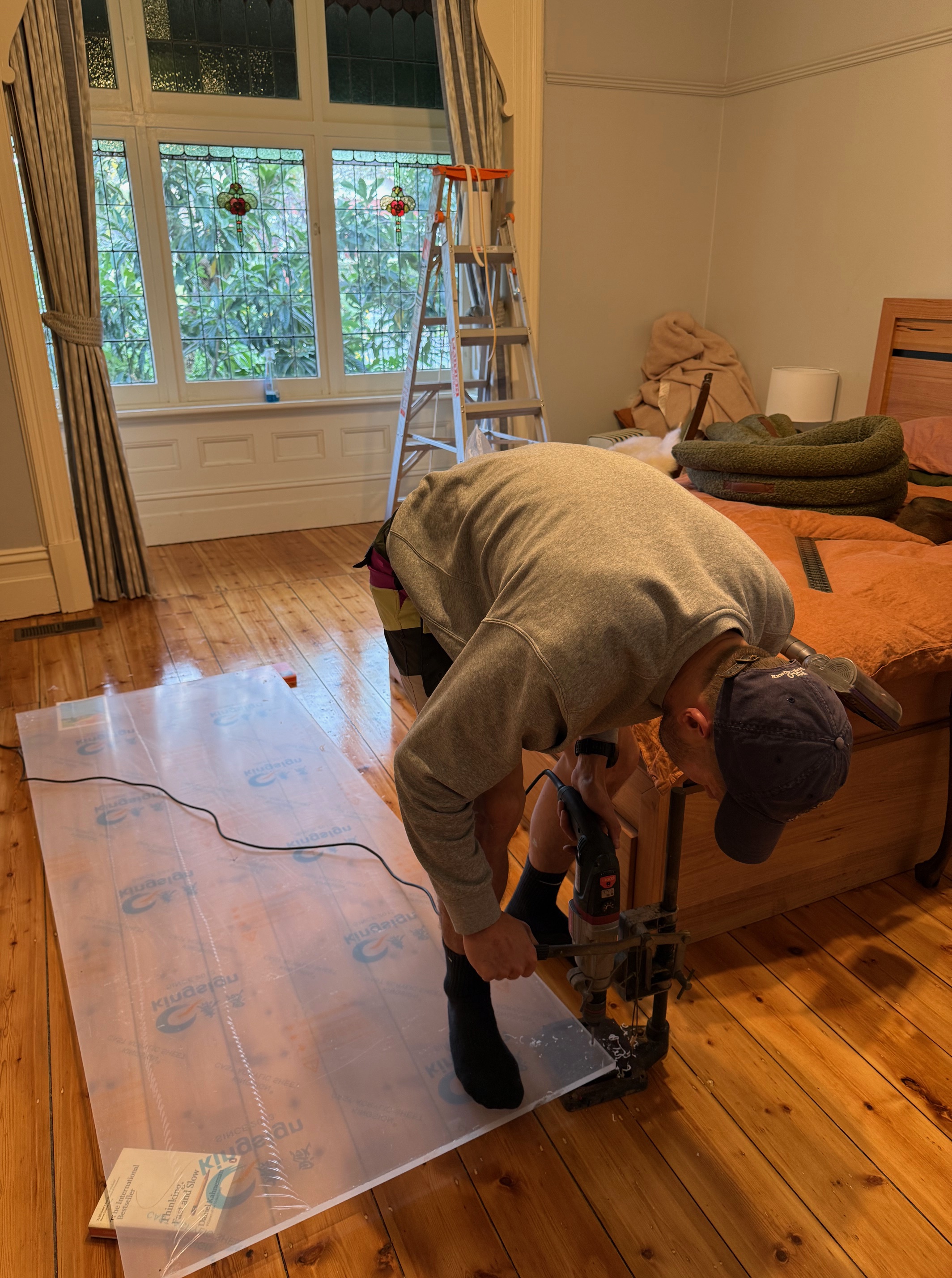

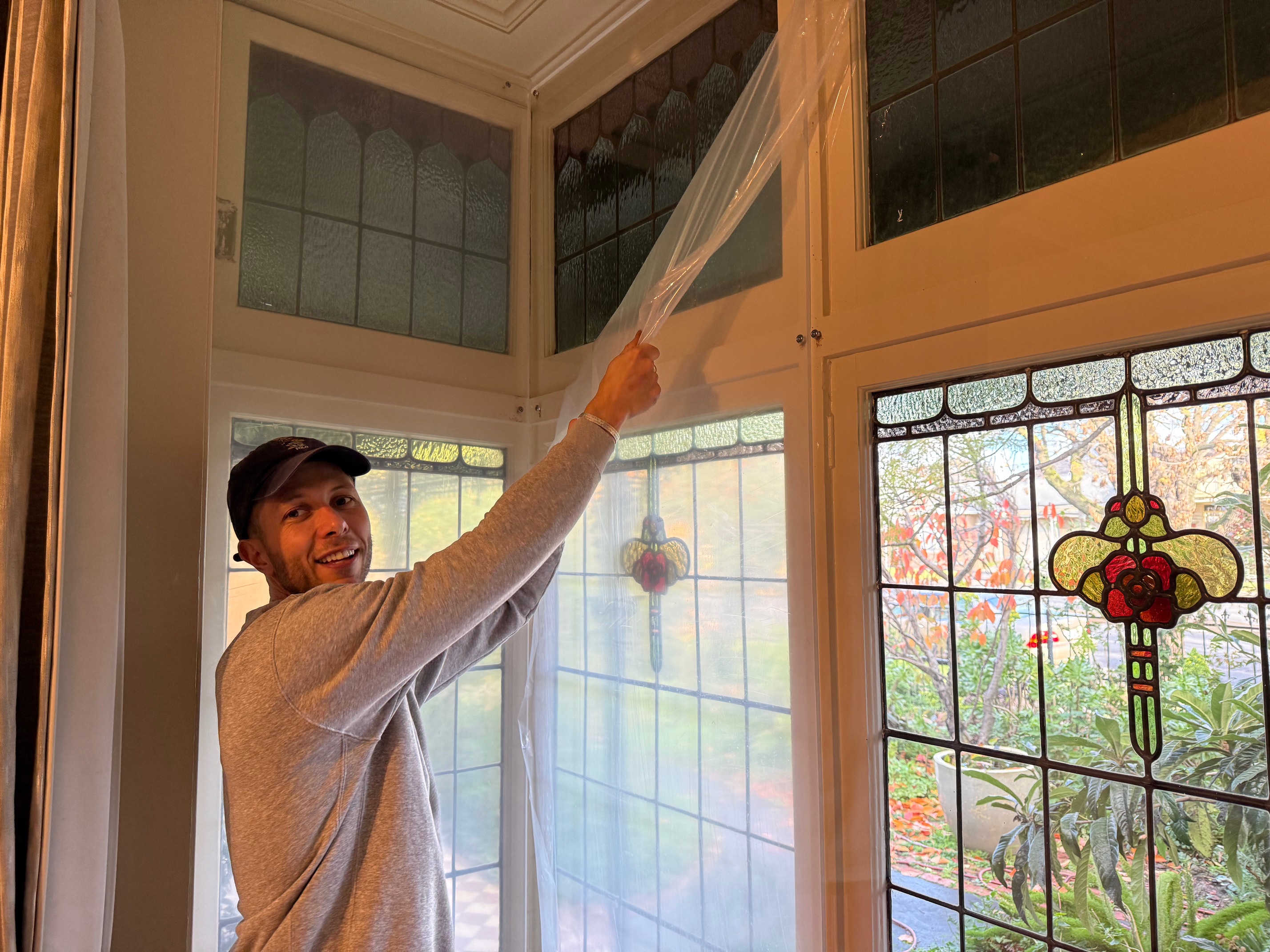


The new owners’ mother exclaimed “haven’t you started yet”. She was in disbelief when we said the job was completed. It was so transparent.
The room was very noticeably quiet, despite the busy road. We are planning to perform some decibel measurements on this room and compare it with the other room facing the road, and also with my polycarbonate covered windows next door.
The acrylic pieces were purchased from and cut to size by Excelite Glass, Dandenong South, Victoria. I believe that my neighbor is happy with their service. Surprisingly, Excelite were not aware of the soundproofing reason for use of their product. But they are very interested……
 johnsmachines