johnsmachines

machines which I have made, am making, or intend to make, and some other stuff. If you find this site interesting, please leave a comment. I read every comment and respond to most. n.b. There is a list of my first 800 posts in my post of 17 June 2021, titled "800 Posts"

Tag: Khufu ship

Khufu Pyramid Ship -4

I am currently waiting for plans to be printed for my 74 gun ship so I can start on that build. I regret to say that I have been messed around by my normally prompt scanning/printing service, and still waiting more than 3 weeks despite weekly reminder calls.

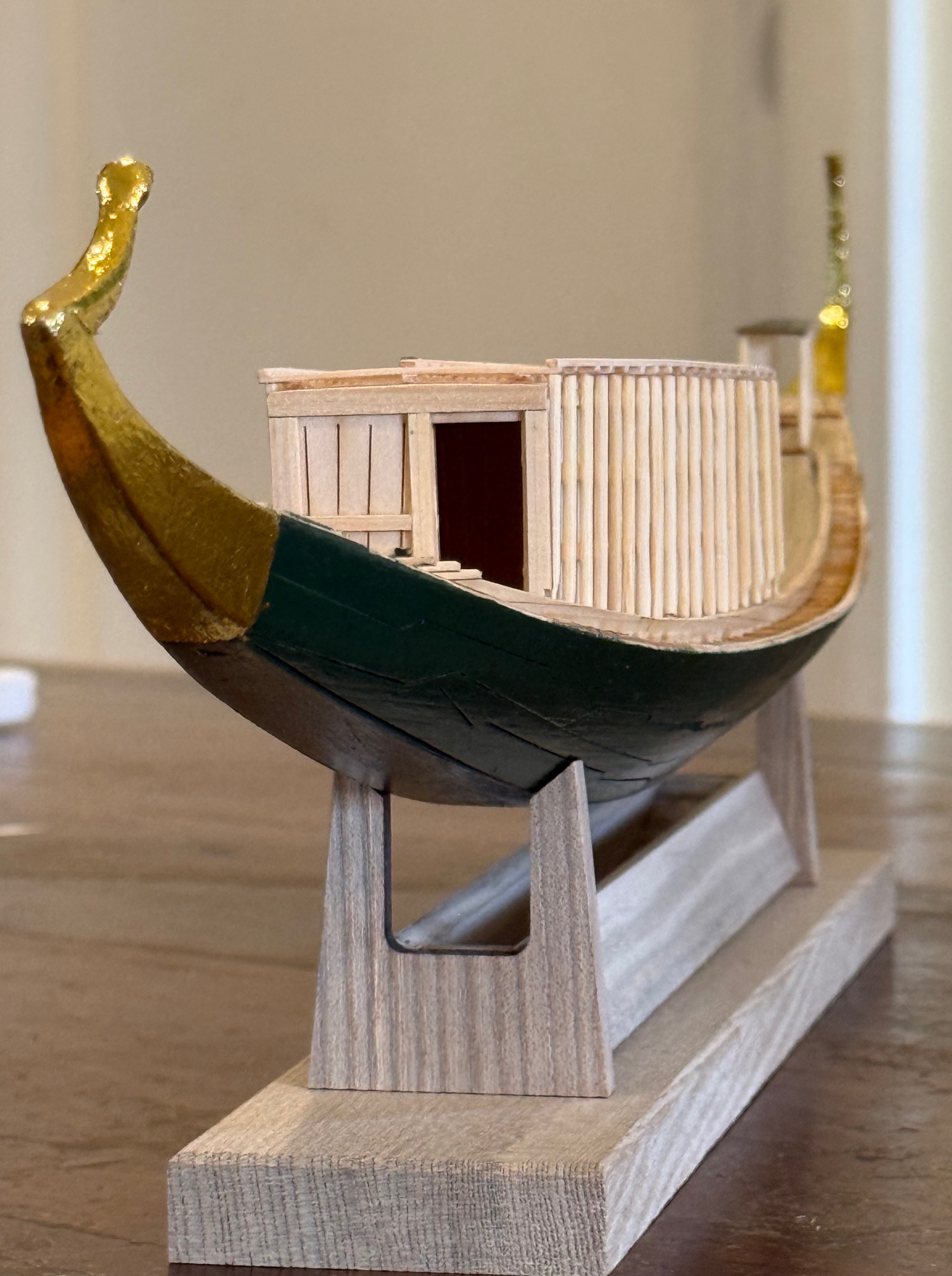
So meanwhile I have been working on the Viking Oseberg ship, and the Khufu pyramid ship. This post is about the Khufu ship. The hull, deck cabin and baldechin are made and installed. still to come are the oars, and shade structure. So I have painted the hull exterior and varnished the deck and hull interior. I painted the hull a dark green, and the bow and stern pieces gold. The green is as I planned, but the gold was quite dull.

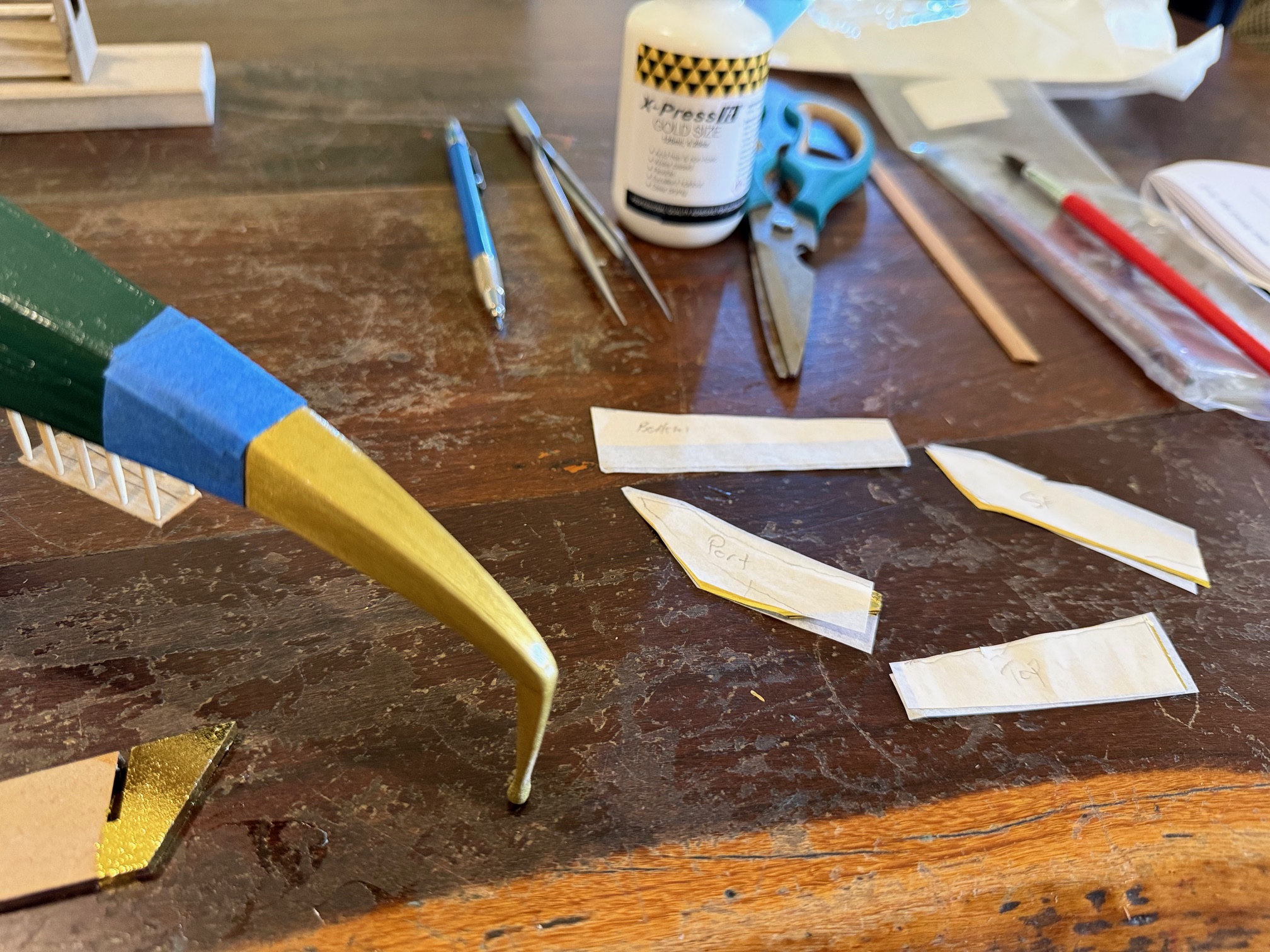
The gold painted prow with masking tape applied. Not enough bling for my taste. Also the test piece (lower left), some cut up foil in the paper wrapping, pencil, fine tweezers, gilding glue, gilding brush in the plastic sleeve, and glue brush.

So, I explored the possibility of applying gold leaf over the gold paint. I have no experience of applying gold leaf, so I asked my AI how to do it. It sounded straight forward, so I purchased some 24 karat gold leaf sheets, 65mm square. There was no mention of them being gold alloy, or “golden” foil, just 24karat gold foil. So, is it 24k gold, or is that just an advertising title for suckers like me? After a long wait it arrived from China. I also purchased some gilding glue, and a gilding brush, which was incredibly soft and fine. I also needed a small paint brush to apply the glue.

The AI suggested practicing on some scrap, which I did, and the test turned out quite well.

The prow section seemed more straight forward than the bent -cocked forward stern piece, so started at the front.

First I masked the green painted section of the hull with masking tape, and firmly applied the tape without gaps.

Then cut one of the foil squares into pieces, some for the vertical bow pole, and some for the hull prow extension, making sure that each piece was labelled (top, port, starboard, bottom, post top, post sides, post rear, and cut at least 2mm wider than needed.

Then brushed on the glue, making sure that there were no drips, or thick areas. Waited about 15 minutes, and tested the glue on a test bit of waste, waiting until the glue became tacky. I do not know what the constituent of the glue is, but it could be a watery version of PVC.

When tacky I applied the first piece of foil in an inconspicuous region, under the prow piece. Several things about handling gold foil. It is weightless, and incredibly thin. If dropped it floats slowly to the floor. If removed from its surrounding piece of paper it tries to coil up like a snake. It seems to be attracted to my skin, possibly by static electricity. And as soon as part of the foil touches the glued area it grabs, and cannot be removed, so positioning is crucial. If a misguided attempt is made to reposition it, it falls apart like a wet tissue.

Fortunately, if a piece of foil is misapplied leaving a gap, another piece of foil can be attached to the gap, and later some gentle brushing with the gilding brush breaks off the non glued sections leaving a patch with invisible joins.

The timing of applying the foil is also crucial. Well, not timing exactly, but degree of tackiness which is assessed with a test piece of wood and finger touching.

Anyway, enough words. Here is a photo of the finished foiling.

Like all of my jobs it is not perfect. But good enough for SWMBO so good enough for me. I do like the gold gleam.

Next to make the pergola at each end of the cabin. It looks and probably is rather flimsy so I have left it almost until last. Then to make and attach the oars.

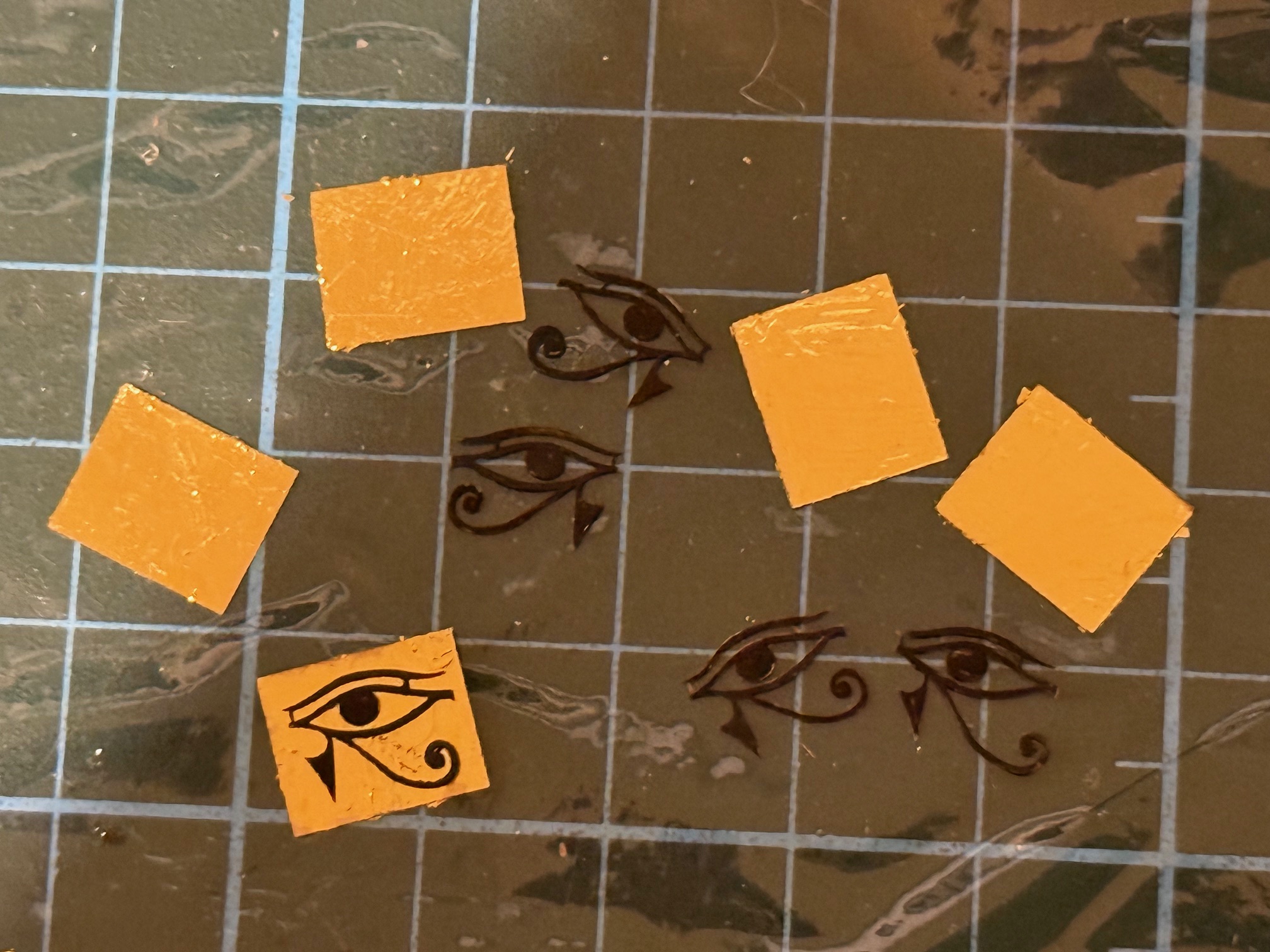
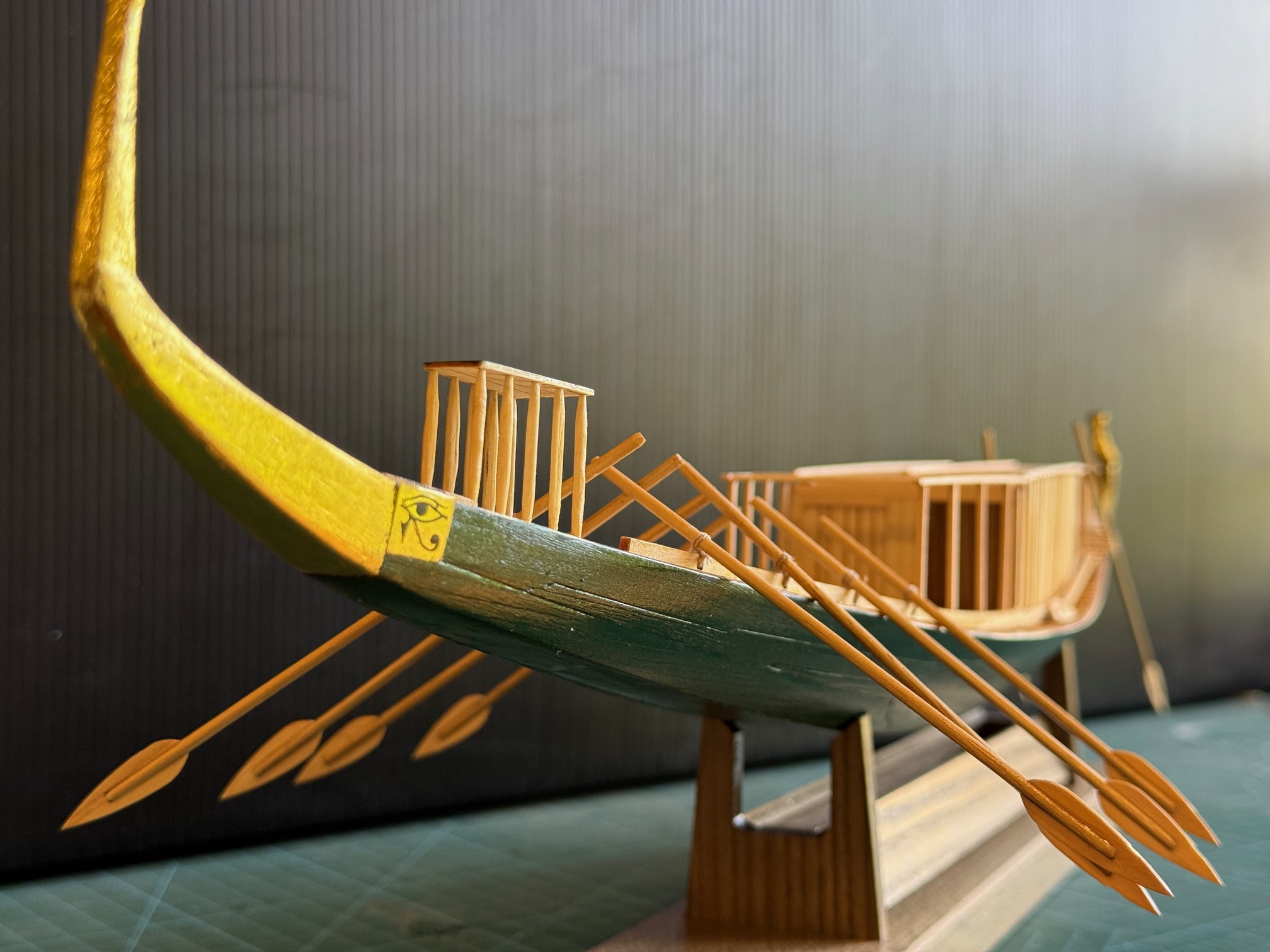
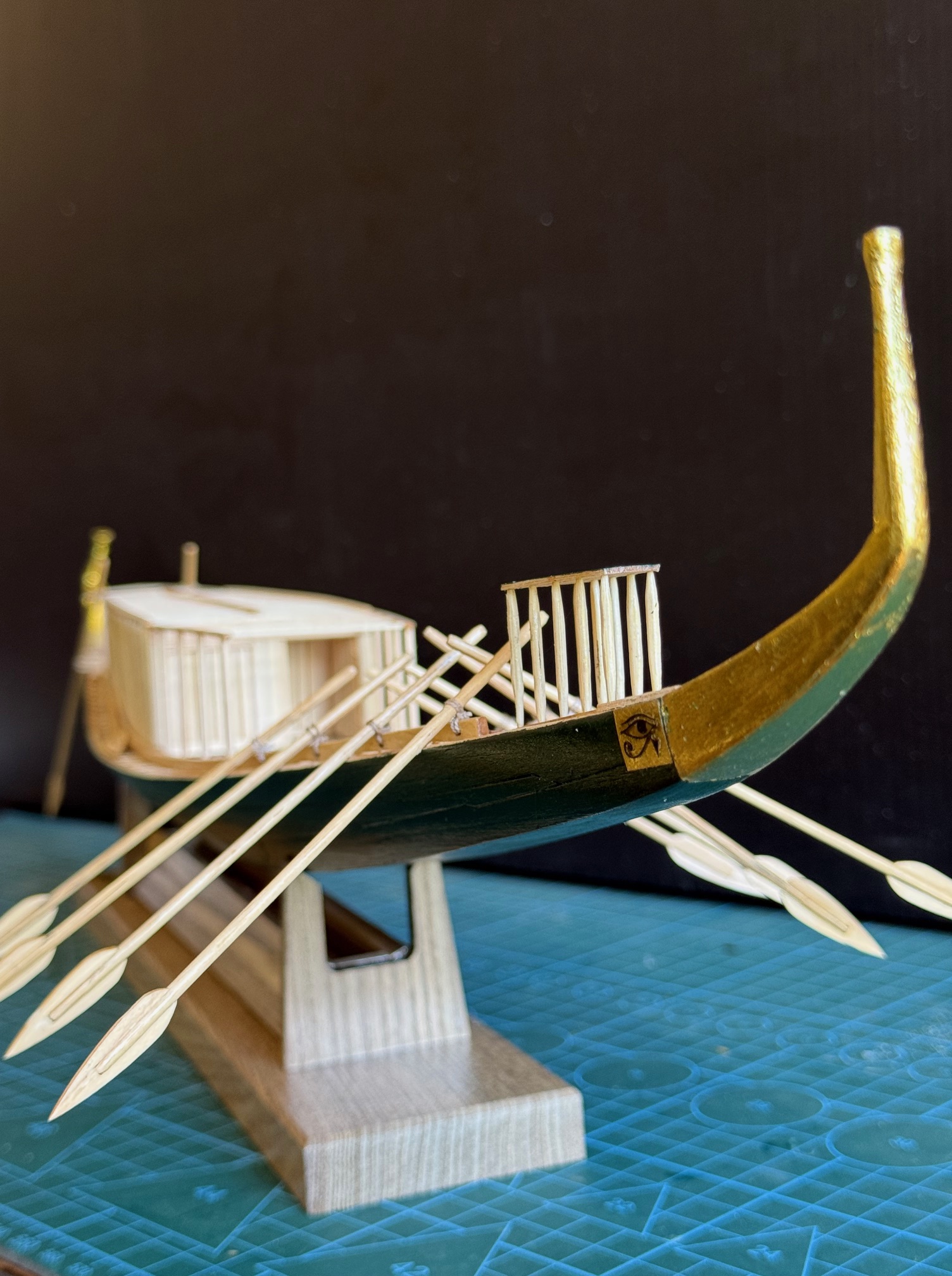
And somehow to paint or make an Eye of Horus on each side of the hull near the bow. Not sure how I am going to do that. I am quite sure that my painting-calligraphy skills are not up to that job, so it will somehow be CNC’d, printed, or 3d printed.

p.s. Here is a link to my “conversation” with the AI on the subject of gilding the Khufu model ship. It is more informative and sensible than most conversations that I have with humans! https://chatgpt.com/share/693badc9-4210-8009-8cef-6e33623dc878

Khufu Pyramid ship -2

Almost fully assembled now. I need to finalise some decisions about finishing the wooden surfaces. Leave au naturale? Use a wood varnish?. Paint some surfaces? Still not finally decided.

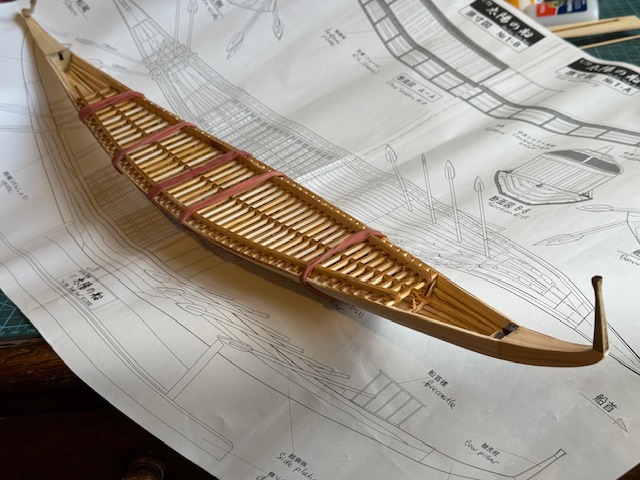
This is where we departed in the last post.. At 1:72 scale the model hull is almost 500mm long.
Installing the deck is the next step. First to free the longitudinal notched beams and transverse beams, one at a time according to the translated Japanese instructions.
Then assemble the components and glue the joints. I was using Gorilla glue exclusively for this step, to give myself a few minutes of adjustment time.
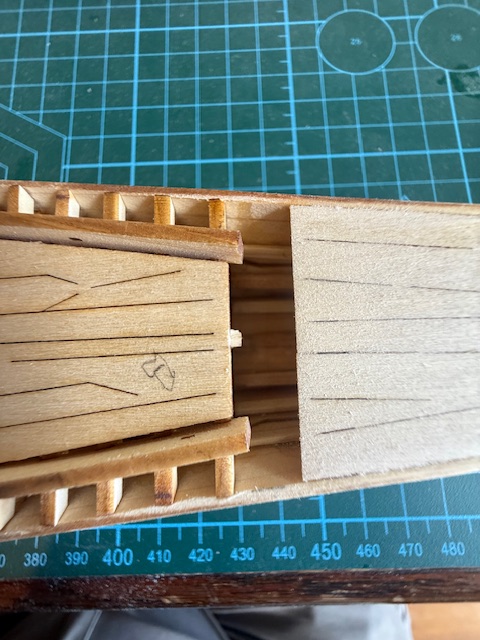
Then to fit the deck assembly into position. A bit of sanding the cross beams to make them fit, and glue it all into position. It fitted pretty well!
The deck planks were in one piece, and there were some gaps present at the sides, but on examining photos of the reconstructed Khufu ship, the same situation exists, so I glued the deck into place, figuring that I could make some pieces to fit the gaps if necessary.


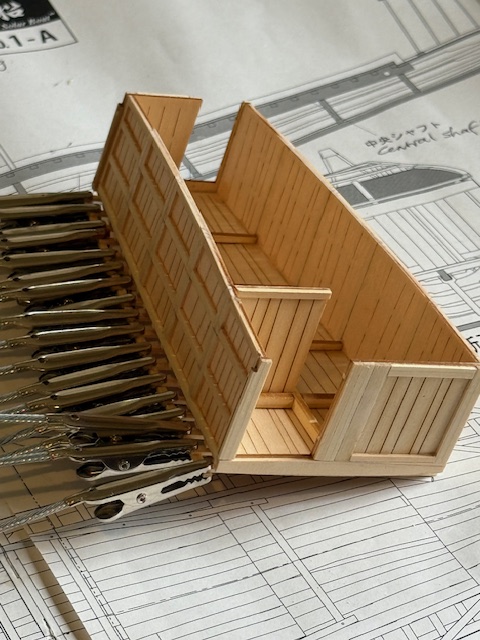
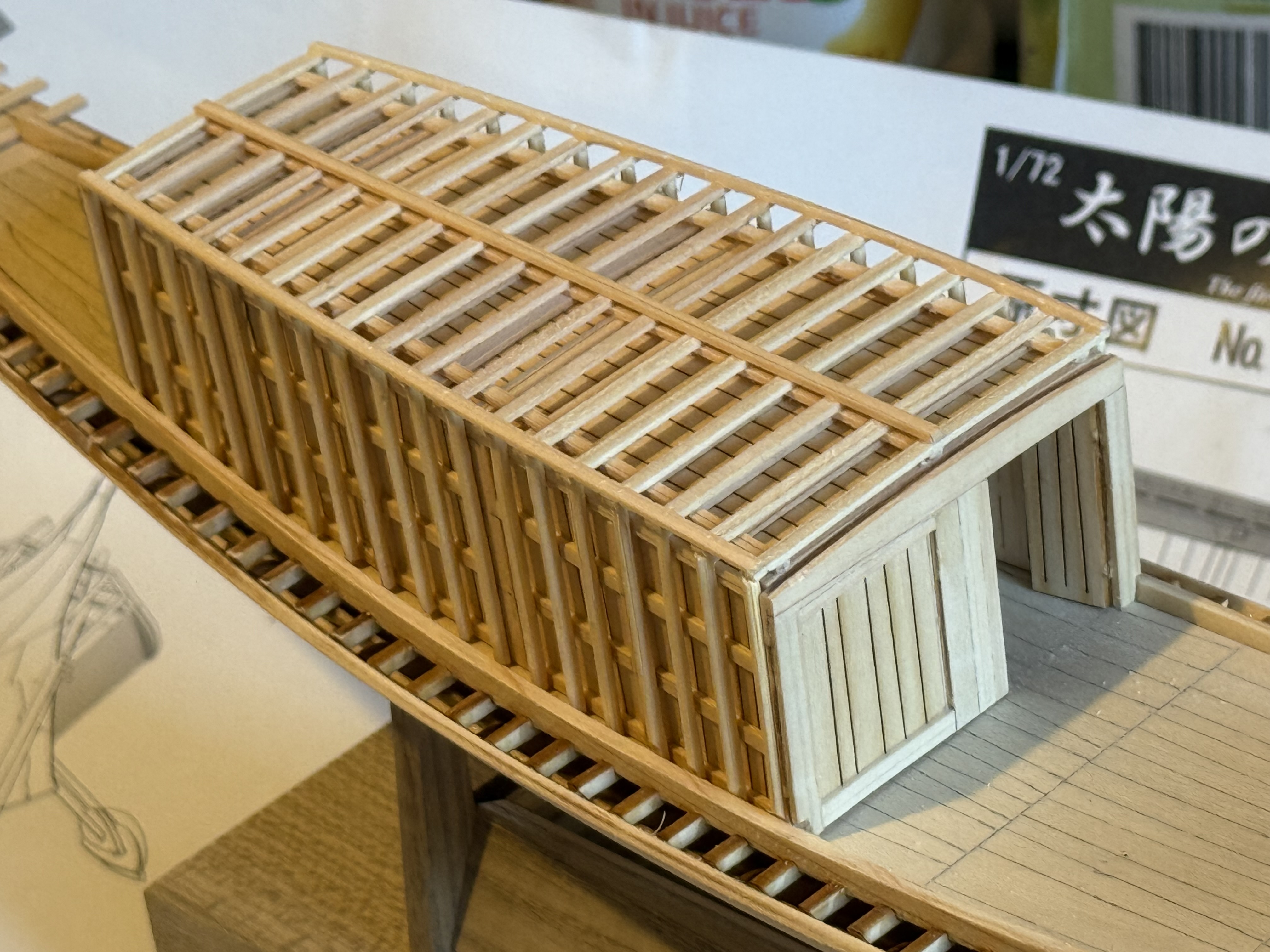
The deck cabin/whatever was next. Although a simple box it took 2 whole days to fit and glue everything together. The base walls and the roof had curves, to add some challenge.
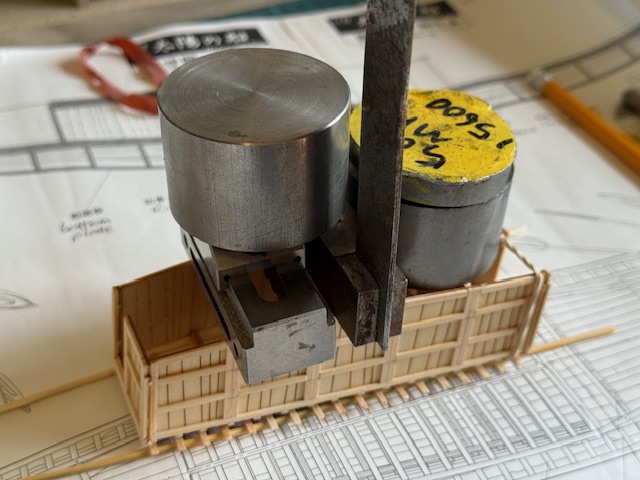
Some workshop offcuts were handy gluing weights.
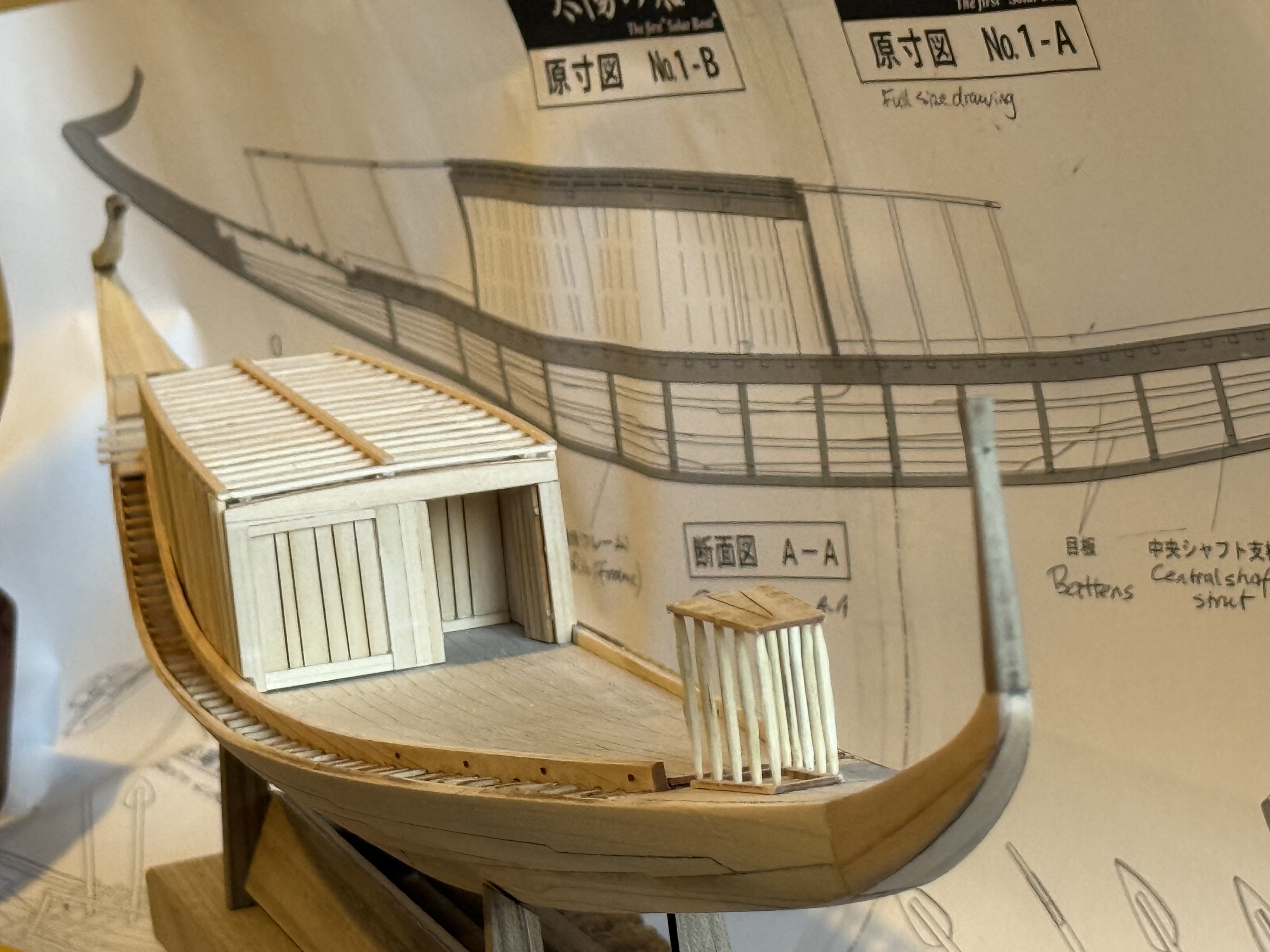
Sitting in place, not yet glued until I can decide how to finish the deck. The roof edges are rounded to support a roof shade cloth, which will extend onto the fore and aft pergola frames.
The function of the little roofed structure at the bow the “baldechin” is unknown. It is presumed that the pharaoh, or his body, used the bigger “cabin”.

I have decided to paint the exterior of the hull dark green, and the stem and stern posts gold. Still not decided about the deck.

Khufu Pyramid Ship

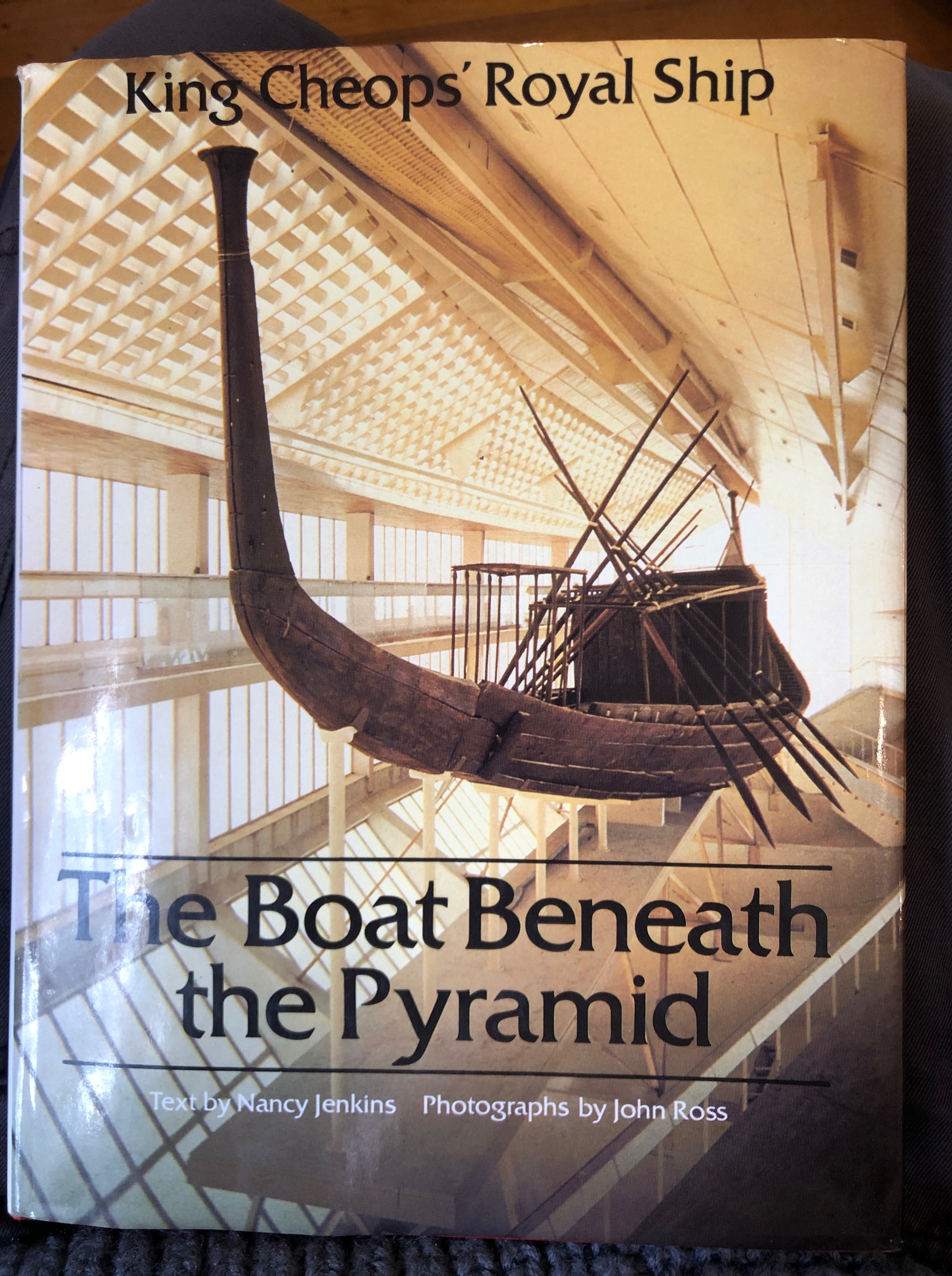
I have been interested in Egyptology for many years, and a few months ago I came across this book in my favourite second hand book shop, bought it and read it. It appealed to both of my interests in Egyptology and ships.

It is the oldest ship in existence.

It was found in 1952, buried in a stone chamber next to the base of the great pyramid of Cheops/Khufu. The ship was deliberately buried, carefully, in disassembled pieces. Complete, even with the ropes that joined the planks together. The wooden ship survived 4500 years, because the chamber was airtight, and the area receives very little rain.

The ship was excavated, and painstakingly reassembled over the next decade. The book pictured is largely about the known history of the ship, its reconstruction, and thoughts about its purpose.

It is a sizeable vessel… 43.6m (143′) long, 5.9m (19.5′) wide, 45-50 tonnes weight, made mainly of cedar from Lebanon. Powered with 24 oars, plus steering oars, but possibly towed by another vessel or from the river banks.

It is not an attractive shape in my eyes, but very interesting from a marine technical viewpoint. It does show evidence of having been actually used in water as a ship.

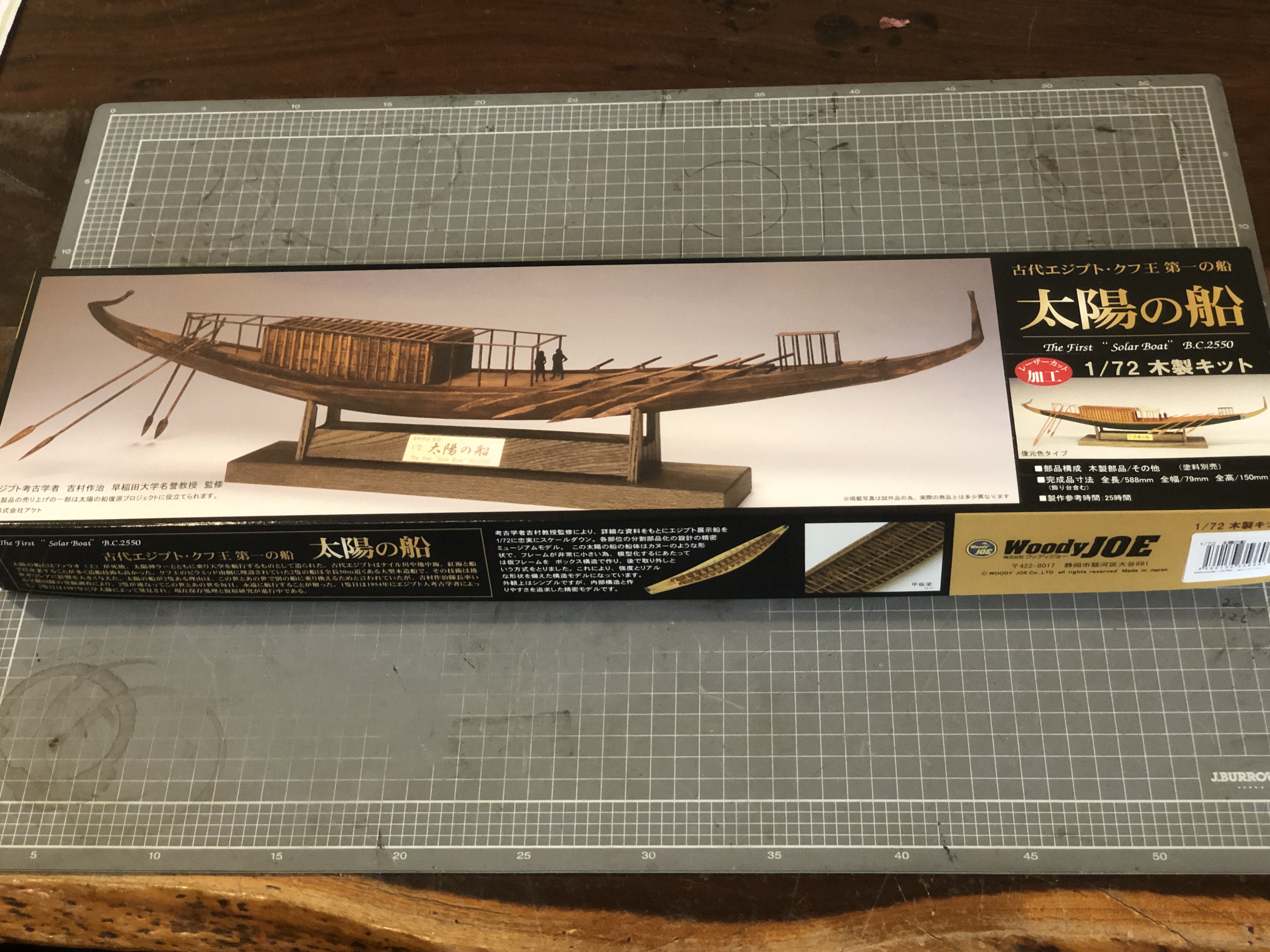
So, I wondered if it had been modelled, and in my Internet searches discovered a Japanese source of a wooden kit,, which I purchased.

1:72 scale. The laser cut parts, planking wood, etc were impressively well packaged, labelled, (in Japanese plus Arabic numbering). However the instructions were also in Japanese. A search of the site revealed that there were no non Japanese instructions. Thank heavens for Google Translate, which performed an almost flawless English version for me. However there was no means of saving the translation except by saving screen shots on my PC.

The kit sat unused for several months. I have been busy with Constitution, and other machine projects of which regular readers of this blog will be familiar. And I have been busy planning my scratch build of a 74 gun ship. But I have been waiting and waiting for some plans of the 74 to be copied and printed so I can make a start on the 74. Still waiting, (paper supply then printer problems). So I started on the kit build of the Khufu ship. This post is a pictorial summary of progress to date. 3 days work so far.

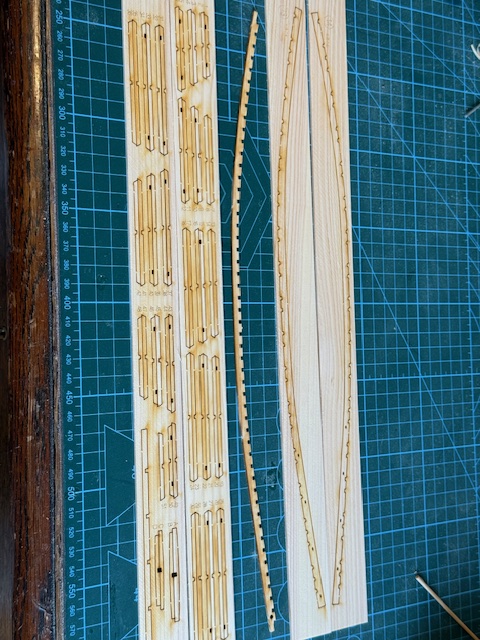
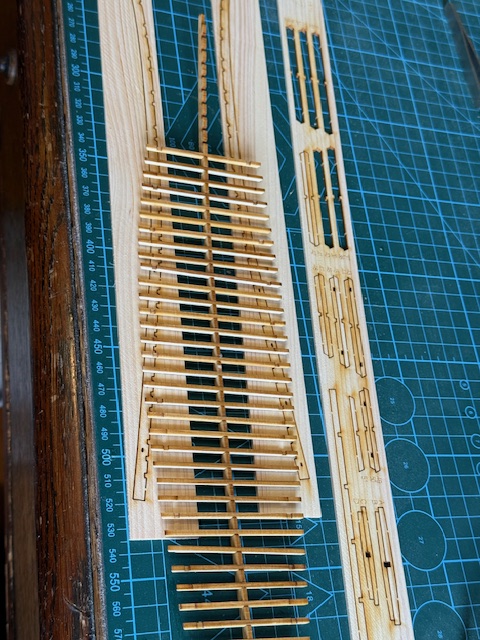
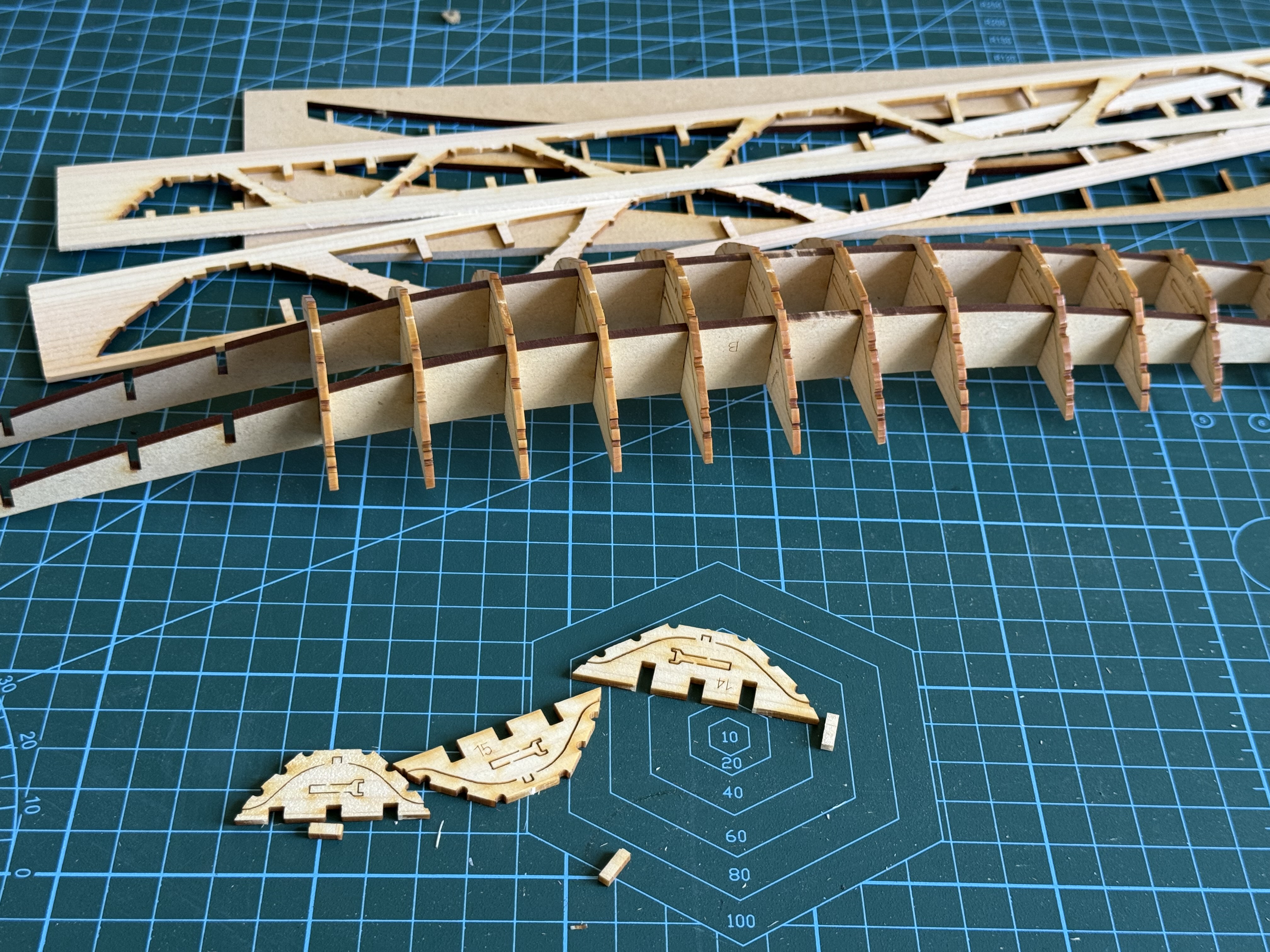
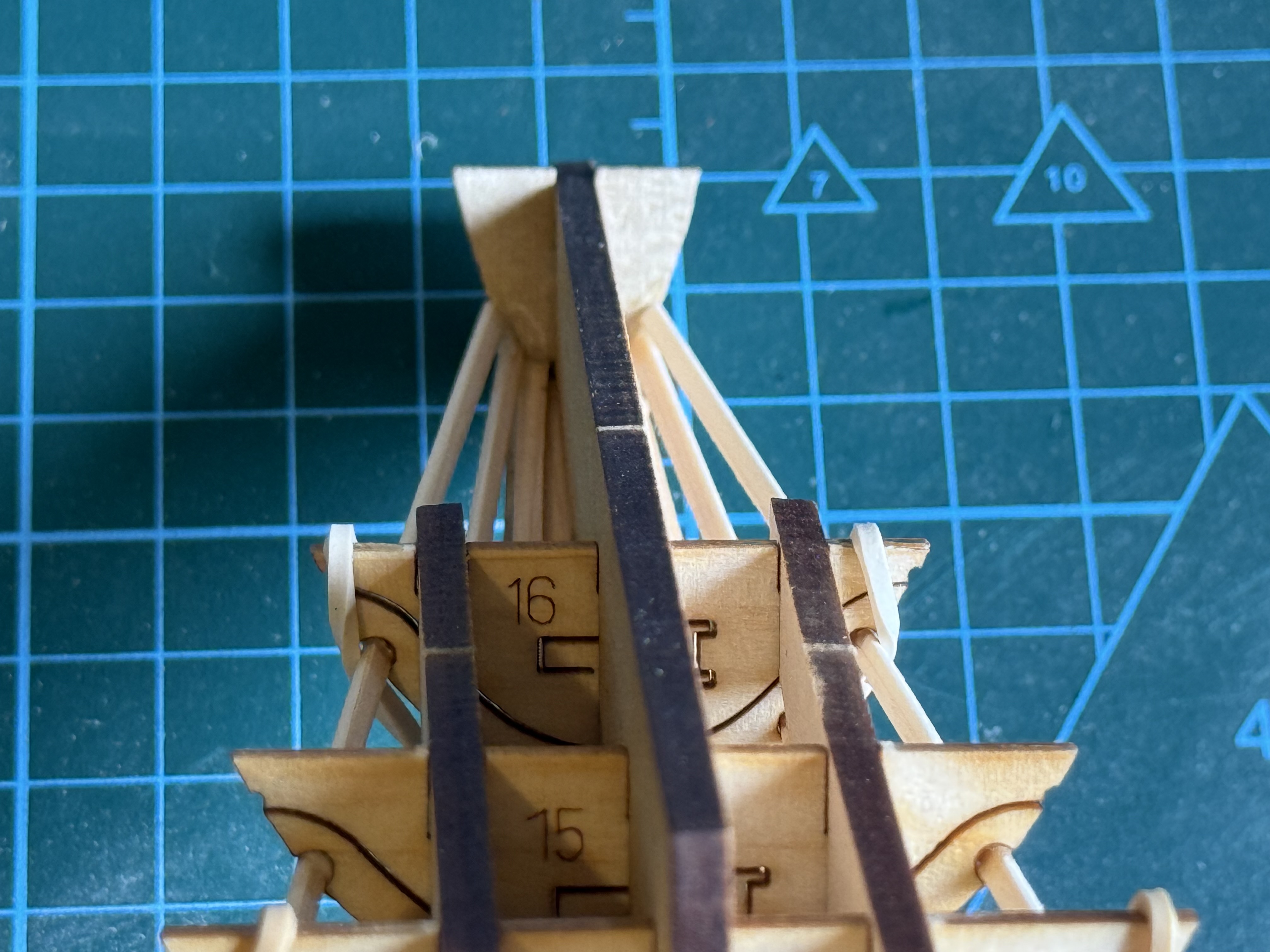
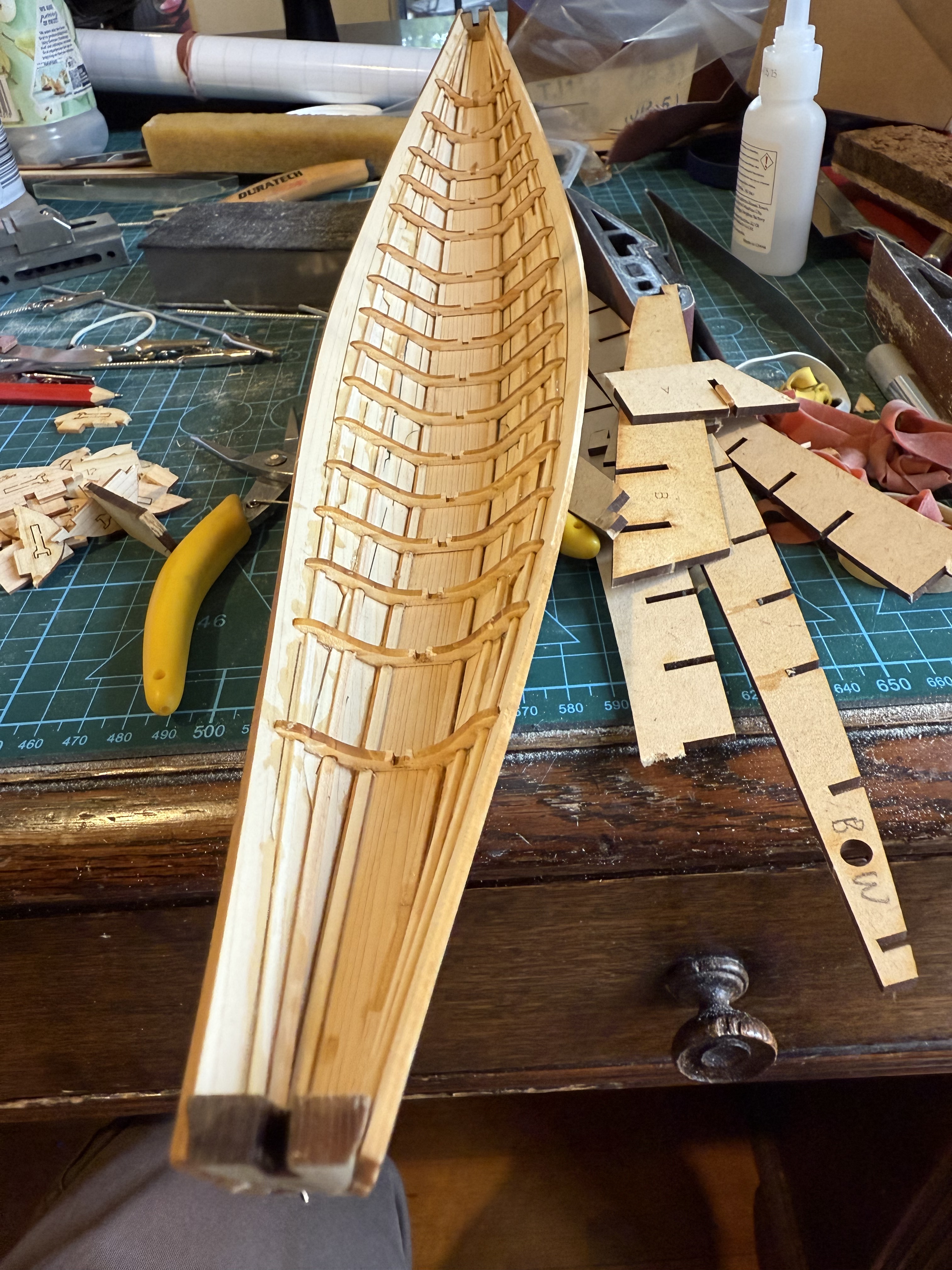
The laser cut parts are very accurate. The wood is spruce I think. Excellent quality. A simple job with a scalpel to cut the parts from the frames. The bulkheads and longitudinal pieces are temporary and are eventually broken out of the semi completed hull.
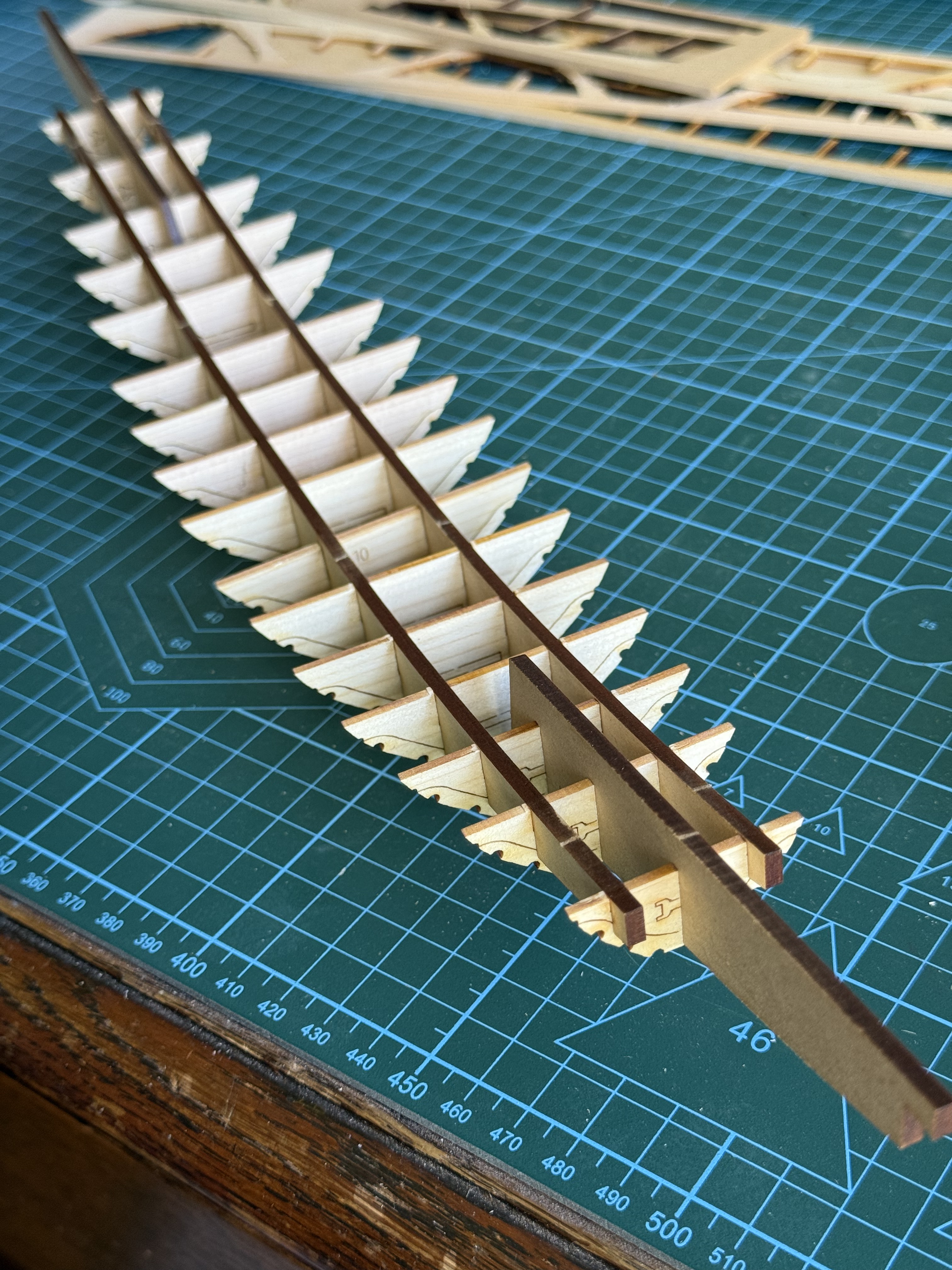
Bow and stern pieces fitted. Nothing glued yet.

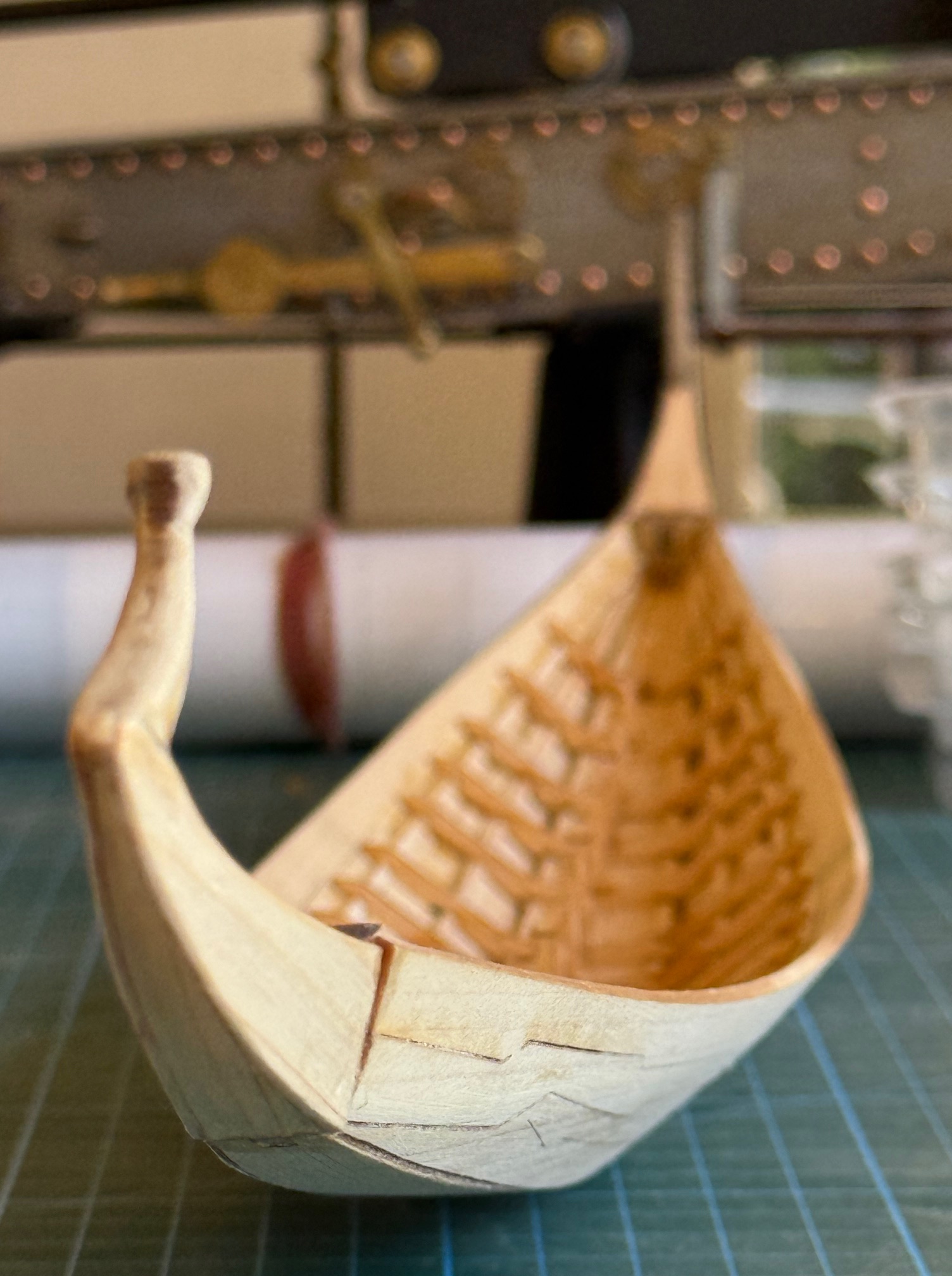
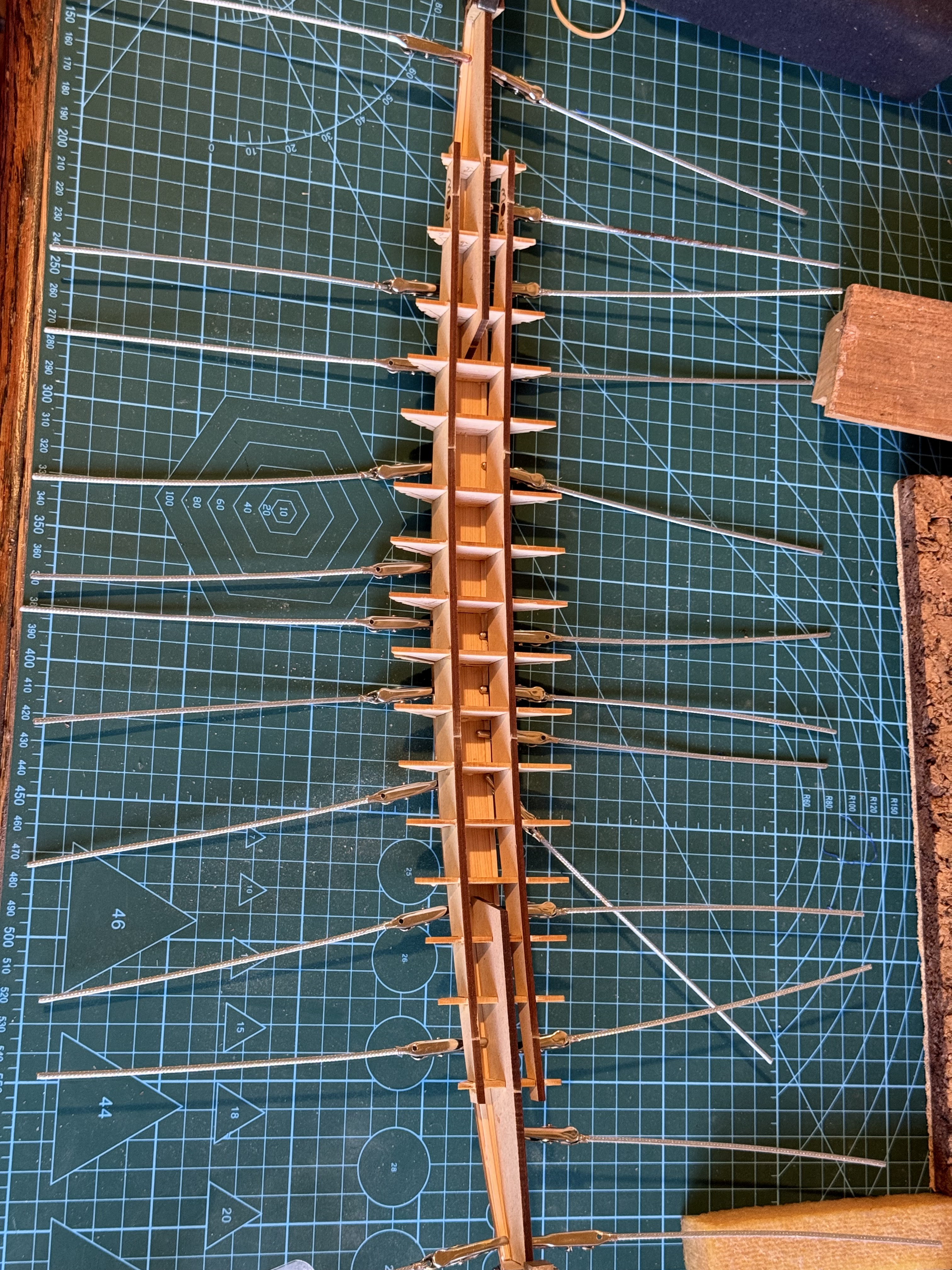
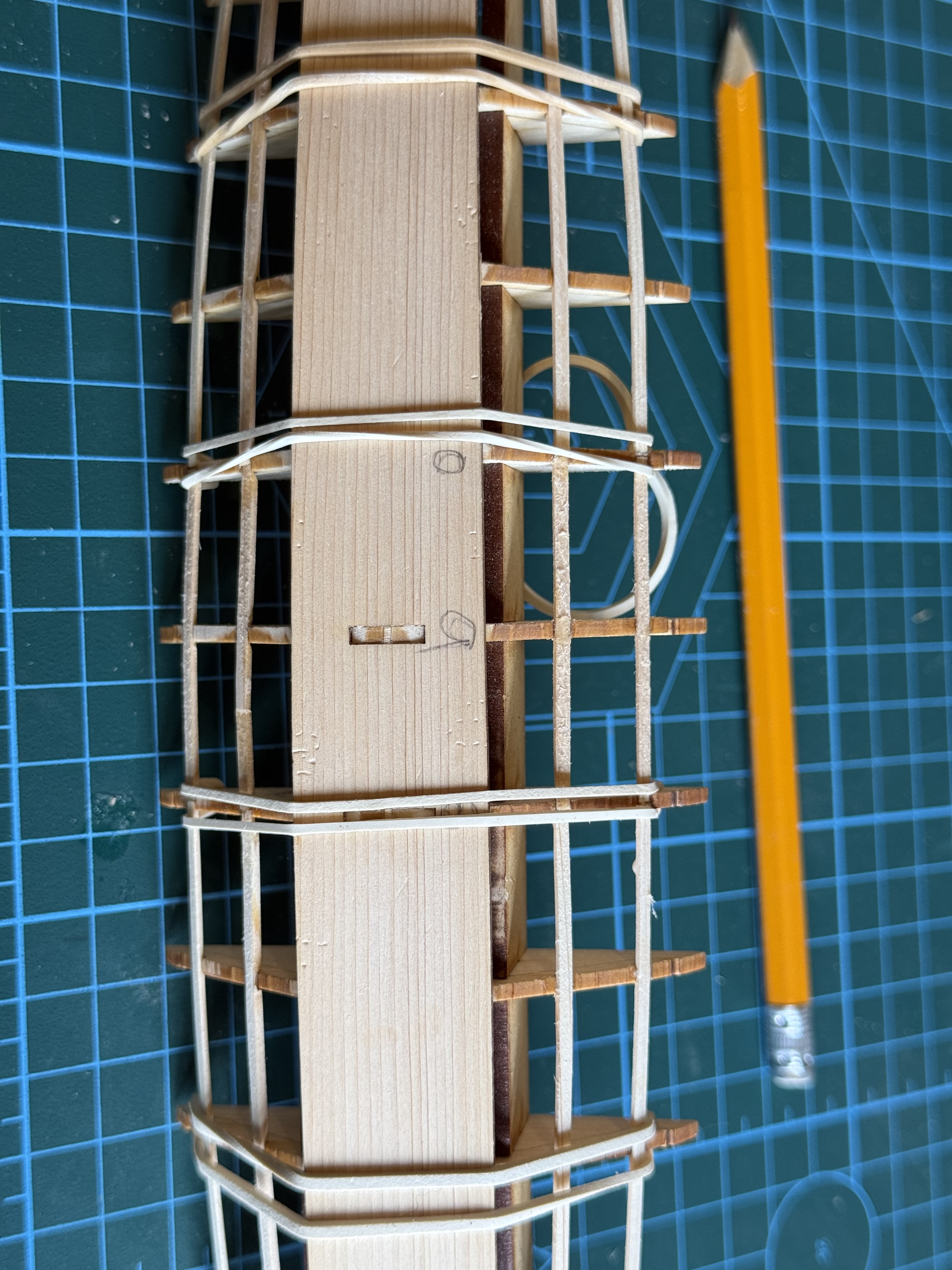
Some stringers were fitted and glued to the frames, and the bottom plank was glued to the stringers. The bottom plank does not classify as a keel.

Stern and bow blocks fitted but not glued, then 4 more stringers glued to the frames and bow/stern blocks.
Steps so far had been completed quickly, but the stringers were fiddly and tricky and took a whole day.
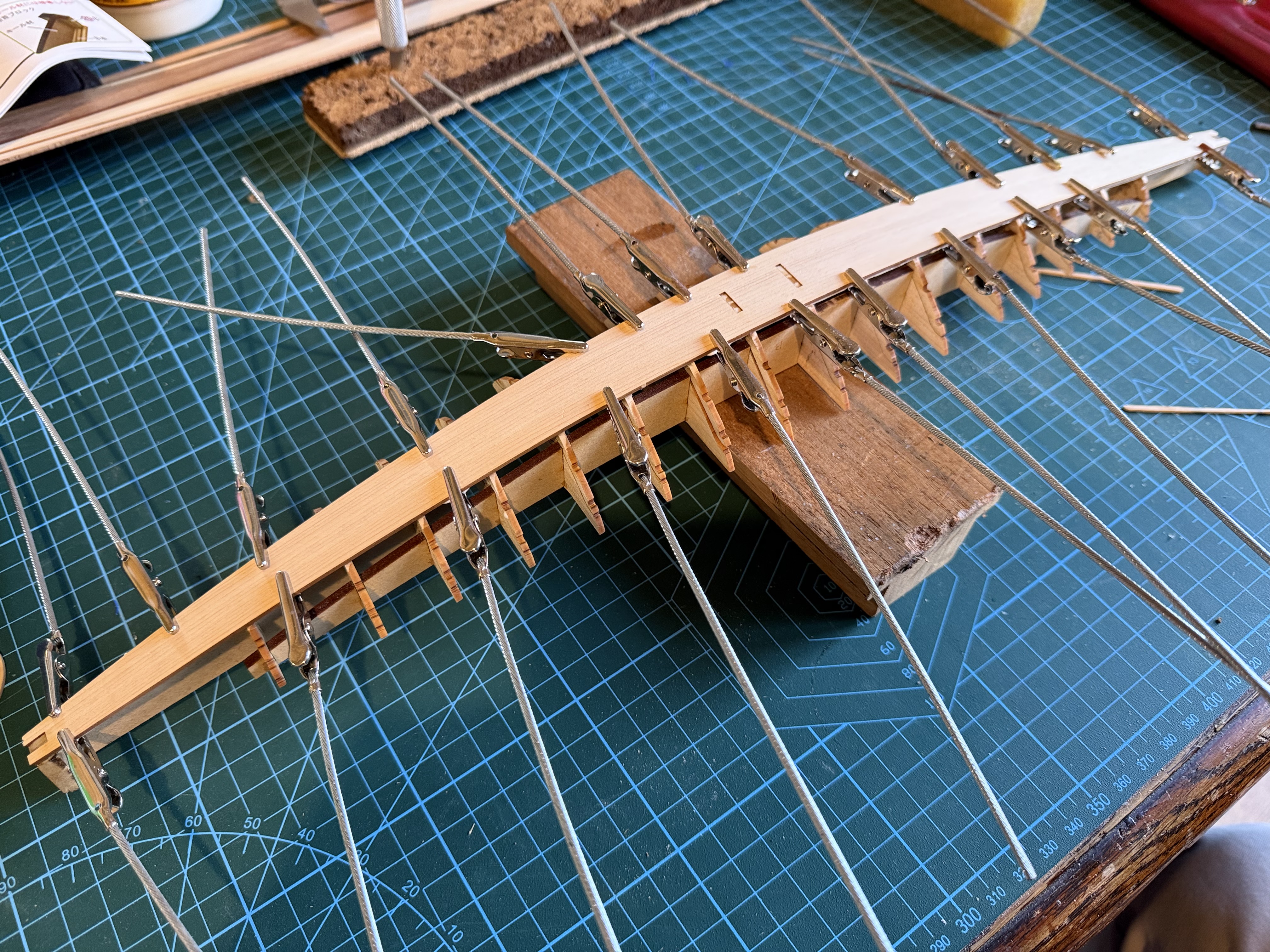
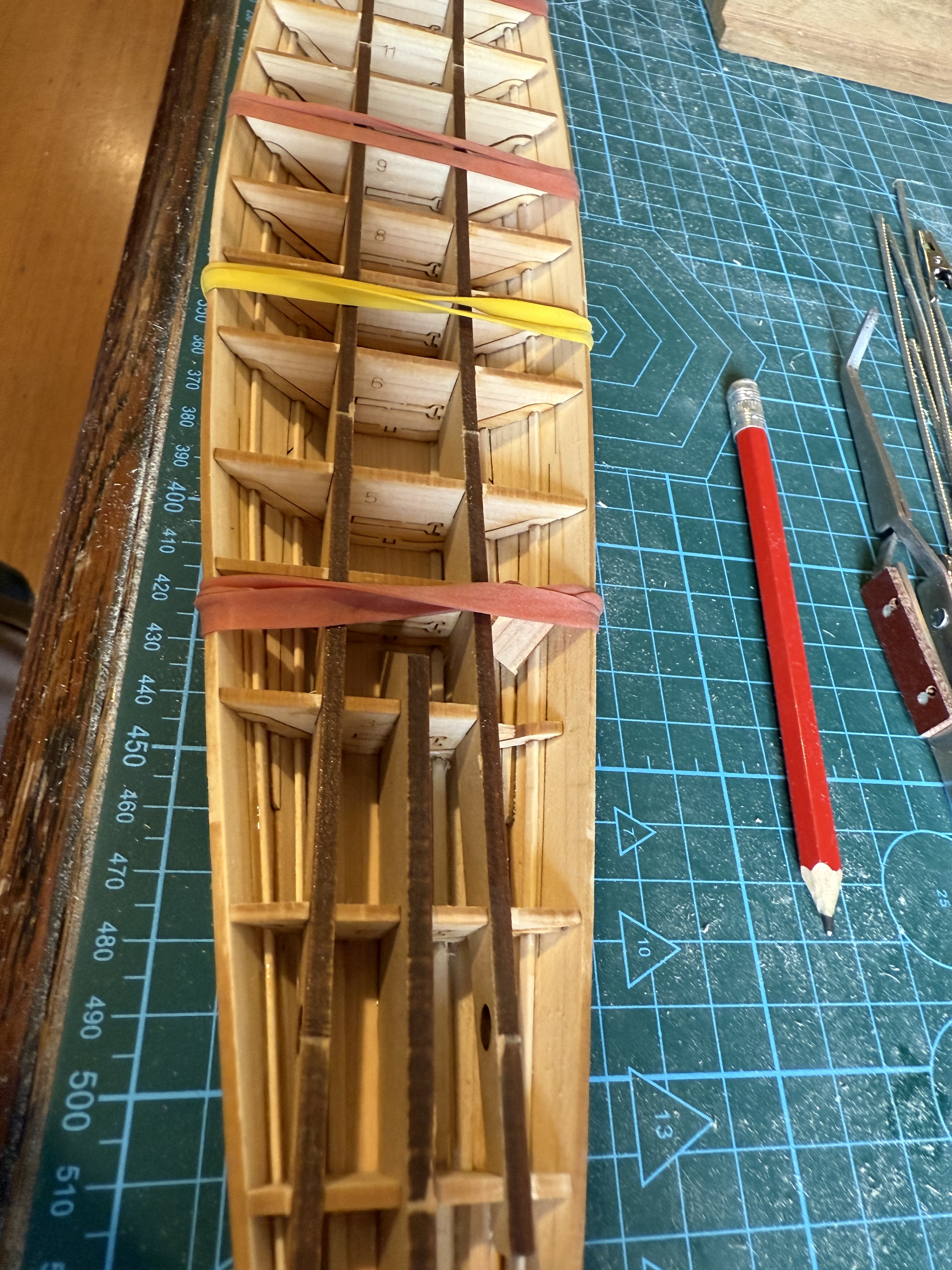
The side planks were soaked in water to facilitate bendability, and glued to the frames. They did not require shaping. Again the laser cut outlines were accurate.
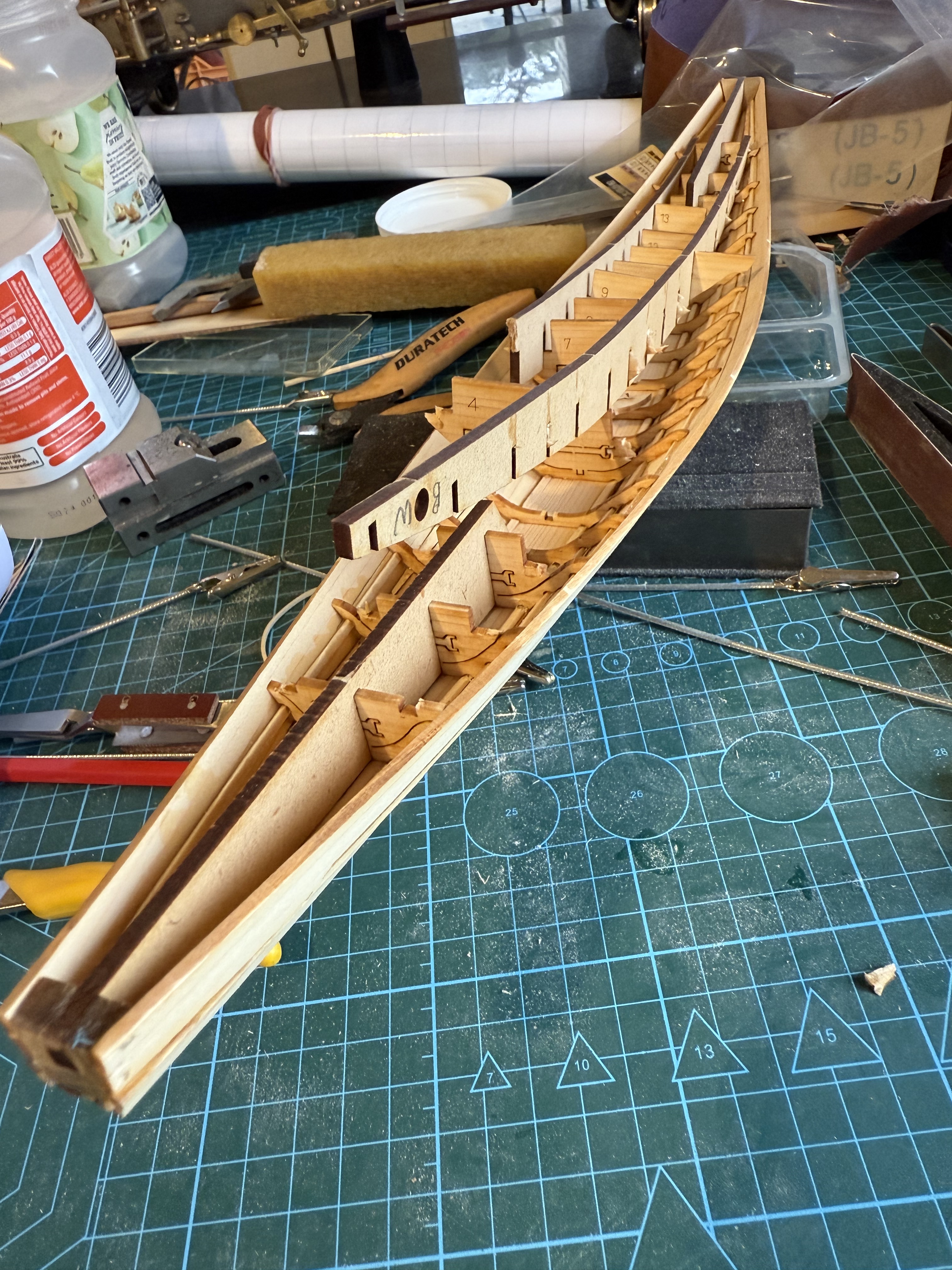
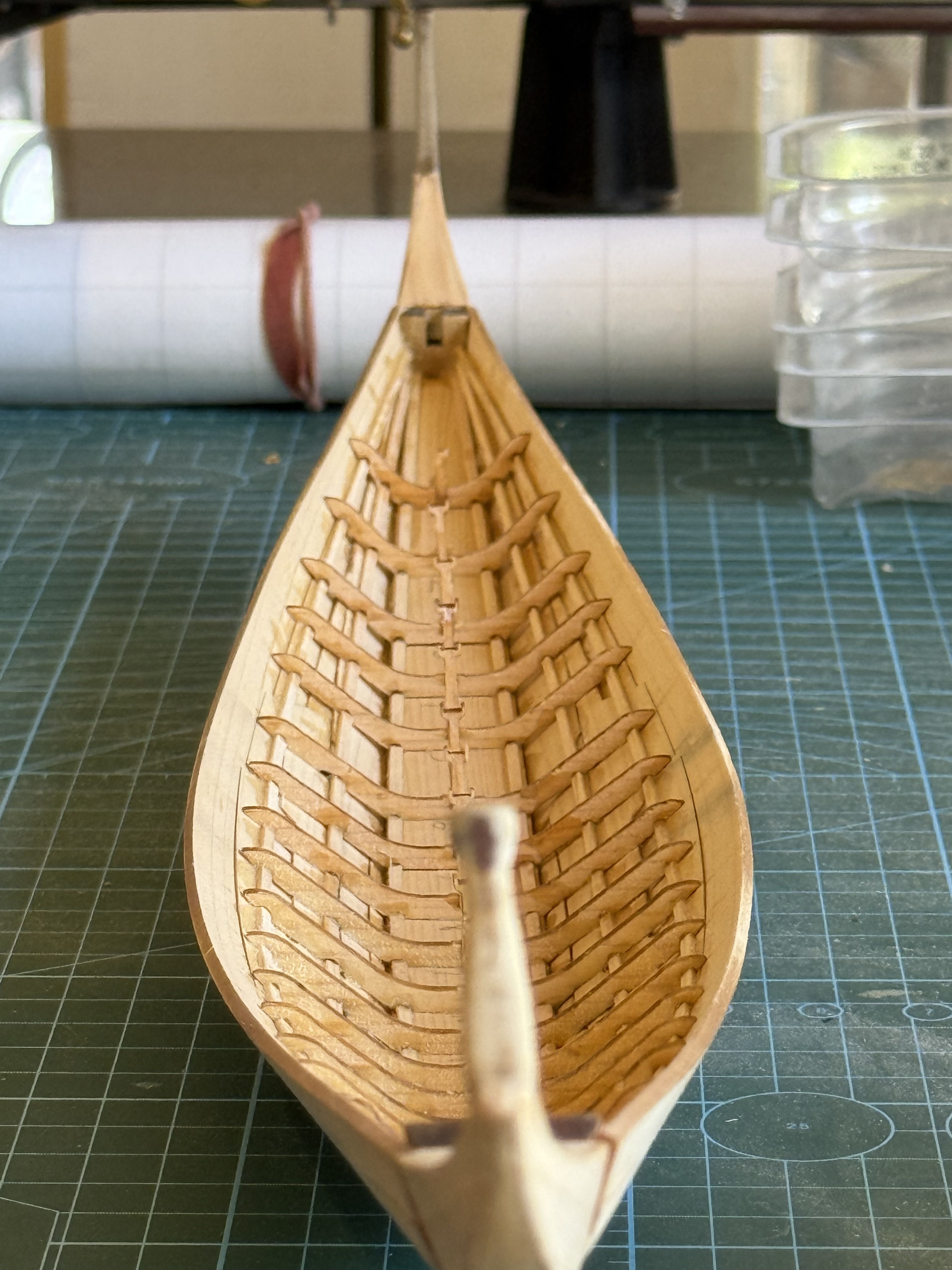
The bulkhead forms and longitudinal pieces were removed, broken out where necessary, just leaving the frames and planks and end pieces.
Starting to look like a hull. Mostly using CA glue so far, but later switched mainly to Gorilla Glue.
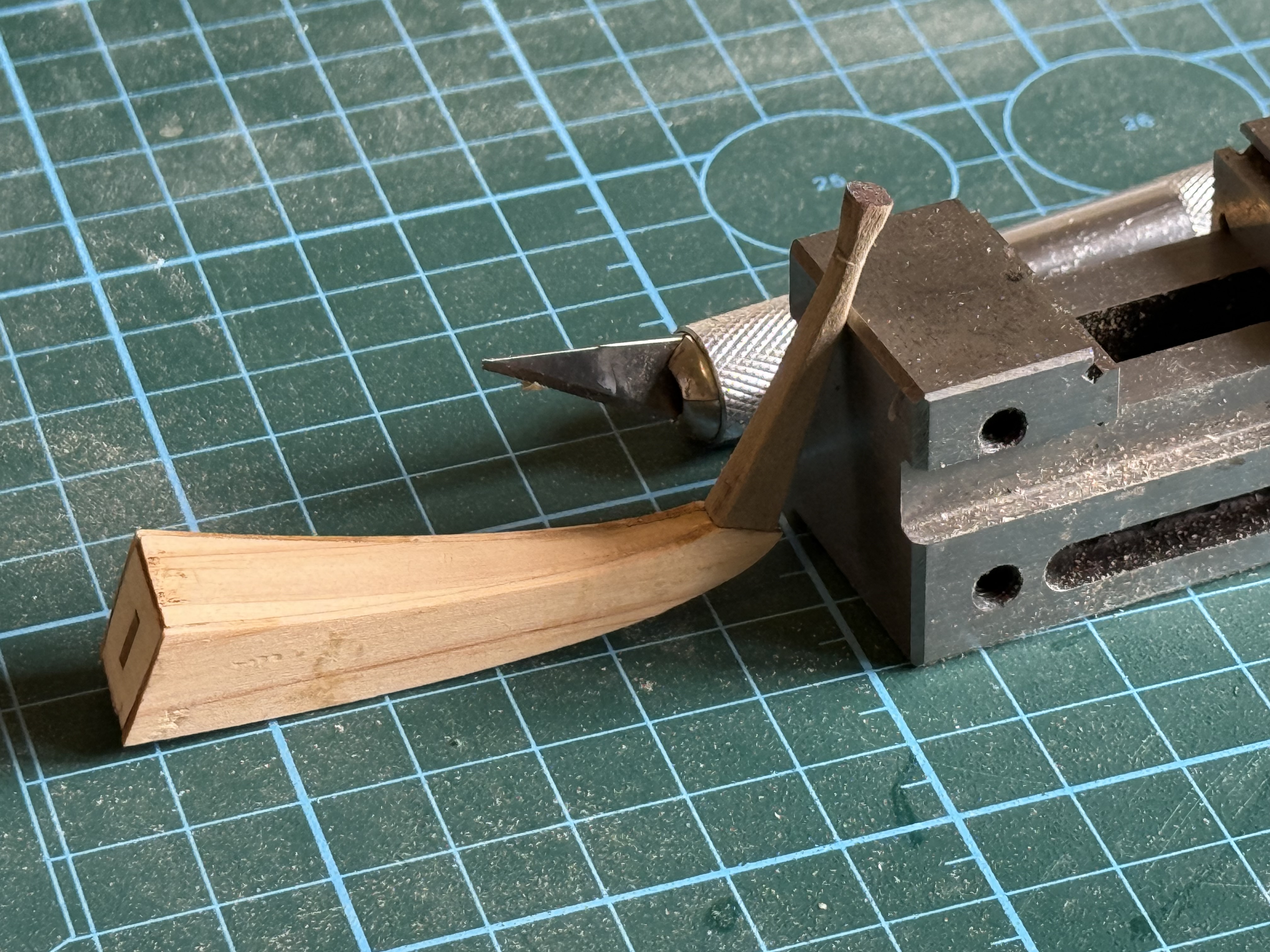
Assembled and shaped the prow and stern pieces. These are typical ancient Egyptian shapes, probably reflecting the shapes of papyrus reed boats.
The stern piece. Sanding will be required to merge the end pieces with the planking.
Some years ago I experienced a retinal detachment requiring surgery, then cataract surgery. Consequently everything which I see from one eye is wavy, no straight lines. So that is my excuse if the prow and stern pieces are not precisely lined up.

So far, the build has taken 3 days. Maybe 4-8 hours each day. I reckon that I am about half through the build.