johnsmachines

machines which I have made, am making, or intend to make, and some other stuff. If you find this site interesting, please leave a comment. I read every comment and respond to most. n.b. There is a list of my first 800 posts in my post of 17 June 2021, titled "800 Posts"

Trevithick Dredger. A start on the Engine.

Some photos of progress on the Trevithick Dredger engine.  I am still making components for the engine, which is a single cylinder, double acting steam engine.  The valves and throttle are cylindrical, which is the method used by Trevithick over 200 years ago.
 

IMG_7074.jpg

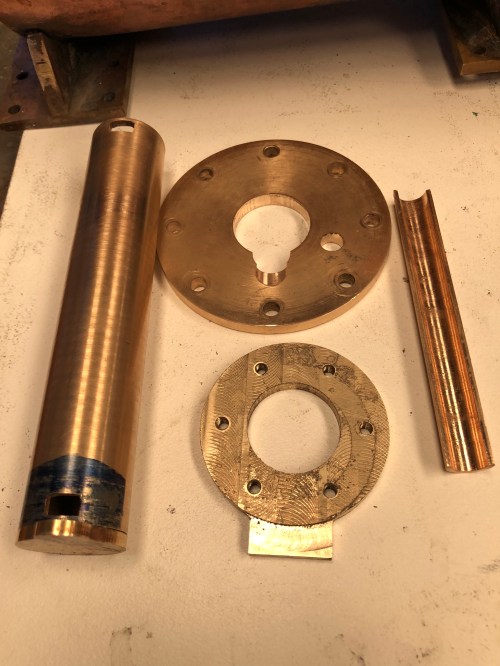
From the left…  the cylinder, with rectangular steam ports and bottom cap; flanges; steam tube.  The steam tube was bronze rod which was OD turned, then drilled, then split longitudinally, then bevelled so that it fits snugly to the outside of the cylinder.  Tricky machining, done with a steel plug to avoid squashing the part in the milling vise.    Some of the 5mm holes in the large flange should have been threaded.  Error in the plans.  Now considering whether to remake the flange or thread the holes 6mm and make some stainless steel stepped studs.  Probably the studs…


IMG_7073.jpg

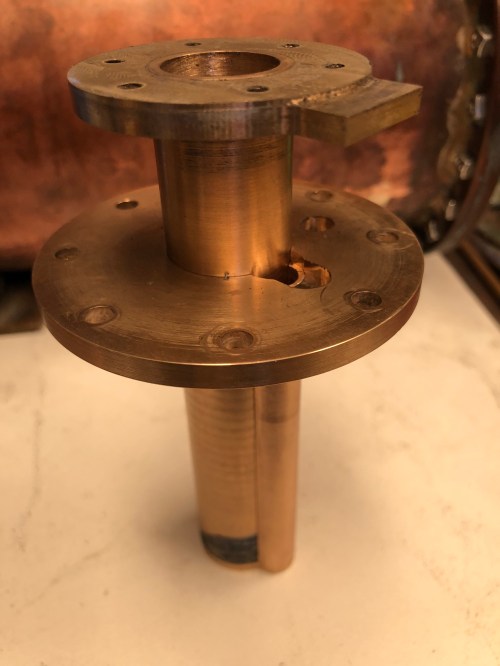
Components pressed together.  Later they will be silver soldered.


IMG_7076.jpg

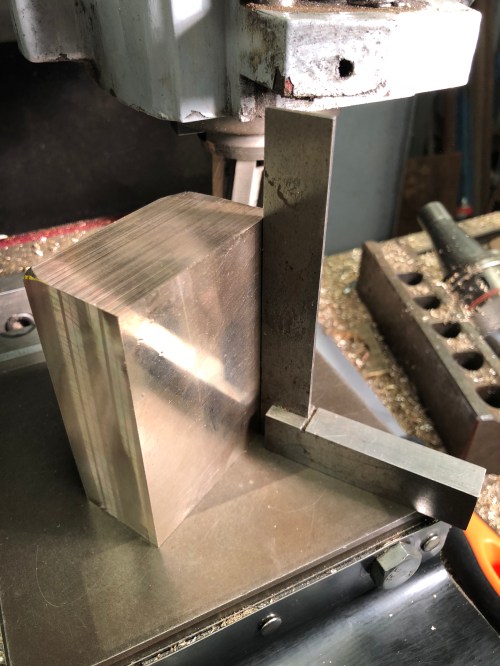
The valve chest was made from a chunk of bronze, which was first squared up…


IMG_7077.jpg

Then marked out..


IMG_7078

After preliminary drilling and reaming, the block was sawn to produce the truncated cylindrical hole.  (any better suggestions to describe the shape?)


IMG_7079

The steam chest will contain the cylindrical valves for throttle and steam opening-closing and direction.  A complex item.  Quite a few hours of nutting out and machining.  Not quite finished.


Hydrostatic Trevithick Boiler Test

This is a video showing how I performed the hydrostatic test on the boiler.

The engine is currently being made, but not at the time of the video.

The test is to hold water at double the working pressure of the boiler, for 20-30 minutes, checking for bulging or distortion of any of the components, and any significant leaks.  Any leaks would need to be fixed, but for the boiler certification, as long as the pressure can be maintained for the duration of test, that is OK.

The working pressure of this boiler will be 50psi, but the minimum pressure in the AMBSC code is 60psi, so the hydrostatic test will be done at 120psi.   As you will see in the video, the pressure reached 140psi at times.

In fact, the AMBSC code is formulated in terms of materials and design to cope with 8 times the working pressure, so the safety margin is generous.

The video is taken over 20 minutes.  I ran the actual test for over an hour.

I am afraid that my very messy bench and workshop are evident in the video.  No apologies.  That is just the way that I work.