johnsmachines

machines which I have made, am making, or intend to make, and some other stuff. If you find this site interesting, please leave a comment. I read every comment and respond to most. n.b. There is a list of my first 800 posts in my post of 17 June 2021, titled "800 Posts"

Tag: condenser

THE CONDENSER- not so easy afterall.

I had deferred making the steam passages (in the triple expansion steam engine), and moved sideways to an “easier” task, which was making the condenser unit.

It consists of a gunmetal box, with walls ~4mm thick, ends of 3mm brass, and 28 copper tubes soldered to the brass plates.  Plus end caps which required some milling and drilling ( see yesterday’s post).

I could not find my soft solder, so I used silver solder.  That was mistake 1. The heat source is an oxy actylene torch, and to keep the heat down I used a small tip. Mistake 2.  The end plates were first soldered (that is soddered if you live across the Pacific ocean) to the main body, and that seemed OK.

Then I fluxed the holes in the end plates, and fluxed the copper  tubes and positioned them into the end plates (mistake 3).  In view of what happened, I suspect that much of the flux was wiped off while pushing the tubes into position.
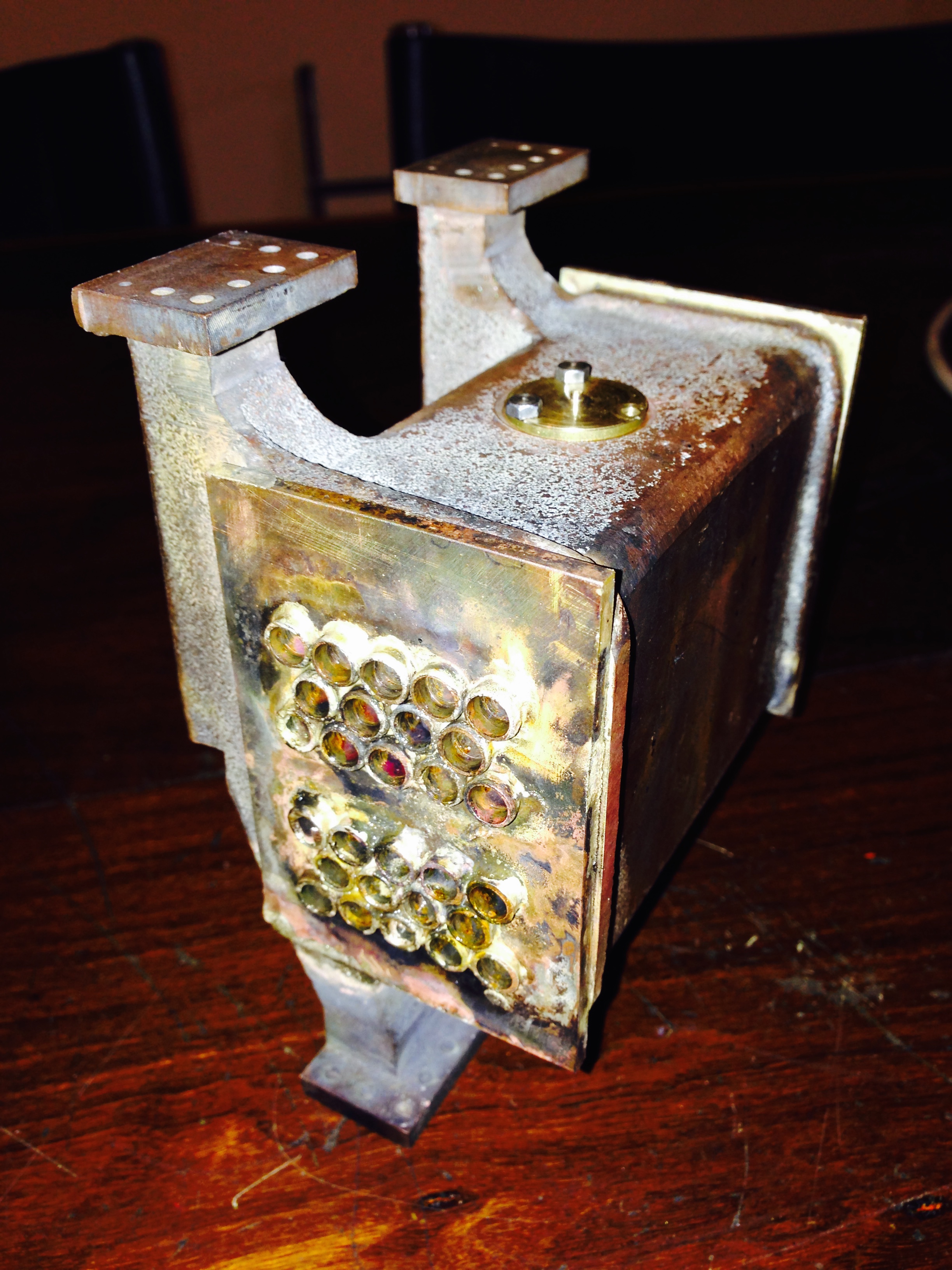
The water tubes silver soldered to the end plate.  The first end soldered, and it had multiple leaks...

The water tubes silver soldered to the end plate. The first end soldered, and it had multiple leaks…
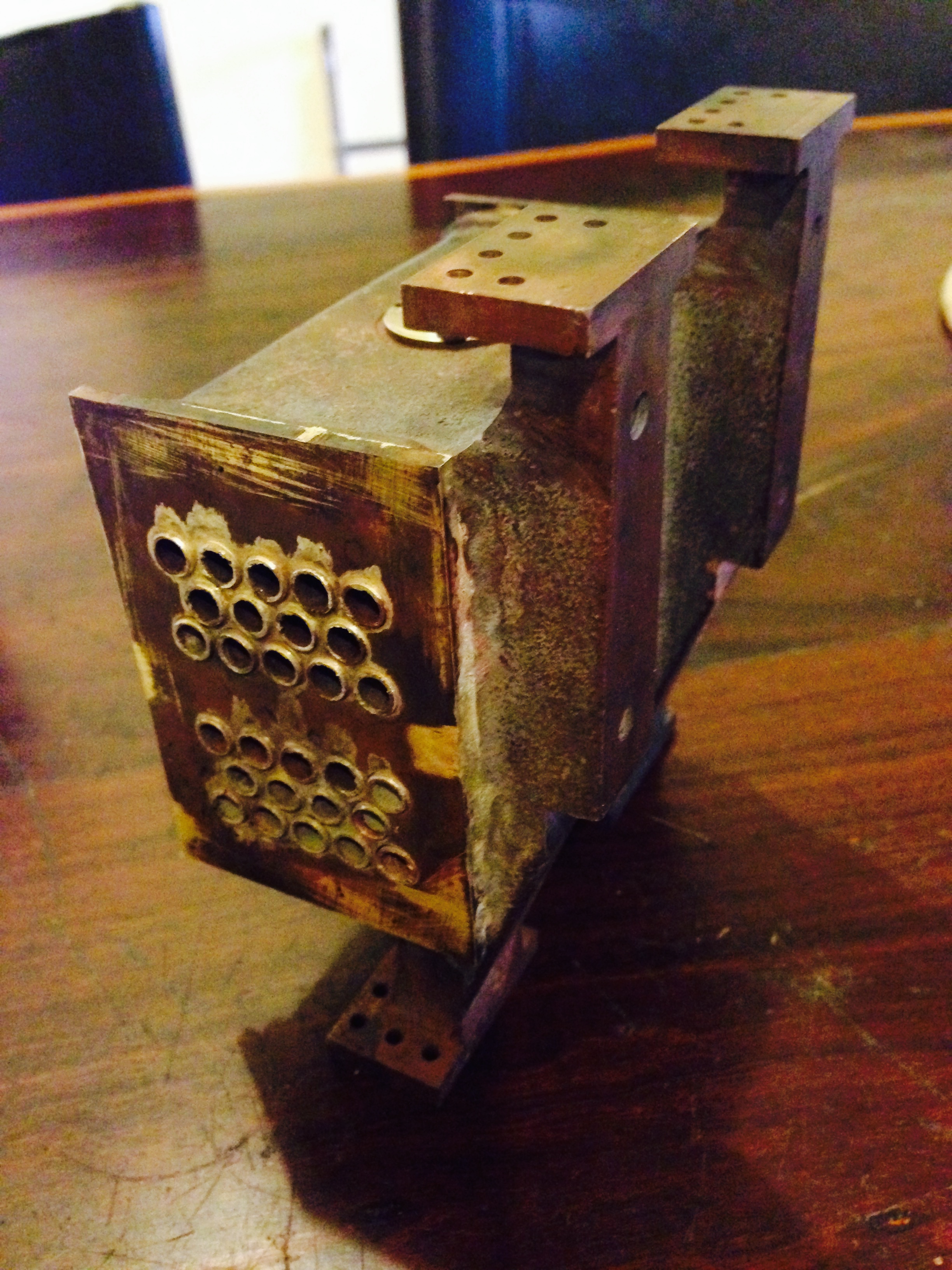
The second end silver soldered, and it was perfect!  No leaks, looked neat.

The second end silver soldered, and it was perfect! No leaks, looked neat.

So, one end soldered without a hitch, and the other needs to be re-done.  Why?

3 possible reasons.

1. The copper tubes protruded further on the bad end, and it was more difficult to position the soldering rod in the in-between joins.

2. I used more heat on the good end.

3. It is likely that the flux was retained more on the good end.

So I am maintaining a well exercised tradition of learning from my mistakes.  I am sure that I have made mistakes 2 and 3 only a few times before.

So how to fix the leaky end??

1. Apply more flux and solder to the leaky bits?  Tried that.  Didn’t work.

2. Expand the copper tube ends with a tapered drift?  Tried that, and it helped, but still not enough.

3. Disassemble the leaky end by melting the silver solder and re-doing it?  After trying fix 2, I think that I have prevented this option.

4. Use soft solder to patch the leaks?  Not yet tried, but that is next.

If fix 4 does not work, I plan to remove and remake the tubes and end plates and re-solder the entire unit.
DARK PLACES

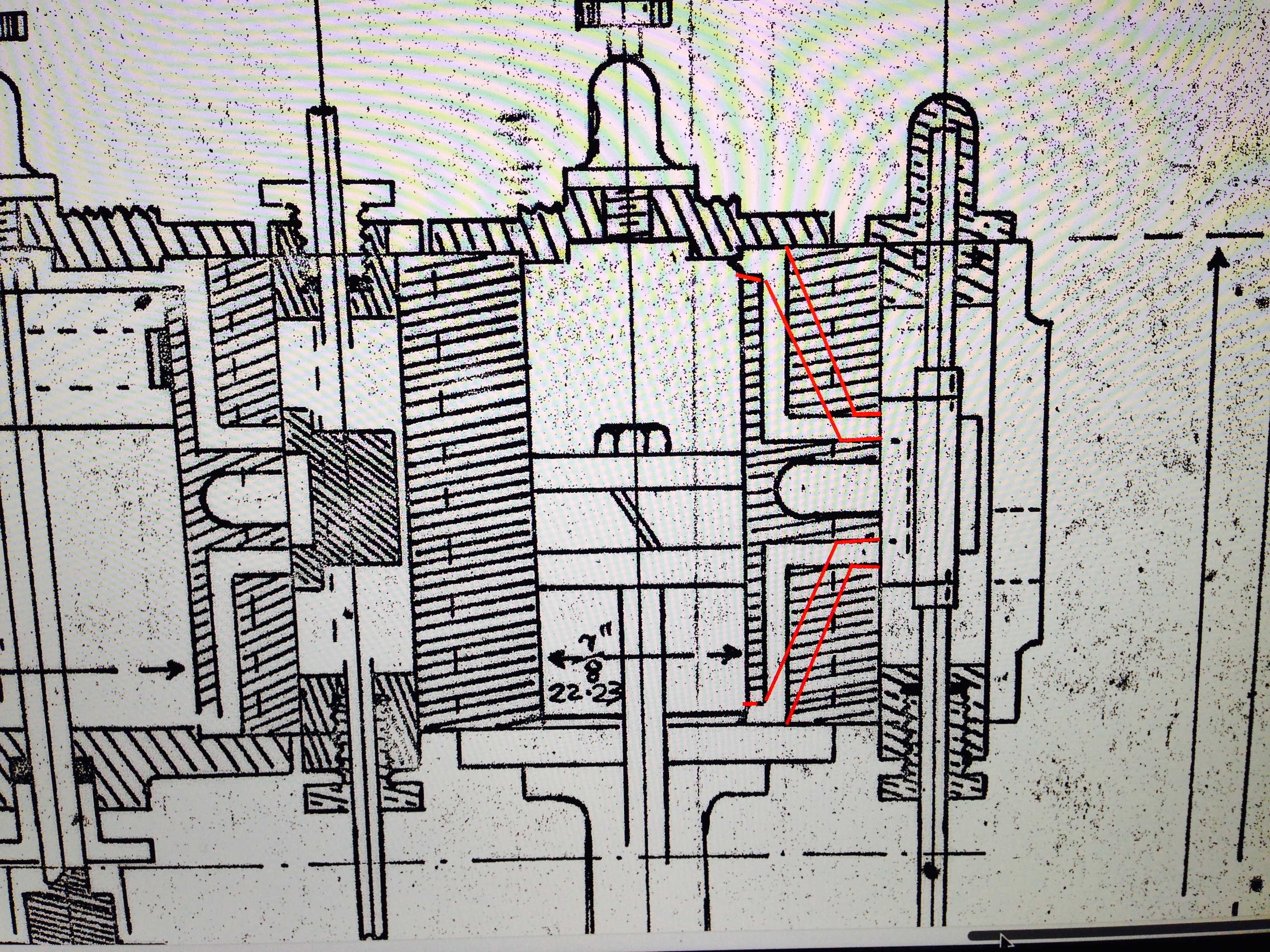
My decision to procrastinate with respect to the steam passages has worked, I think.  Several suggestions have come in, and I am intending to go with the one from Stuart.  And that is to angle the steam passages, which lengthens one on which I can use a larger diameter milling cutter, and to shorten the one under the steam port.  See the red lines for the proposed changes.

Red line plan alteration in the high pressure steam lines.  The other cylinder plans will be altered also.

Red line plan alteration in the high pressure steam lines. The other cylinder plans will be altered also.

While waiting for a light bulb to switch on regarding the dark places, I have not been idle.

I moved on to a part of the triple expansion steam engine build which I expect to be easier.  And that is the condenser unit.

The condenser is the box shaped protuberance attached to the columns.  I believe that its function is to convert the last dregs of steam, after driving the 3 pistons in succession, into water, for re-use in the boiler.

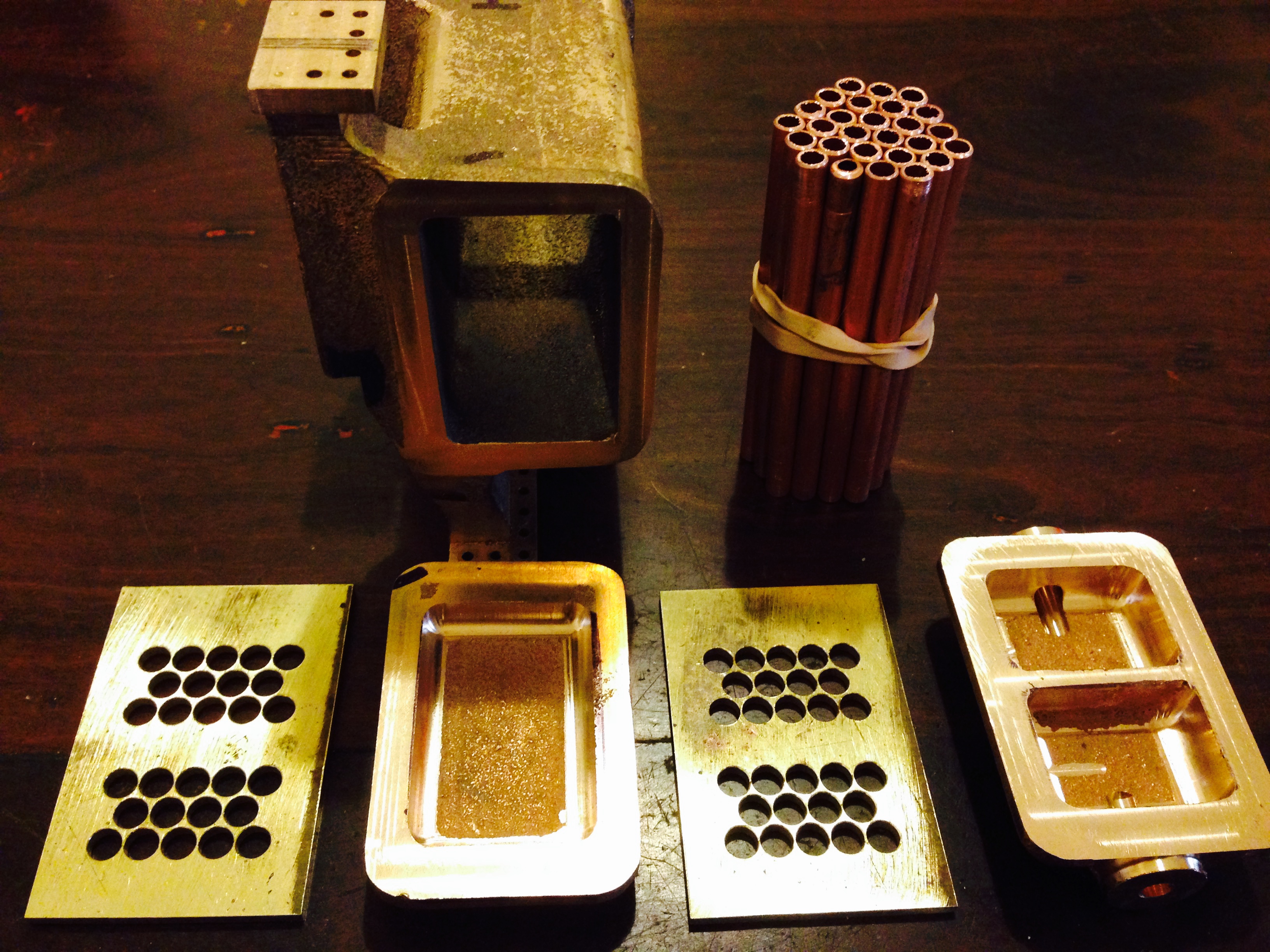
These are the components, machined and ready for assembly.

The condenser components.  There are 28 tubes, to be soldered into the holey brass plates.

The condenser components. There are 28 tubes, to be soldered into the holey brass plates.

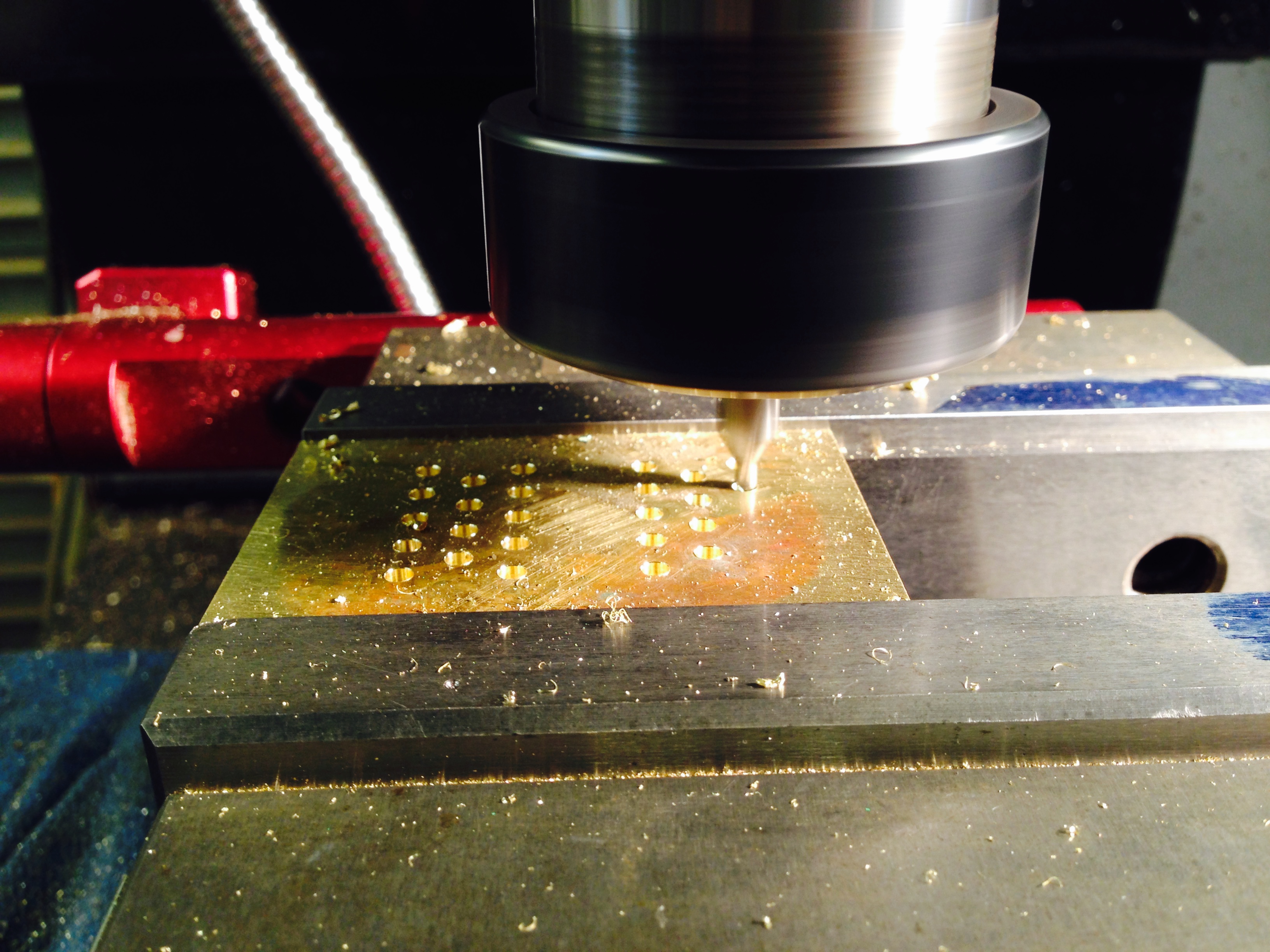
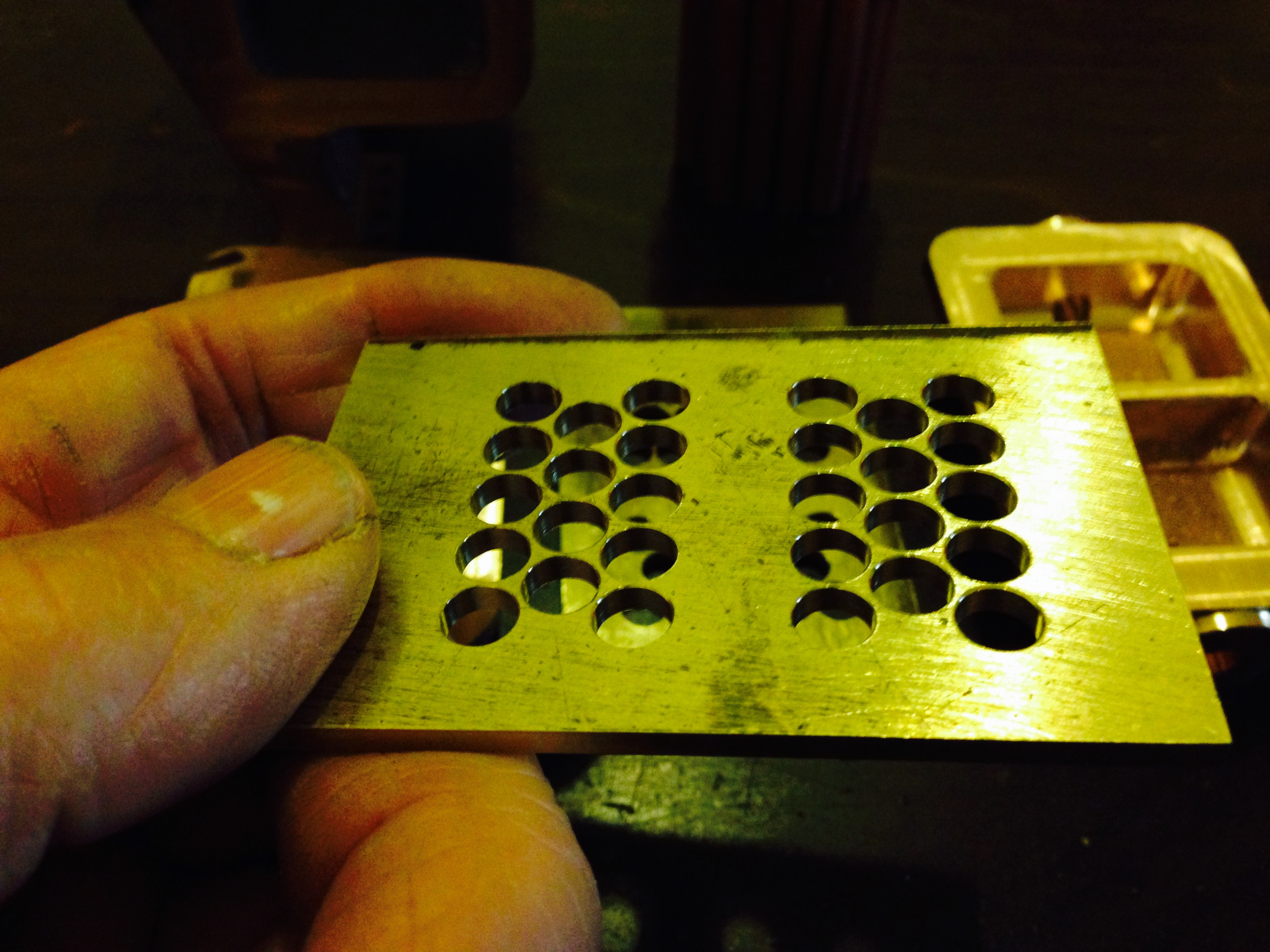
The holes in the end plates have 0.5mm of material between them.  Tricky drilling, but a breeze for the CNC mill.

CNC drilling the end plates.  Centre drilling initially.  The 112 operations proceeded perfectly.  Did I say before that I love CNC.

CNC drilling the end plates. Centre drilling initially. The 112 operations proceeded perfectly. Did I say before that I love CNC.

End plate holes.  No breakthroughs, despite only 0.5mm between holes.

End plate holes. No breakthroughs, despite only 0.5mm between holes.

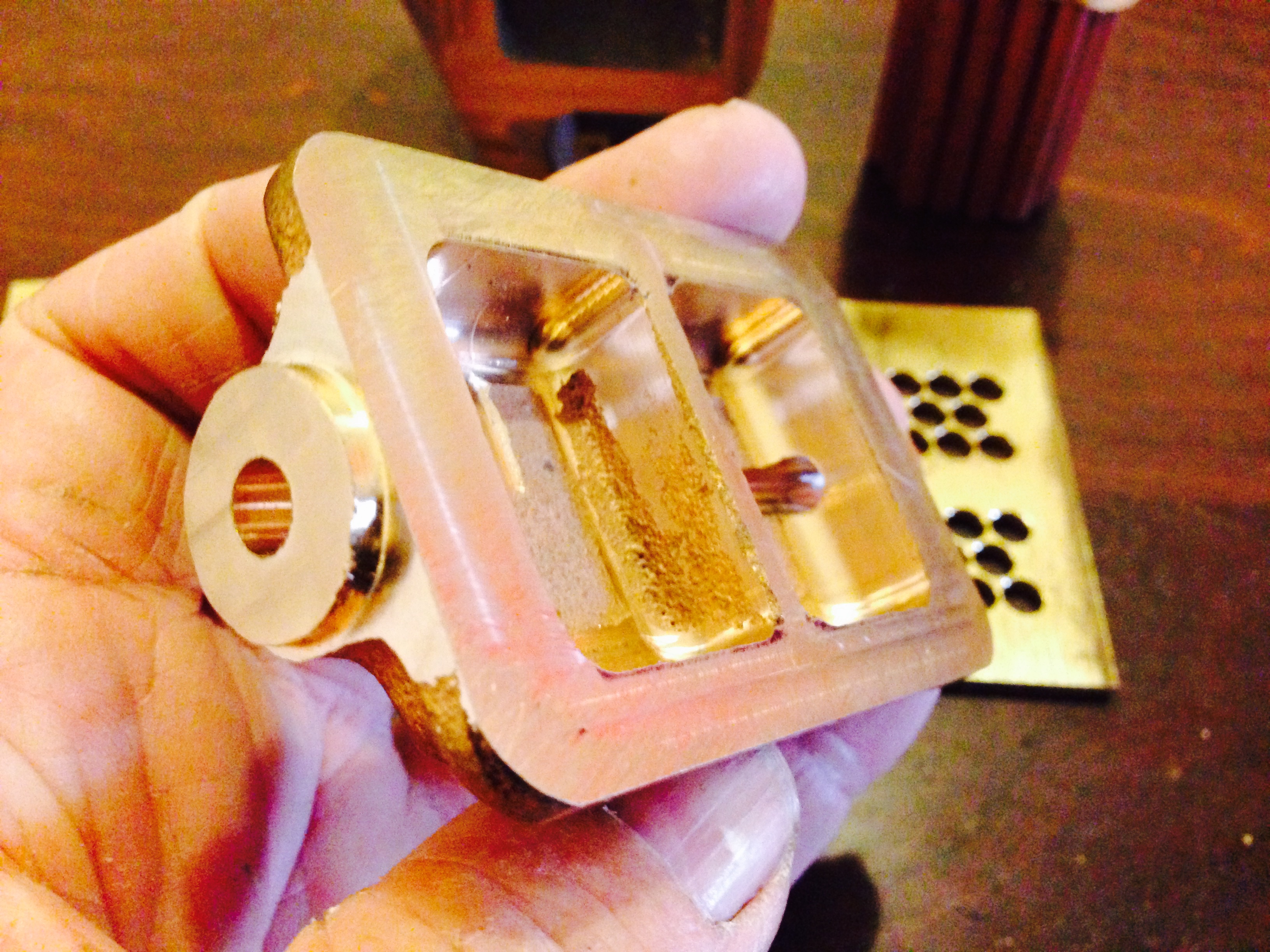
An end cover after machining.  The bosses and holes were CNC'd.

An end cover after machining. The bosses and holes were CNC’d.