johnsmachines

machines which I have made, am making, or intend to make, and some other stuff. If you find this site interesting, please leave a comment. I read every comment and respond to most. n.b. There is a list of my first 800 posts in my post of 17 June 2021, titled "800 Posts"

Tag: model steam engine

Book Review… “Making a MARINE TRIPLE EXPANSION STEAM ENGINE OB BOLTON No9 “

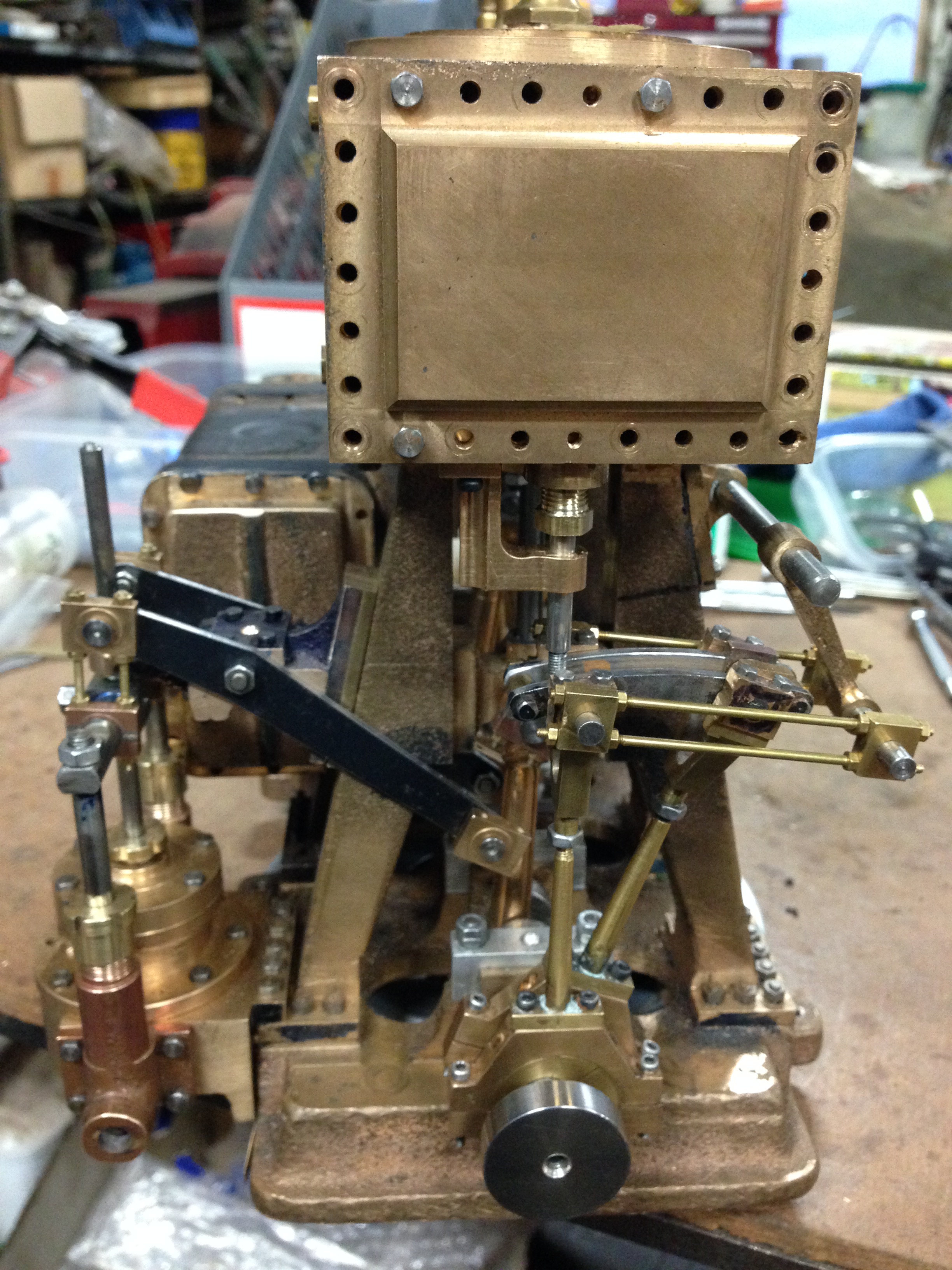
I made a Bolton 9 triple expansion steam engine 2014 – 2017. It took 3 years from opening the parcel of gunmetal and cast iron castings, to running it on compressed air and later on steam. It still runs on steam once or twice each year at our model engineering club’s exhibitions.

The triple was the third steam engine I made. The first was a Bolton 7 single cylinder mill engine, then a Bolton 12 beam engine, and after seeing them run I felt that I was ready for the more difficult build.

Someone estimated that making a triple expansion steam engine takes 3000 hours. I did not count the hours for mine, but I know that many days in those 3 years I spent between 4 and 12 hours each day. It was the first model which I made after retiring from my occupation. Over those years (and subsequently) I was getting to grips with CNC machining on a lathe and mill, so the time was not exclusively on the triple.

A lot of the triple build is documented on johnsmachines.com, including difficulties, mistakes, and unresolved issues. I used the OB Bolton plans, and the Bertinat articles from Model engineer. And advice from from experienced model steam engineers in my club.

I have looked through the new book listed in the blog title, and read some sections in detail.

Oh HOW I WISH THAT I HAD THIS AVAILABLE 2014-2017!!!

The 2nd edition of the book was published in 2025. It is available from Ben deGabriel at EJ Winter. Costs $AUD39.95 + p&p. There is a separately bound 28 A4 pages of updated CAD drawn metric plans by Ron Collins for $44.95. The 86 page book has a soft cover, A4 format, with many excellent colour photographs and line drawings. It includes a brief history of the Sydney Harbor ferry “SS Kuttabul”, the engine of which was the inspiration for the original Bolton 9 design.

Chapter 3 is a sensible, thoughtful, short summary of “Defining the desired outcome”.

Chapter 4 is 6 pages explaining “Valve events and timing”. I had gradually understood how the triple worked as I progressed with my build, or at least I thought that I gradually understood. I did eventually get the engine working. Having now read chapter four I can see that my 2014-17 understanding was limited. As result of his considerations the author modified the design, particularly the valve timing and he gives a lengthy, clear rationale for the changes.

Chapter 5 “Other Design Considerations” is short discussion on suggesting an increase in rotational inertia by adding a propellor, and choosing the direction of rotation of the crankshaft. I confess that my choice in 2014-17 was random, not rational, and I have now added a propellor, which adds interest from onlookers, and smoothness of engine rotation.
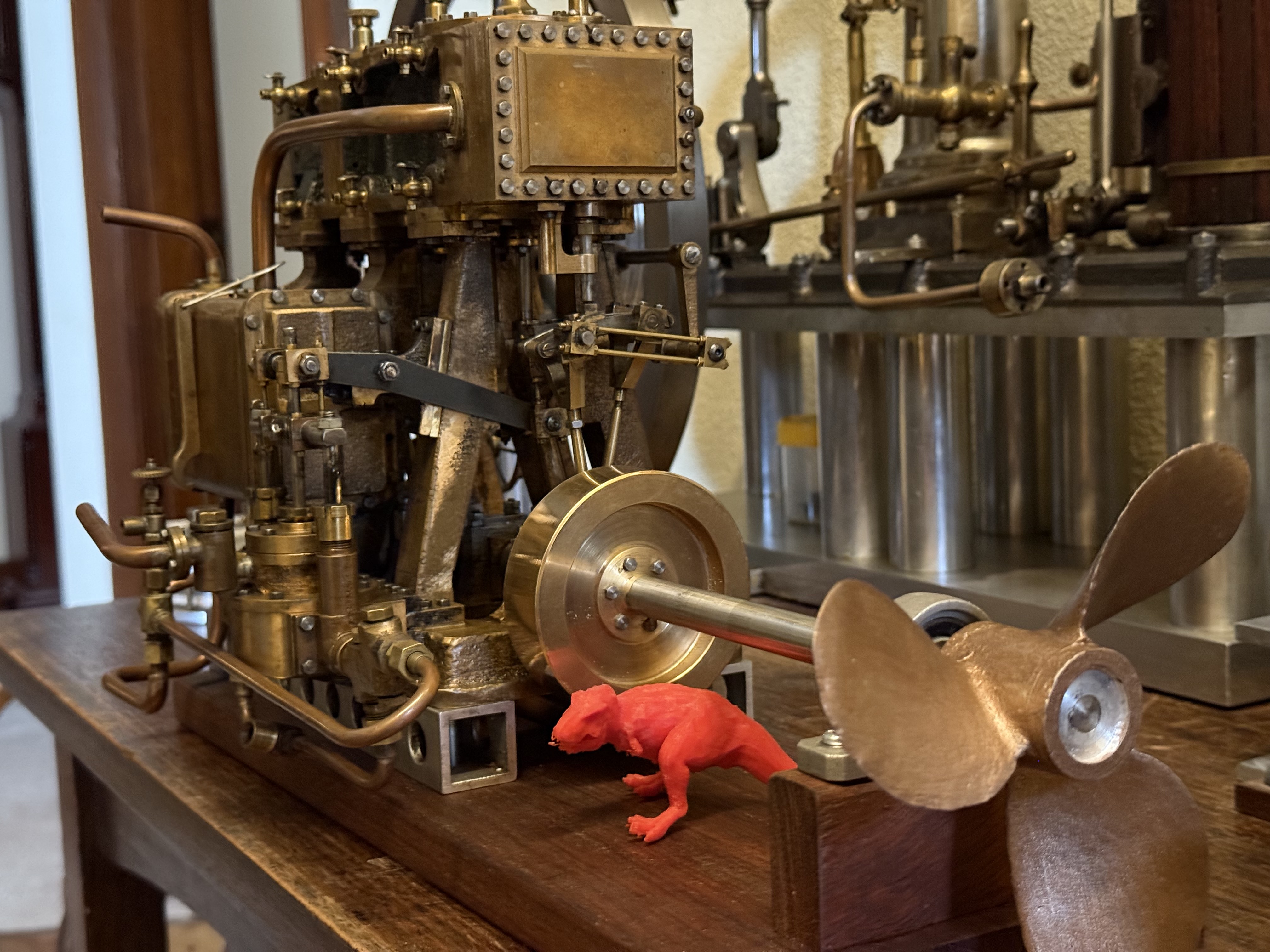
My Bolton 9 Triple Expansion Engine with family pet.

Chapter 6 is another short and useful discussion about the levels of accuracy and precision which should be the builders’ aim. And the use of Imperial and metric measures. Even mixing them for best effect.

Chapter 7 “Painting and Finishing Considerations”. Helpful advice about when to paint components (early), use of stainless steel where possible, and more.

Chapter 8 “General Notes for Other Builders” including jigs and fixtures, Build Sequence, and other Important Notes. For an “intermediate” level builder such as myself, these would have been incredibly useful.

Chapters 9-24 are the bulk of the book, comprising detailed advice on how to make and assemble the various components. Again, how I wish that I had this advice available instead of trying to work out from first principles how to hold and machine the irregular shapes. I did make my crankshaft from one piece of steel instead of the built up method used by Clark, but I have no doubt that his method would be more efficient, and easier than the method I used.

Chapter 24 “Finishing Off. Drains, Gauges and Lubricator.” The OB Bolton and Bertinat plans and text have nothing about these items, so the Clark information is invaluable.

Chapters 25 and 26 “First Test Runs” and “Analysing the Test Results”. Clark suggested different valve settings than specified by Bolton, and gave reasoned justification for his suggested changes. If/when I get around to another tear down of my triple, I will institute his suggestions, and if I am ever crazy enough to build another one, I will build them in.

Chapter 27 “A Display Base”

Chapter 28 “Some Display Loads for the Engine”. Including a propellor, a pretend thrust bearing which is actually a large flywheel, and a generating set. Very good and interesting suggestions. Also some thoughts about a suitable boiler. I might add that at exhibitions I run my triple on supplied steam at only 25psi, and somewhat to my surprise, it runs fairly smoothly. I suspect that it is working principally on the high pressure cylinder, with a small contribution from the intermediate cylinder, and only load from the low pressure. When I use my own 6″ boiler I run it at 80-100psi. To operate the engine using all 3 cylinders the condenser should be working, and using cold water.

Chapter 29 “Thoughts for Future Developments” and Finally “Conclusions” “Bibliography” and a very nice “Acknowledgments” page.

The accompanying booklet “Detailed Construction Drawing Set” is accurate, clear, metric, and more detailed than the original OB Bolton plans. And in workshop useful A4 size in a foldback spiral binder, and blank alternate pages for notes and calculations.

So, my conclusion is that anyone contemplating building the Bolton 9 Triple Expansion Steam Engine should definitely spend the extra on top of the castings expense, and get these books. You can thank me (and James Clark and Ron Collins) later for this strong recommendation.

p.s. Ben deGabriel informed me that one of his customers built the Bolton9 triple IN 9 MONTHS, using the Clark book and Collins plans. And that he intends to make another one!!
Trevithick Dredger Engine Progress

First day of summer in southern Australia today.  And it was very warm and windy.  Keeping my eyes open for snakes, but none seen.

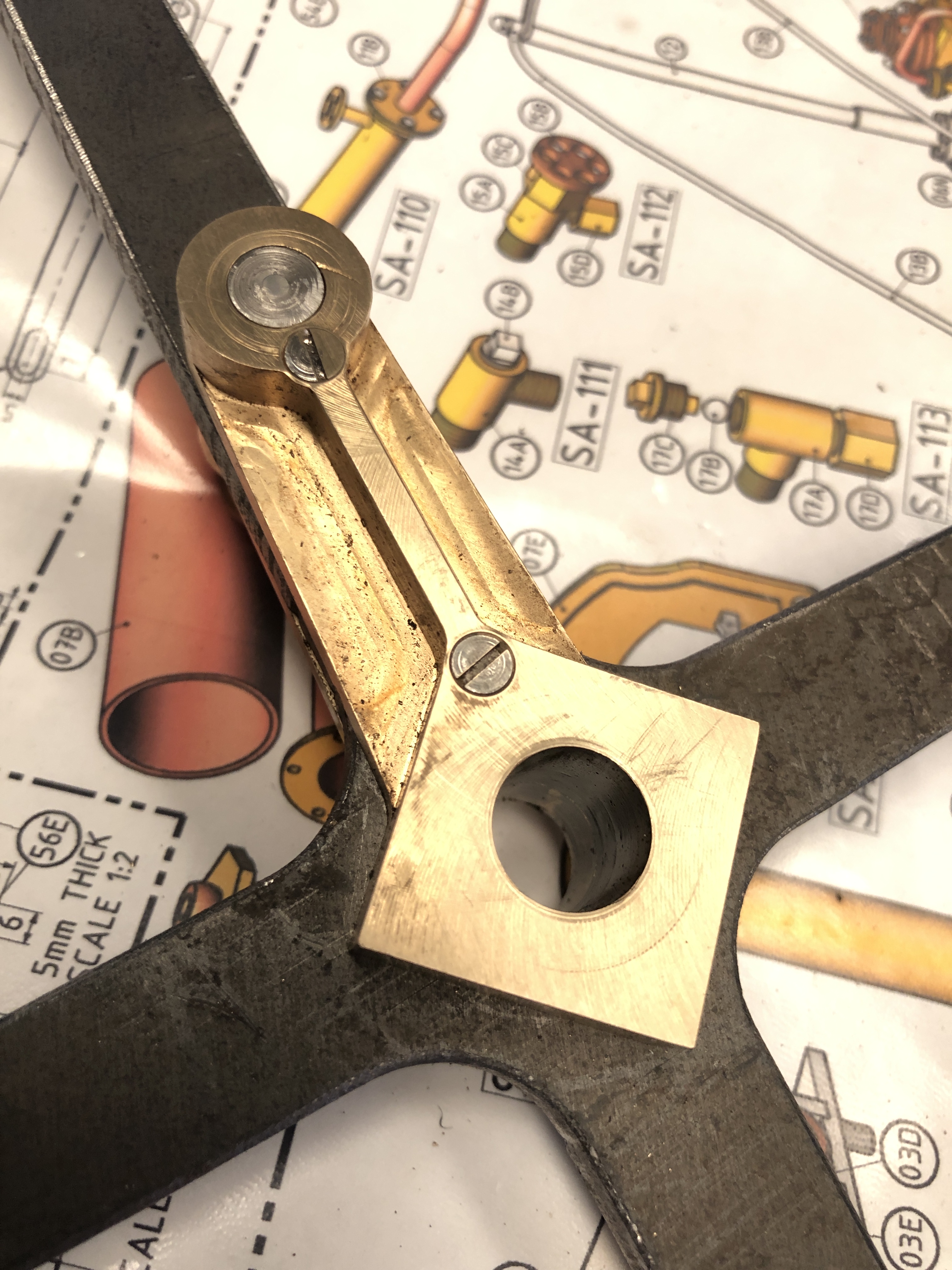
I was pondering how to attach the crankwebs to the flywheel.  I had decided that I would not silver solder them together, because the heat would likely distort the thin flywheel.  And pressing them was not feasible because I had machined them to a sliding fit.  Whatever method was used, I wanted it to be reversible i.e. future disassembly possible.  So, in the end, I used small brass screws which will not be visible when the engine is painted.


IMG_7187.JPG

countersunk brass screws holding the assembly together.


I made 2 more U shaped bearing retainers to fit on the ends of the connecting rods (same as shown in last post).

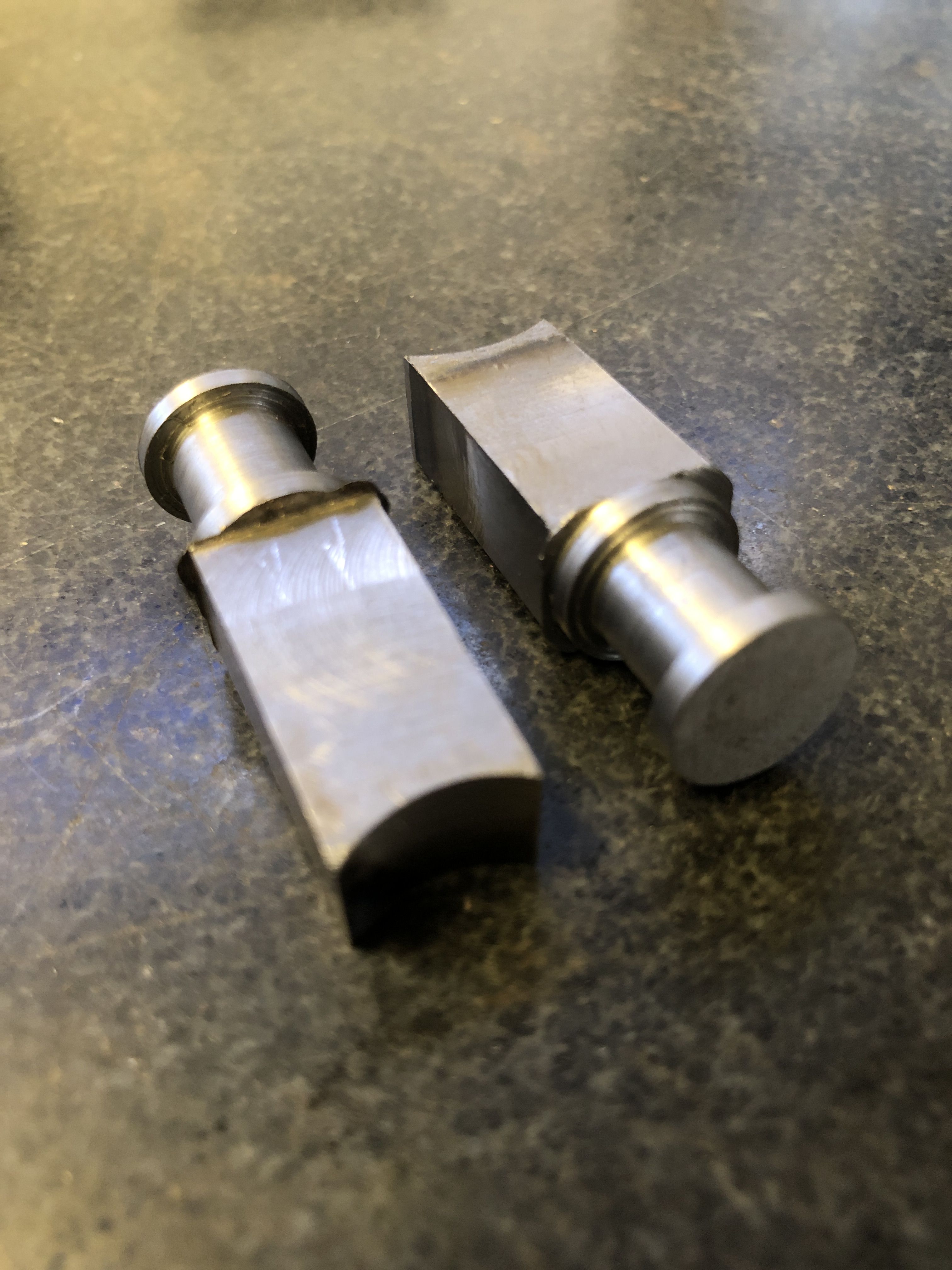
Then made 2 shafts which will be attached to the cross head bar, to join to the con rods.  These are made from silver steel.


IMG_7185.JPG

The concave end had a radius of 10mm.  Fortunately, I had a 20mm end mill which worked well to produce the curve.  A bit of finishing required for these parts.  I will probably run them for a while in my gemstone tumbler to knock off the sharp edges and polish them.


IMG_7186.JPG

They will be pinned in place at the ends of the cross head bar.


Trevithick Dredger Engine Guide Bars and Crosshead


IMG_7119.jpg

As you can see from the photo, I have made the vertical guides, the curved top bar and the crosshead.


IMG_2749.jpg

The curved bar was bent in the motorised ring roller which I made years ago.  Bending 3.2mm steel was easy.  I have bent steel bar up to 10mm thick in this machine.

IMG_7117.jpg


IMG_7118.jpg

Parts of the guide bar.  2mm thick.  I confess that these were CNC’d.


IMG_7120 2.jpg

A few more parts required for the crosshead, but a test fit was quite good.  It is just pushed together at this stage.


Trevithick Dredger Engine….progress

IMG_7100.jpg

Finishing bits on the engine assembly.  The stuffing box, the gland, and a threaded plug in the throttle cylinder.  Throttle valve, stem direction valve,  piston and piston rod next.

Running in the Triple Expansion Engine

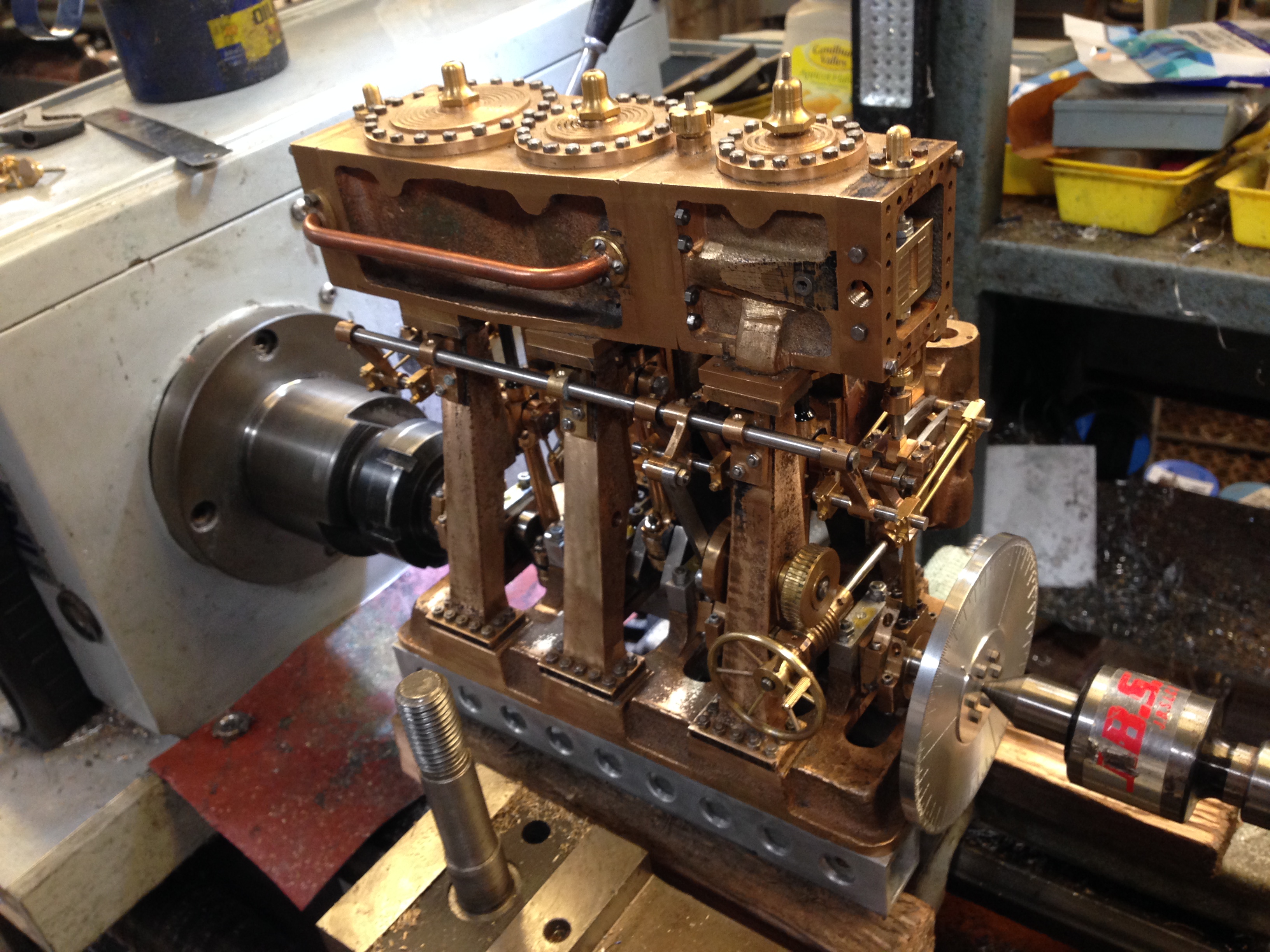
The Bolton 9 engine is assembled, almost completely.  The valves are approximately correctly timed.  I can turn it over by hand, just.  There are a few tight spots.

So today I mounted the entire engine in a lathe, oiled all bearings and slides, and tentatively ran it for a few minutes.   The lathe was set at 60rpm, in back gear.

All seemed OK, so I ran it for about 30 minutes.   Then increased the rpm to 90 for another 30 minutes.  After that the tight spots still exist, but much less pronounced.

IMG_5932.JPG


I kept a check on bearing temperatures with a laser thermometer, and none were running more than a degree or two different from any others.

The test did show that a low pressure cylinder drag link is touching the condenser, and will need some relief.  Also the high pressure cylinder eccentrics need to be repositioned a little on the crankshaft.  But nothing major.  And it was very nice to see everything moving in quite an impressive manner.

I will upload a video when the upload speeds are reasonable.


Horizontal Mill Engine (HME)

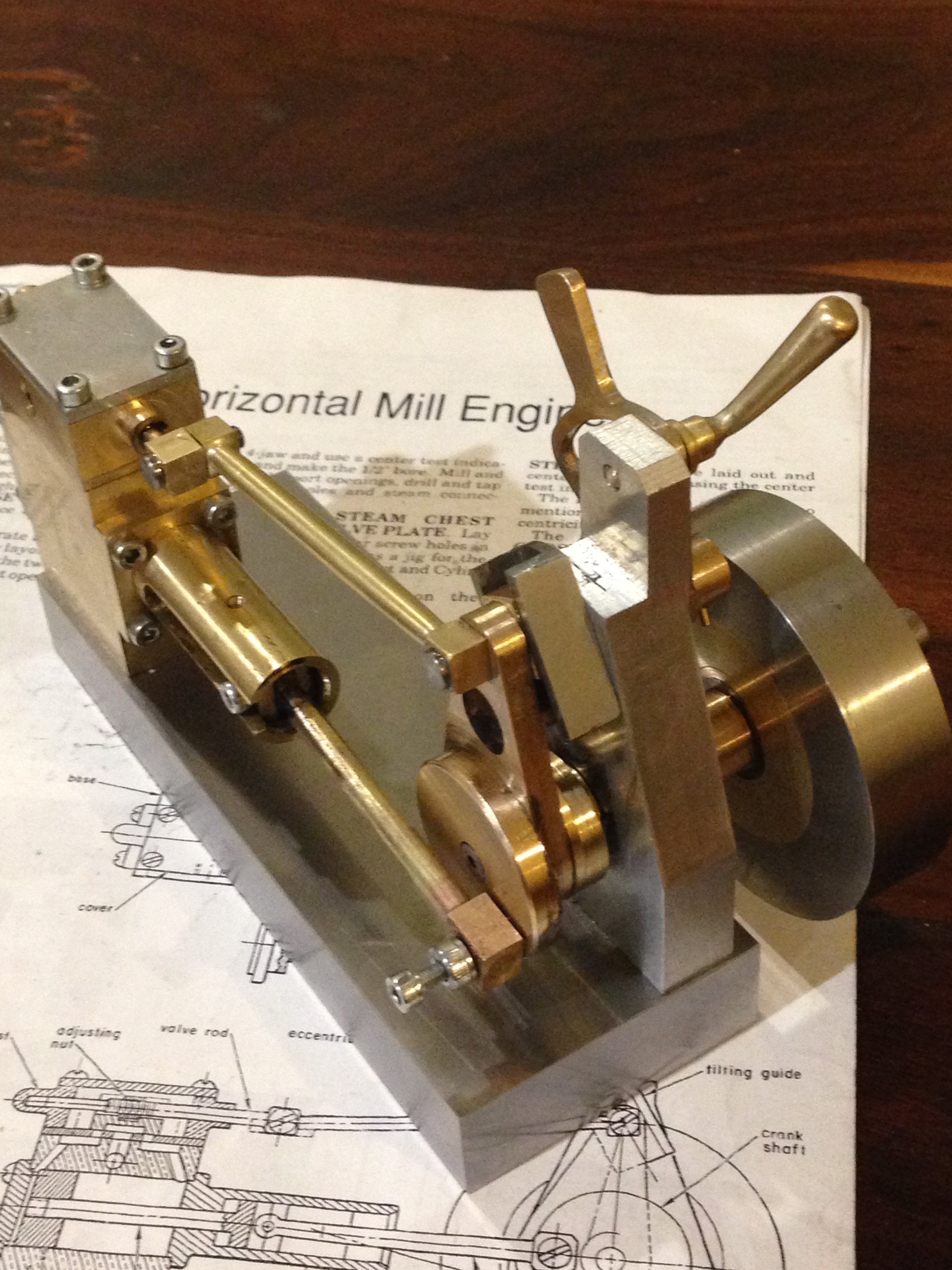
The HME is our Model Engineering Club competition build for 2017.  I finished making the components and tried to get it running, unsuccesfully.

So today I took it to the GSMEE morning meeting, and Rudi, who is a retired marine engineer, and has completed his own HME, took one look at mine and said that the timing was totally up the creek.

Rudi fiddled for a few minutes, and said, “it will work now”.  A couple of other members doubted his assessment, but were not confident enough to put money on it.

Anyway, this afternoon I hooked it up to a small compressor (my air brush compressor actually), and at 10psi it started to move.  At 16psi it was ticking over quite nicely.  Then the big test, throwing it into reverse.  And hallelujah!  It reversed.

Seeing an engine working, which you have made yourself, is an immensely satisfying moment.

This one still has some finishing jobs to be completed.  Like sealing the joins against steam leaks.  And a bit more polishing.   And maybe a name plate.   And there is an annoying knock which might disappear on steam.  But if not, I might need to re-make one of the bearings.

But it goes!!   Yay!!


Koffiekop Modification

I have been considering this modification for some time, and today I located the aluminium heat sink-radiator material which I needed, and which I knew was somewhere in my stuff.

The Koffiekop Sirling engine requires differential temperatures between the top and bottom plates.  I wondered if installing some heat shedding plates on the top plate might increase the running time on a cup of coffee.

IMG_5238.JPG

The heat sink material is glued to the top plate with a heat transmitting electronic silicone glue.

Afterwards I ran a test with a cup of hot water.

The engine ran for 26 minutes!  That is an improvement of about 25% on the best previous runs.  Success!

The Horizontal Mill Engine (HME) is assembled and ready for the D valve to be timed.  This is how it looks.  I wont get to it for a couple of weeks now.

IMG_5236

I did squirt some compressed air into the valve chest, but minimal movement.  Not surprising, considering the position of the eccentric was just a guess.  When I get it going there will be a video.  That crankshaft pin is temporary.  It is a 3mm cap screw going through a 4mm cap screw.  go figure.


If at first you don’t succeed…

Try again.

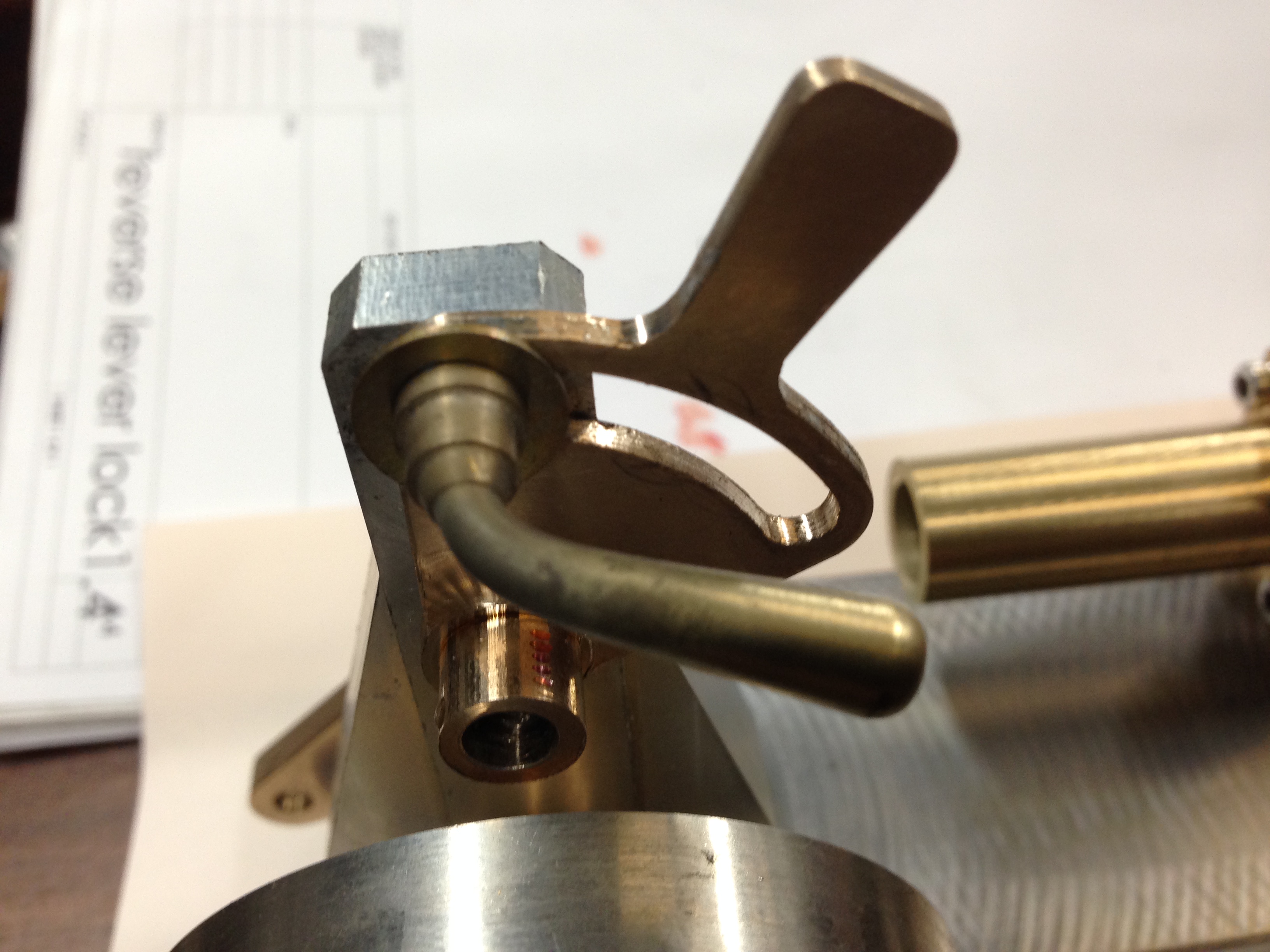
The small reversing handle lock on the horizontal mill engine took 4 attempts.

IMG_5215.JPG

Most of the components are made.  That is my blood staining the plans.  

IMG_5216.JPG

The lock is made of brass.  About 32mm long, then bent into shape.

IMG_5217.JPG

From the left.. 1. broke when turning the thread.  2, cracked during bending, not enough heat.   3. Too much heat melted the surface.  4. Success.

And on the same subject, the cylinder head and guide went well until I neglected to remove it while finishing the guide block.

IMG_5209

I might have mentioned this one previously.  It still rankles.

Another Diversion from The Triple

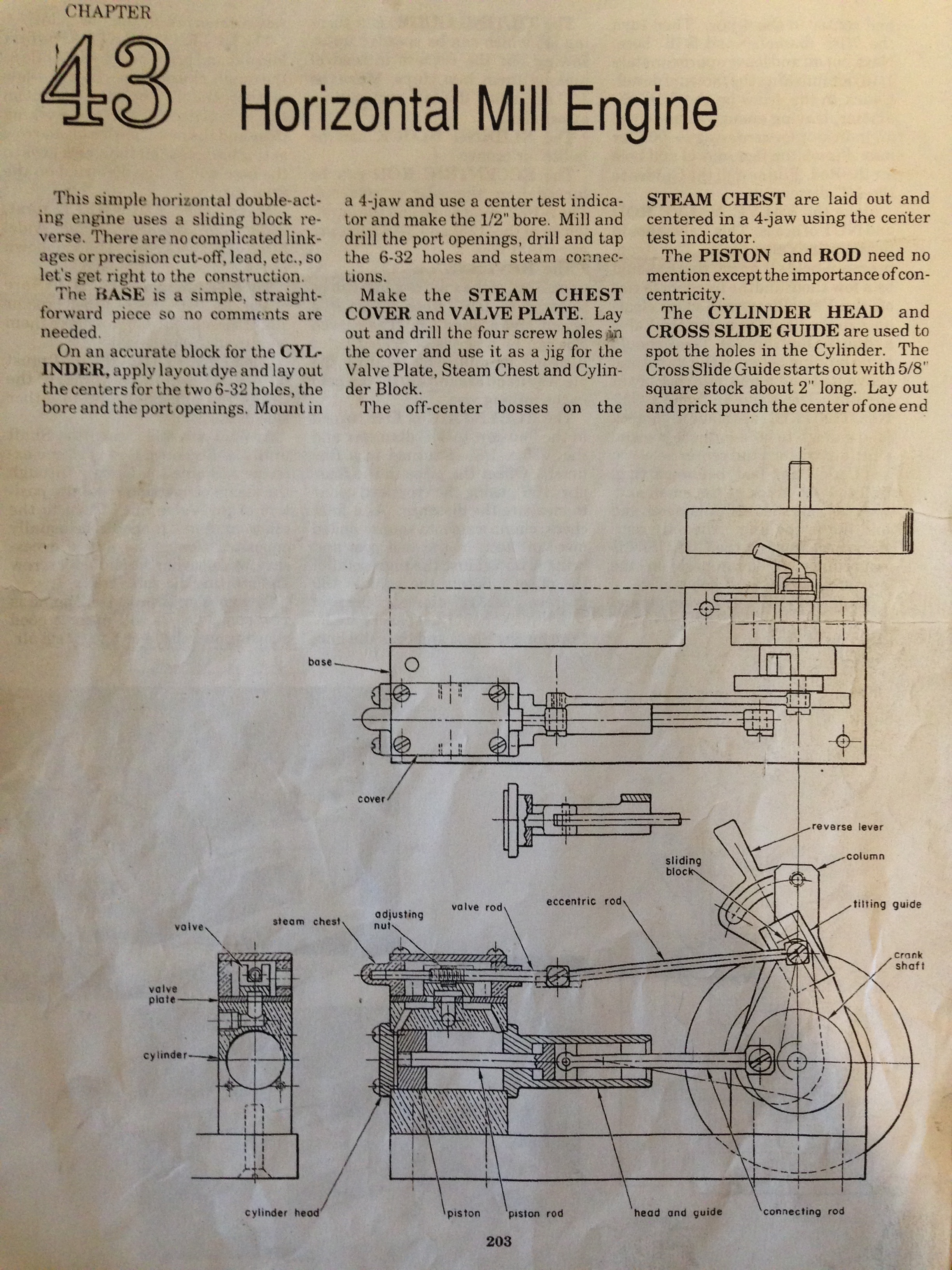
My model engineering club (GSMEE) has an annual competition build.  This year it is a small horizontal reversing steam engine.

IMG_5210.JPG

So I have taken another break from the triple to build the HME.  I have redrawn the plans to make my model 40% bigger, and also to accept metric fasteners.

IMG_5197.JPG

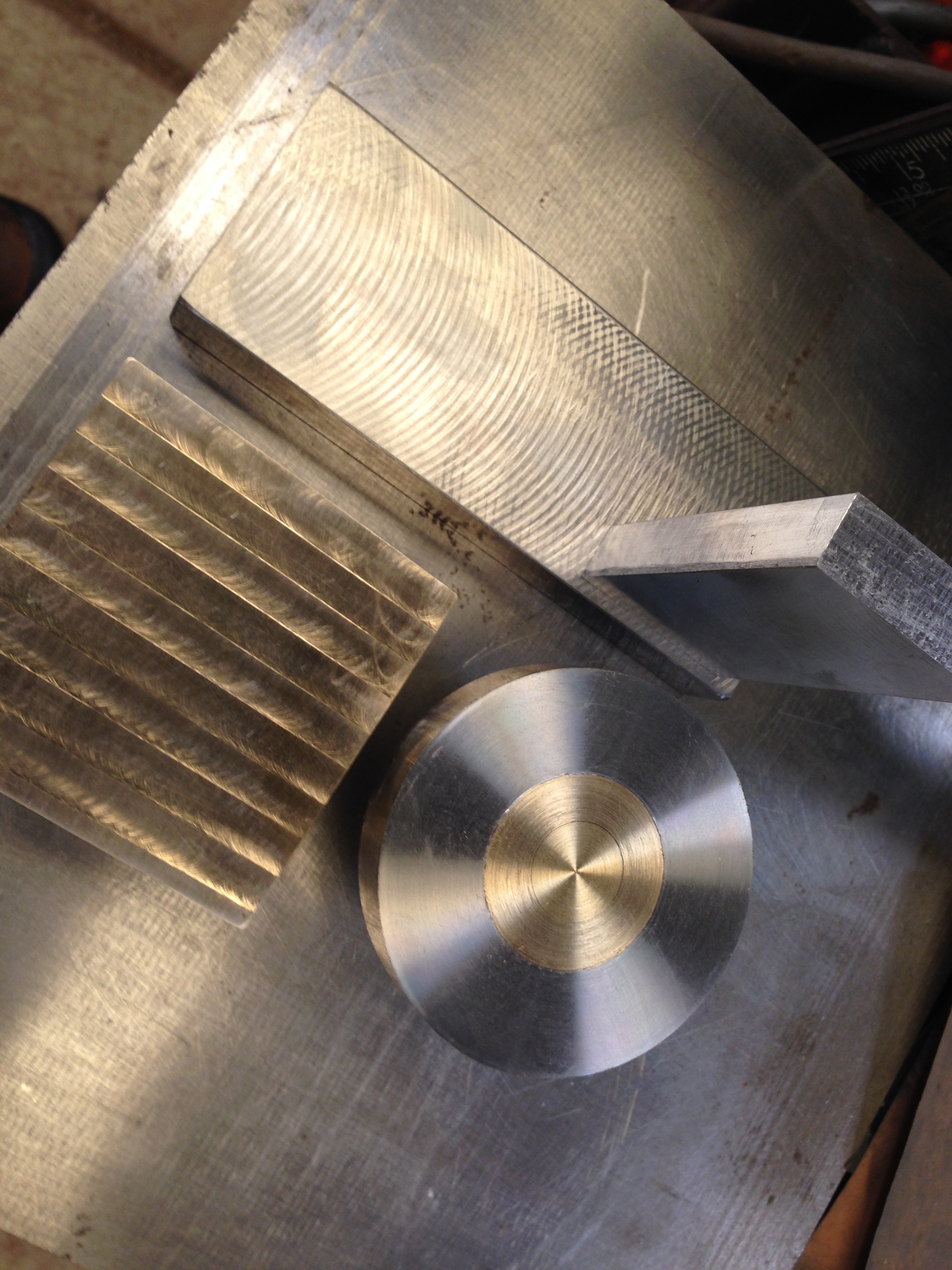
The HME blanks for the base, the cylinder block, the flywheel pillar and the flywheel.  The only stainless steel I had in my junkbox, er storage facility, had a  big hole in the middle, so I filled that with brass.

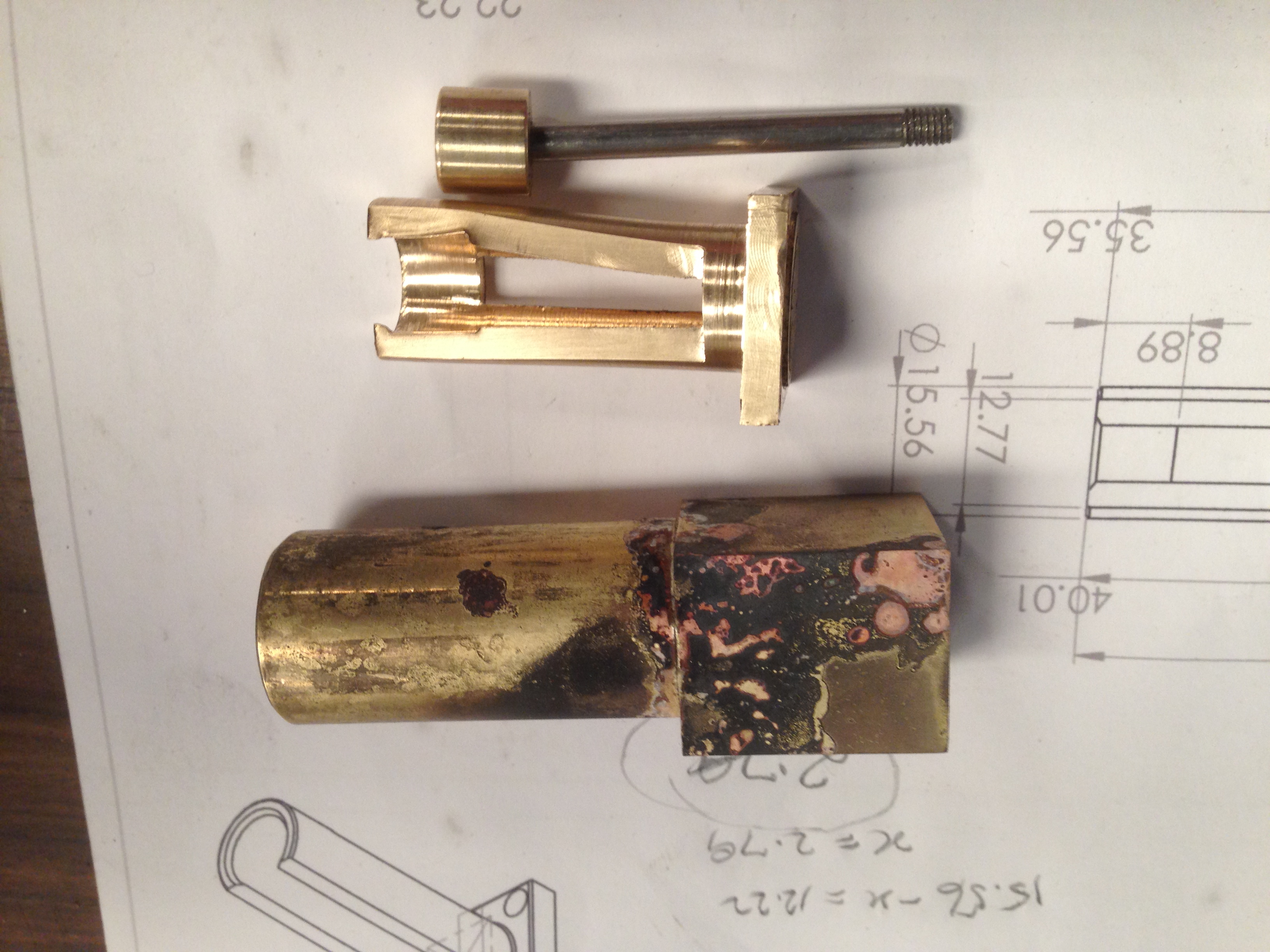
All was going well, and I spent almost a day making the piston head guide. Then finished off by making the guide rod and block.   I decided to take another thou off the guide block, and set the lathe going.

And heard an ominous bang.

IMG_5209

I had forgotten to remove the piston head guide from the from the piston before I restarted the lathe.  Destruction.  The lump at the bottom is another piece of brass, ready to be turned into another head guide.  I had run out of suitably sized brass, so I silver soldered a length of rod to some square section.  A day later and the new piston head guide is now made.  

At least I know from this (and other crashes), that the second part is always made much faster than the first.

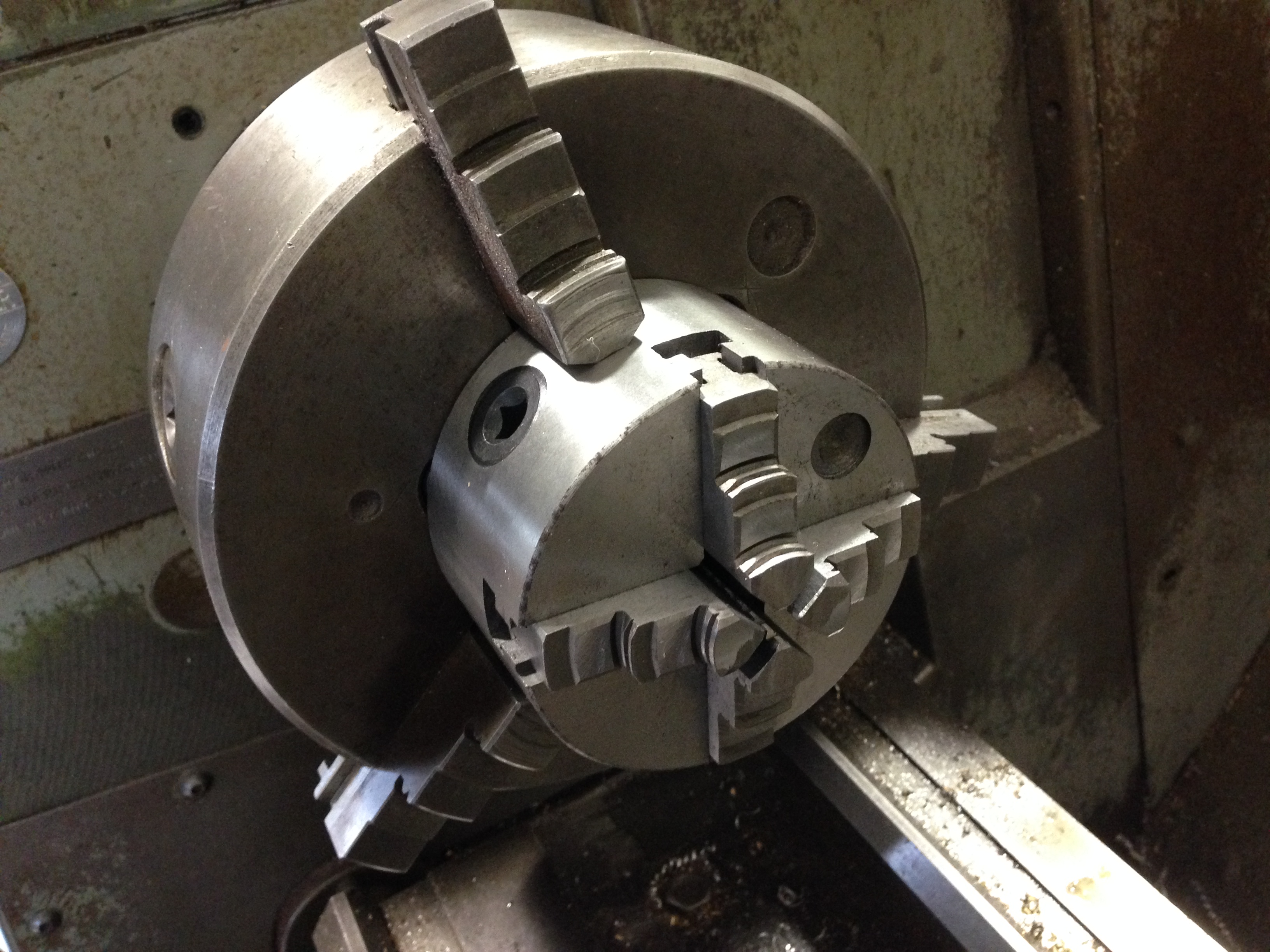
And on a different subject, I recently bought on Fleabay a self centering 4 jaw chuck.

IMG_5201.JPG

It does not replace the independent jaw 4 jaw chuck for accurate work, but will be useful for turning small square stock.  Also, I plan to make a backing plate for it to fit into the tailstock, so it will hold taps.

Triple Expansion Steam Engine Pipework.

I am close to disassembling the Bolton 9, before gradually reassembling it in preparation for running it on air then steam.  Most of the components have now been made.  Most recently I completed the pipework associated with the Edwards air pump and the twin water pumps.

IMG_4997

This is the combined air and water pumps, and new pipework.  Most joins are silver soldered, but a couple are Loctited.  Loctite should be adequate.  These components will not get super hot.

IMG_4999

This valve is one of the few components on this engine which I have not personally made.  This one came from the effects of the late Harry Close, who was a valued member of our Model Engineering Club.

IMG_5002

The pipework adds to the overall interest , yes?  It will look good when polished.

IMG_5001

And the “tails” for the valve rods, which are attached to their respective steam chests.  The BA7 bolts are a bit oversized for the job.  The intermediate cylinder tail screws into place.  I am not sure why it is different from the other two.

So now I am making a list of tasks which need to be completed when the engine is taken apart, hopefully for the last time before it is run.  The list is not complete, and so far it runs to 3 pages.  Mostly like fixing parts which interfere with each other, and freeing up tight bearings.

I will take some pics of the components.

Edwards Pump for the Triple Expansion Steam Engine

The triple expansion steam engine has been progressing, again.  I started this project over 2 years ago, but I have taken many breaks, some prolongued.  One break lasted over 6 months while I made some cannons.

I cannot remember when I made the Edwards pump for the triple, but it must be over a year ago.   In the past few days I have returned to it, finalising the mounting to the engine, and joining the driving levers to the pump and the engine.

The Edwards pump creates the vacuum in the condenser chest.  It is an air pump.

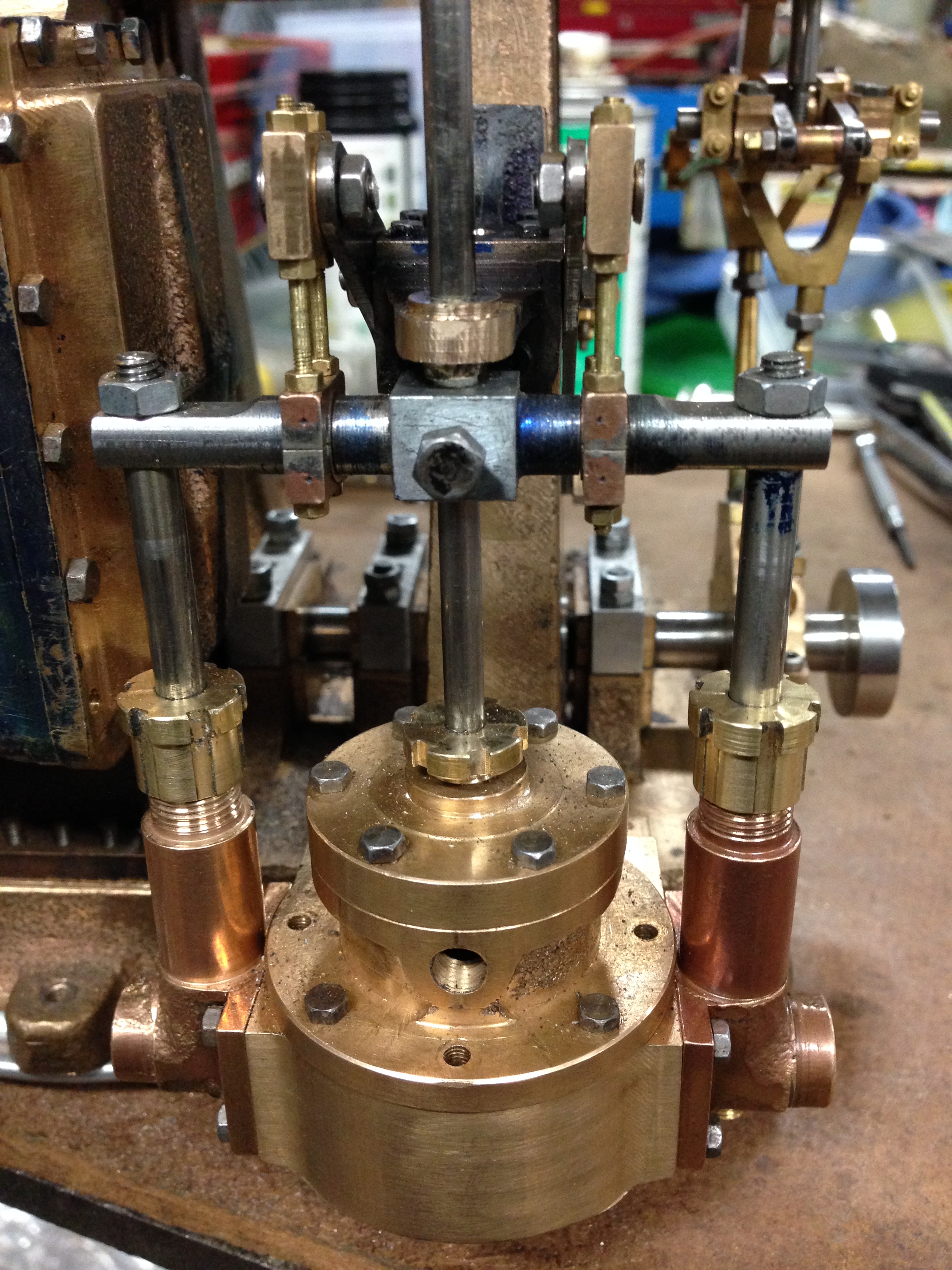
Attached to the Edwards pump are 2 water pumps, which return condensed steam as water, to the boiler.  At least that is what I understand from the descriptions.  It feels a bit odd, making these components before understanding what they really do.

triple-expansion-engine-1-22

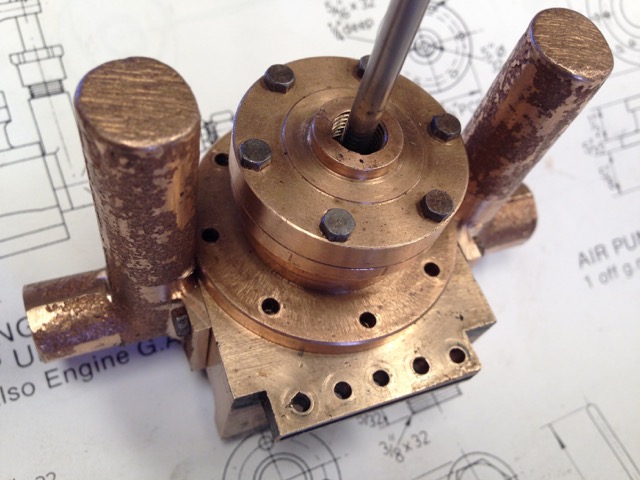
The Edwards pump is the central cylinder and rod.  The water pumps, bolted to the sides, are just lumps of semi machined cast gunmetal at the stage this photo was taken.

triple-expansion-engine-1-17

The step before the above picture, where the base of one water pump is machined.


IMG_4918.JPG

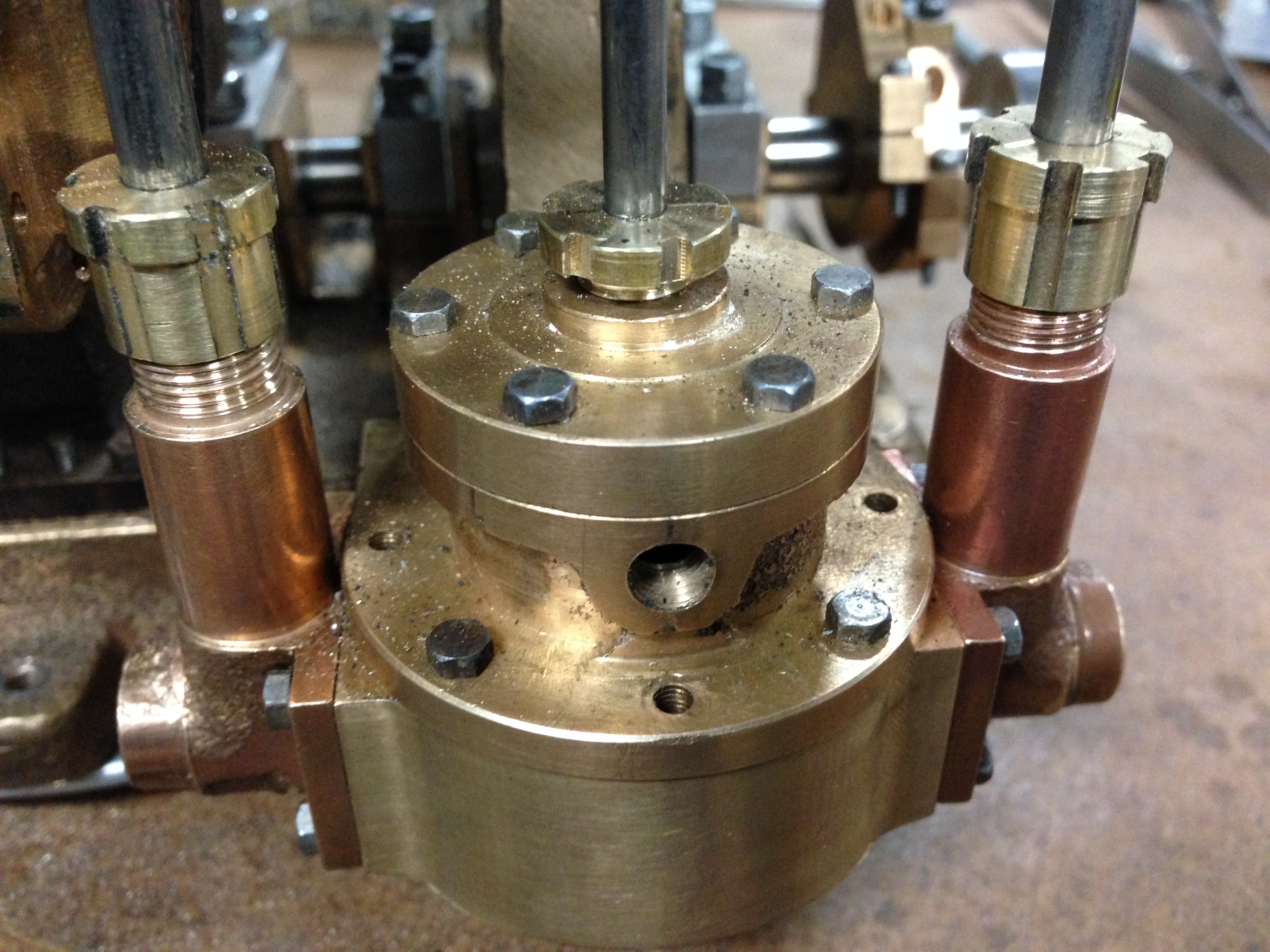
The Edwards pump, and the 2 water pumps, almost finished, attached to the engine.

pump spanner.JPG

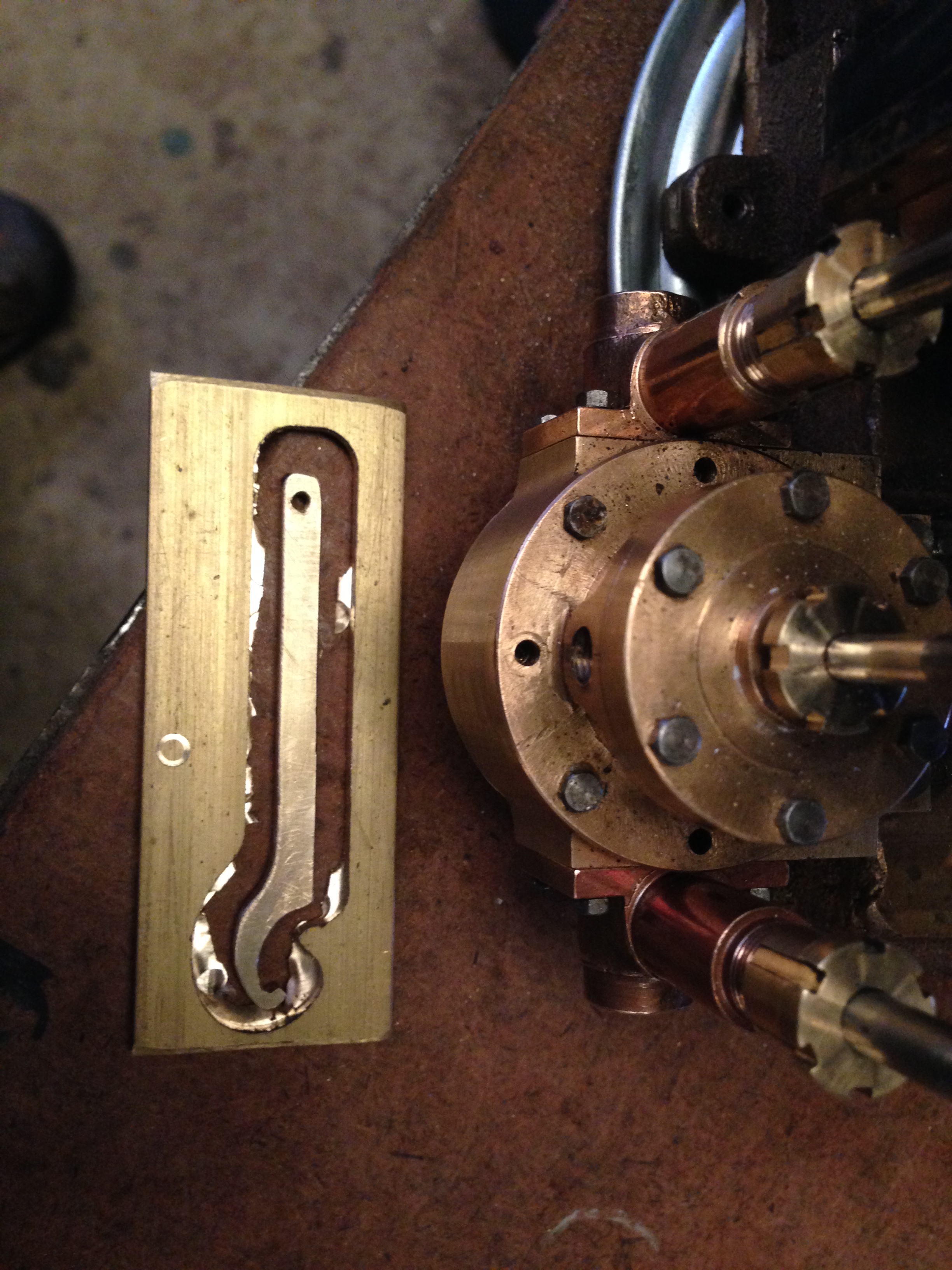
There is no clearance between the pump gland and the condensor, so the intitial hexagonal glands which I made (not shown) were unuseable.  So I made these cylindrical glands which required a tiny hook  spanner to tighten.  The hook spanner was made on the CNC mill from 1/8″ brass plate.  A little filing was required to shape the hooked tooth.  Works nicely.


IMG_4917

The pump unit, lower left, attached to the engine.  Actuating levers driven off the low pressure cylinder (not yet connected).

IMG_4915.JPG

The pump unit viewed from the side.

So I am at the stage where I would like this project to be finished, so I can get on with other projects.  It feels like it is close because there are very few castings remaining in the box.  But I know that the entire engine has to be disassembled, and painstakingly reassembled, freeing up some of the tight parts so it will turn over more easily.  Then the steam pipe hookups and valve timing.  Then hopefully, a video of it running!