johnsmachines

machines which I have made, am making, or intend to make, and some other stuff. If you find this site interesting, please leave a comment. I read every comment and respond to most. n.b. There is a list of my first 800 posts in my post of 17 June 2021, titled "800 Posts"

Tag: Williamstown

SEAWORKS Maritime Museum, Williamstown

I visited this museum last Sunday with a friend who I shall call Michael or Chestcutter. Michael because that is his name. Chestcutter because that is his SOS name, and his profession.

We made the 1 hour trip to Williamstown because we had heard that it has in its collection a block from HMS Bellerophon, and the steering wheel from HMS / HMVS Nelson. There was a suggestion that the Nelson steering wheel was originally also from Bellerophon, but that is probably not the case. Michael was interested to see the Bellerophon block because he has modelled HMS Vanguard 1787, which was almost identical to Bellerophon. Both were 74 gun, line of battle, 3rd rate ships. Photographs of his Vanguard can be seen at “Ships of Scale” and search for Vanguard/Chestcutter.
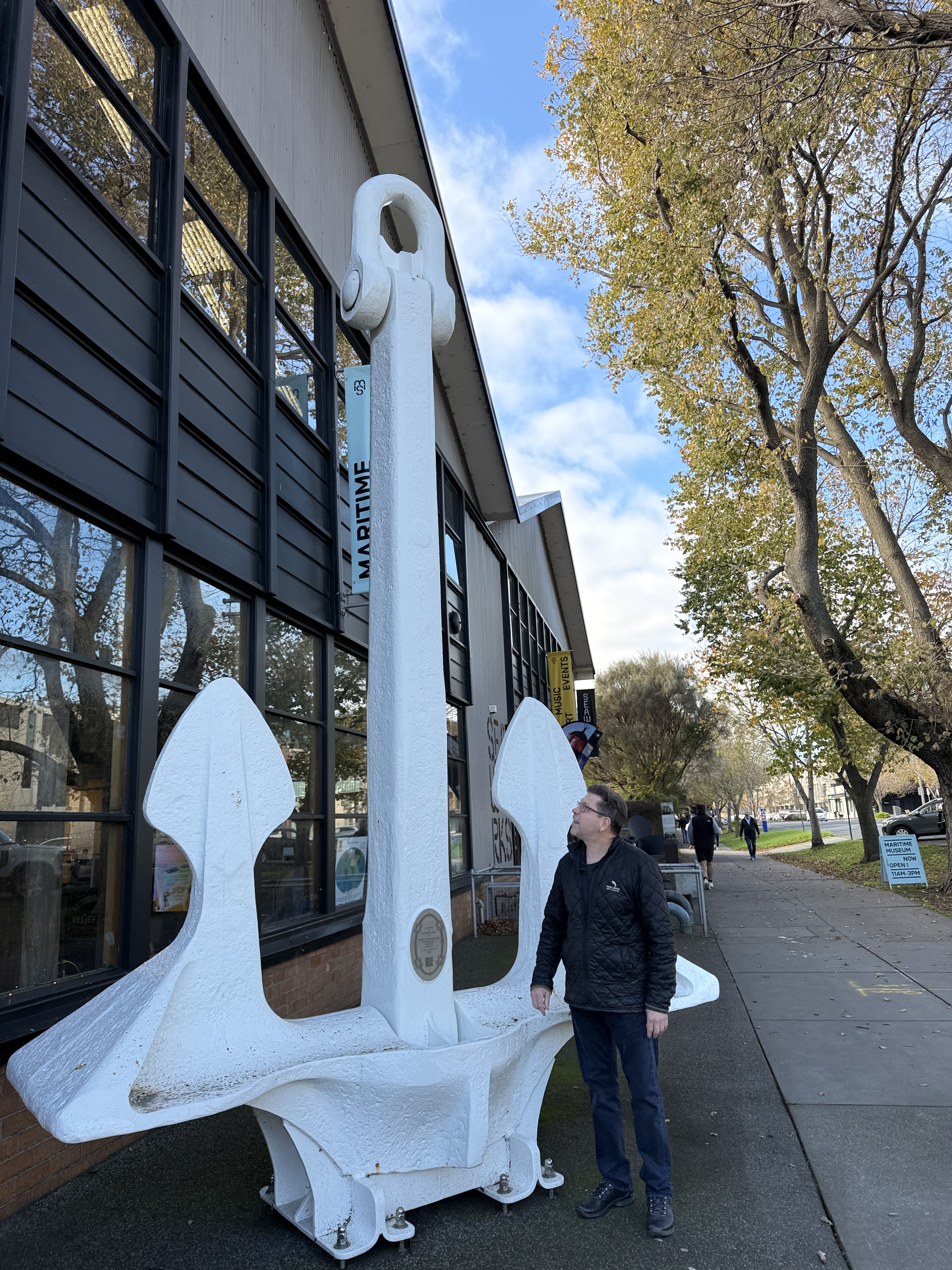
The museum is open 11am -3pm Sundays and Wednesdays. Plenty of parking, overlooking Hobsons Bay and CBD Melbourne.

The Bellerophon block was impressively huge. 620mm wide. 156kg. 4 lignum vitae pulleys. We wondered what was its function. The label states “deck tackle”. Maybe a backstay tensioner? But the label says “backup for the anchor raising capstan. After HMS Bellerophon 1787 it was used on HMS –>HMCS Nelson 1814. (HMS Her Majesty’s Ship; HMCS “Her Majesty’s Colonial Ship”.)
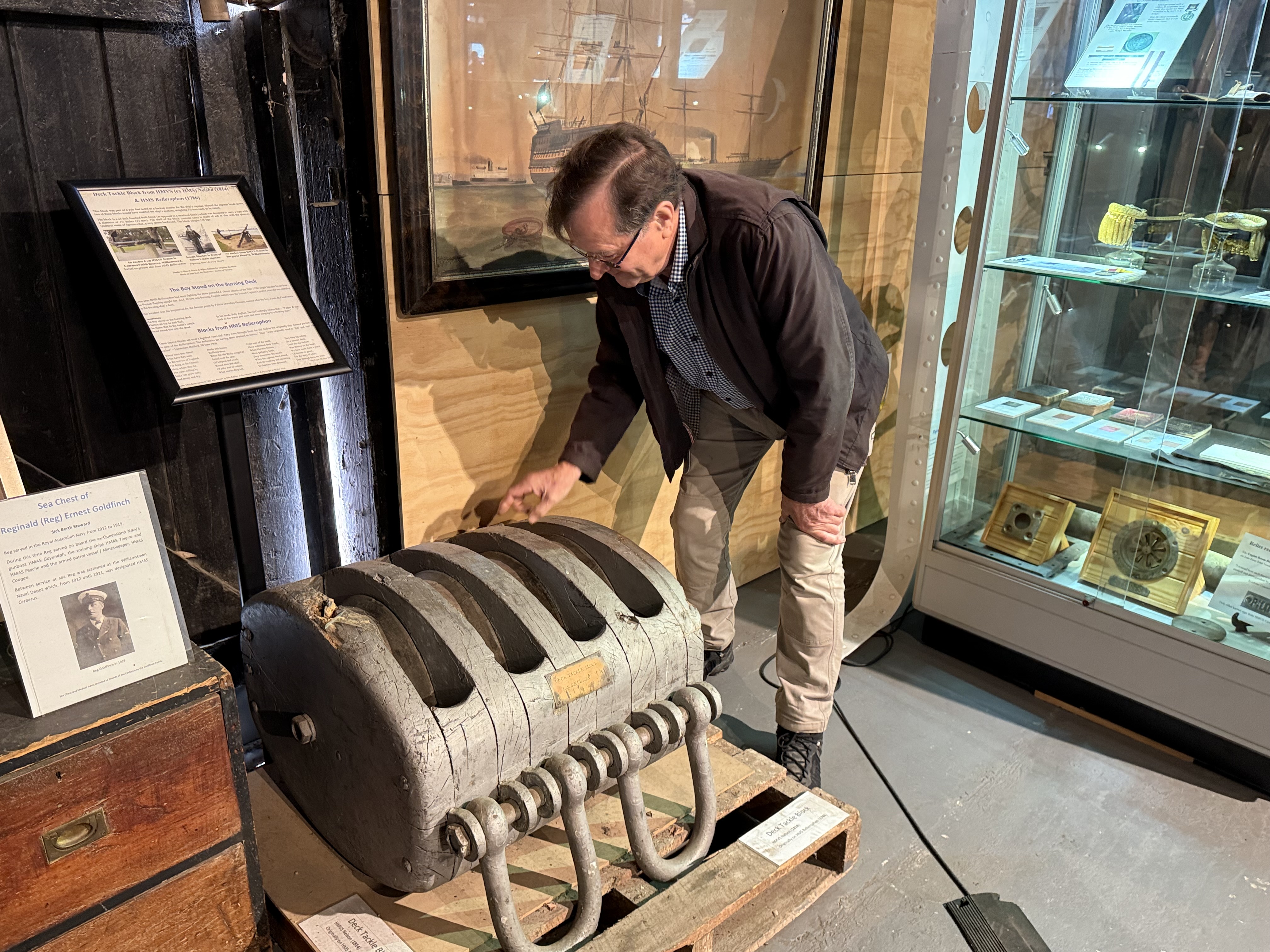
Me, touching the block from HMS Bellerophon

We wandered around the other museum exhibits. Many superb ship models, from the first fleet, to our (fairly) modern navy.
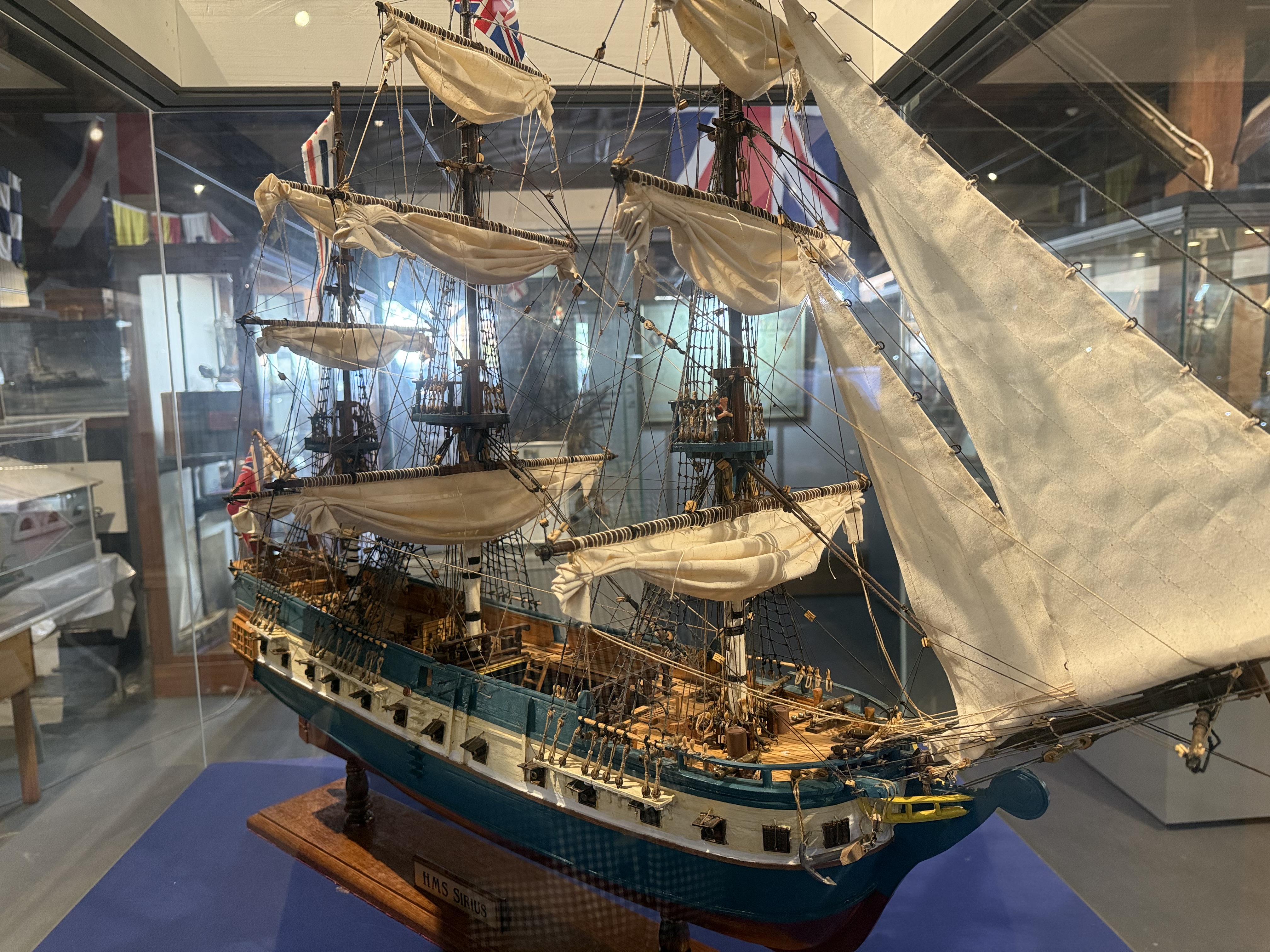
HMS Sirius. Flagship of the 1788 first fleet which comprised 11 ships carrying convicts, supplies, soldiers, officers and crew, and Governor Arthur Philip. All first fleet ships are modelled, made by one person.

And the steering wheel from HMCS Nelson. It is about 8 feet high. The dummy is full size for scale.
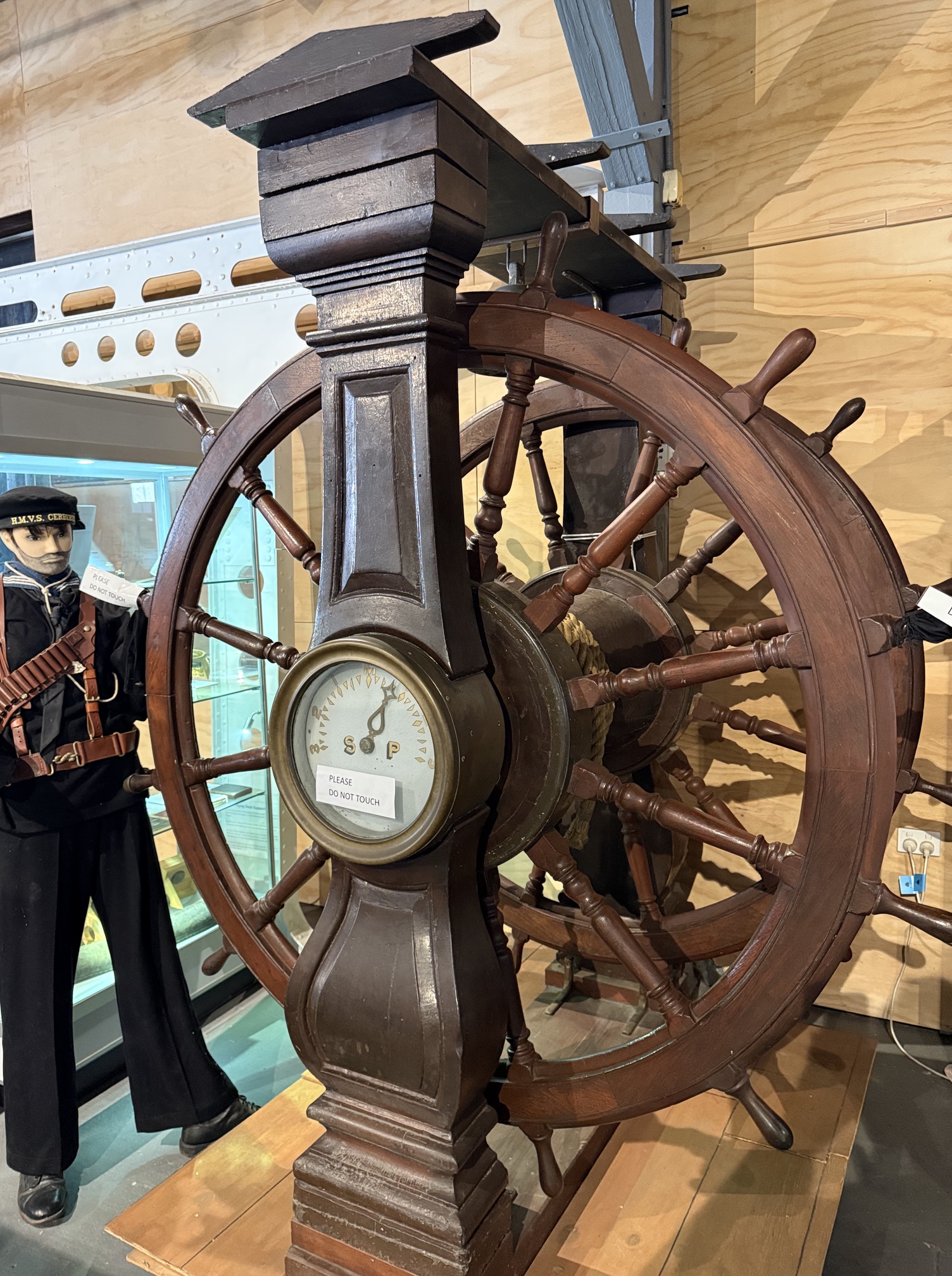
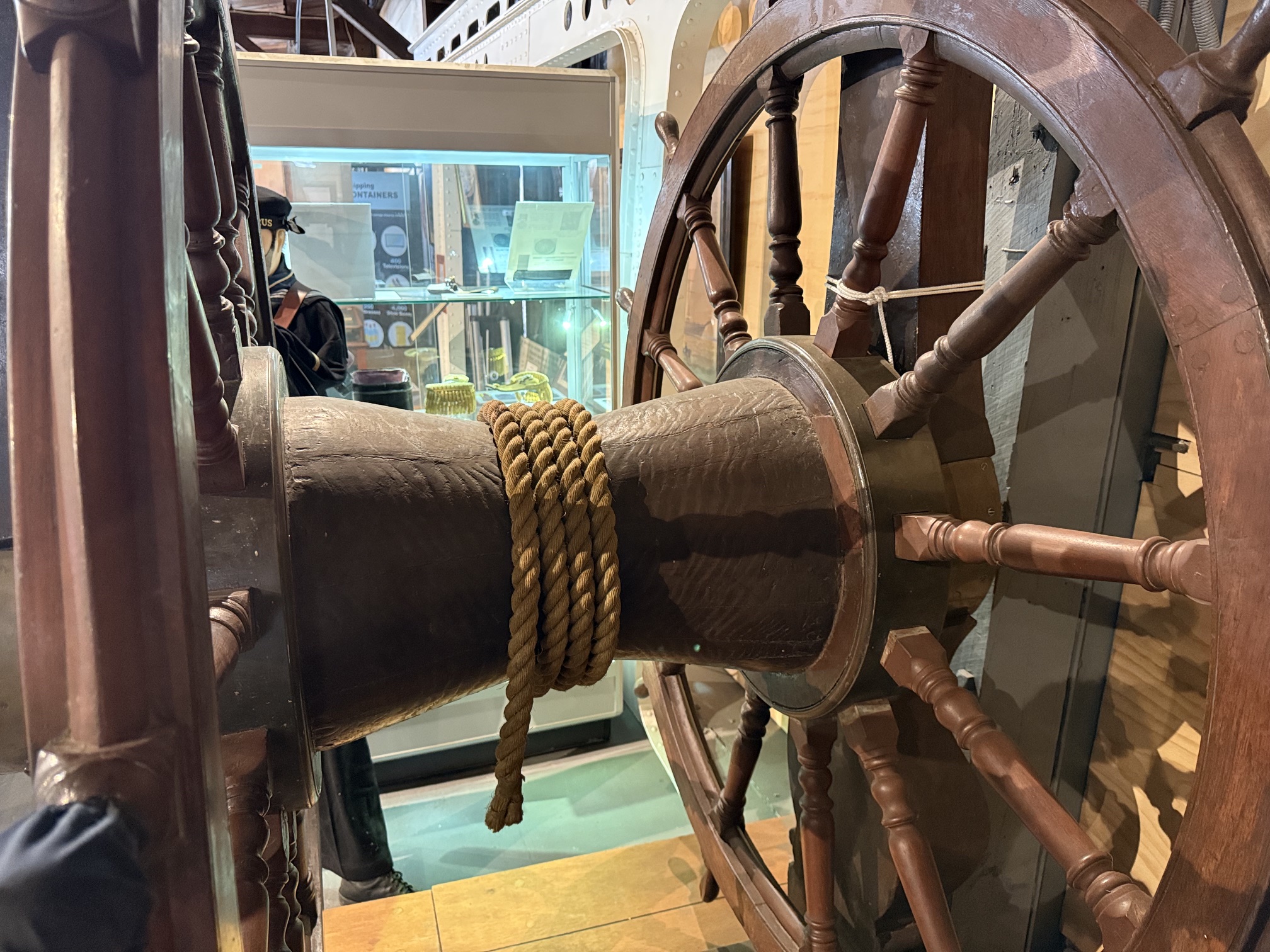
2 or 4 steersmen were normally required, but in heavy weather up to 8 were used.
Note the waisted spindle. I guess that the smaller diameter provided more leverage.
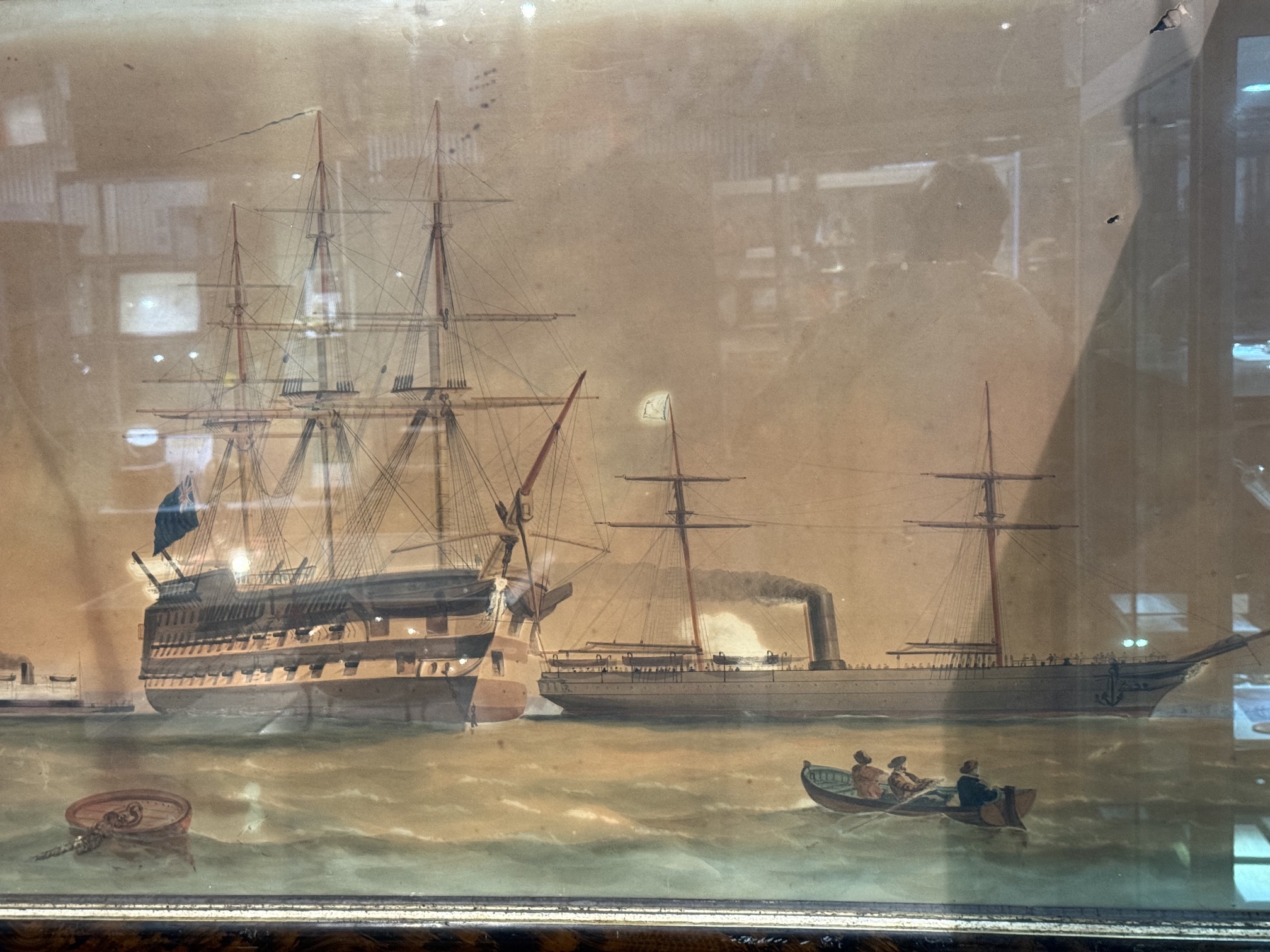
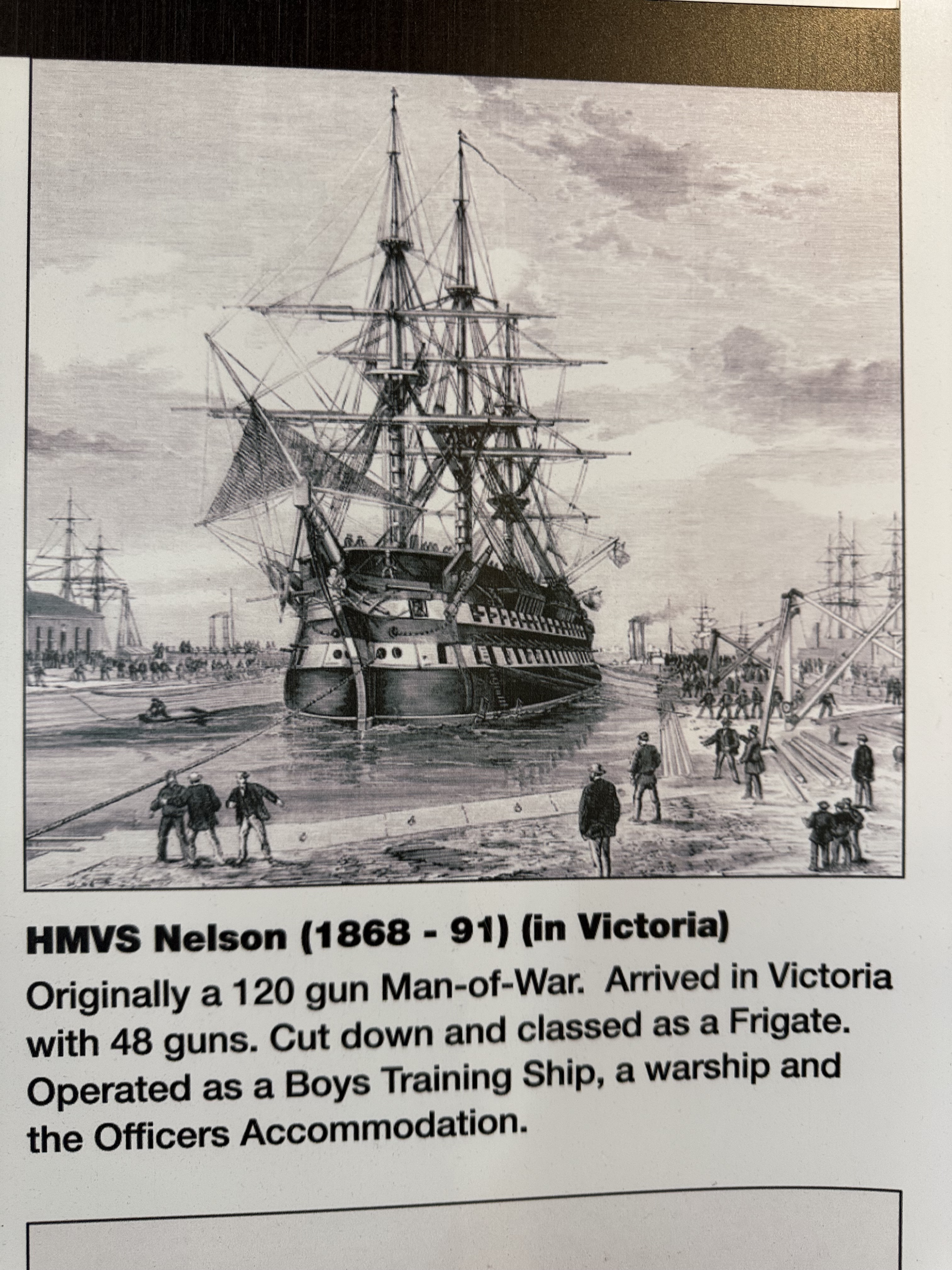
A nice painting of HMVS Nelson and HMCSS Victoria. Nelson was launched at the end of the Napoleonic wars as a 3 decker 120 gun battleship, one of the most powerful sailing battleships ever built, but already becoming obsolete. HMCSS Victoria was built in England for the defence of Melbourne, Colony of Victoria. Victoria is currently being modelled by Patrick Majewski.

We finished our circuit of the museum and were surprised to see that 2 hours had elapsed. A very satisfying and pleasant visit.
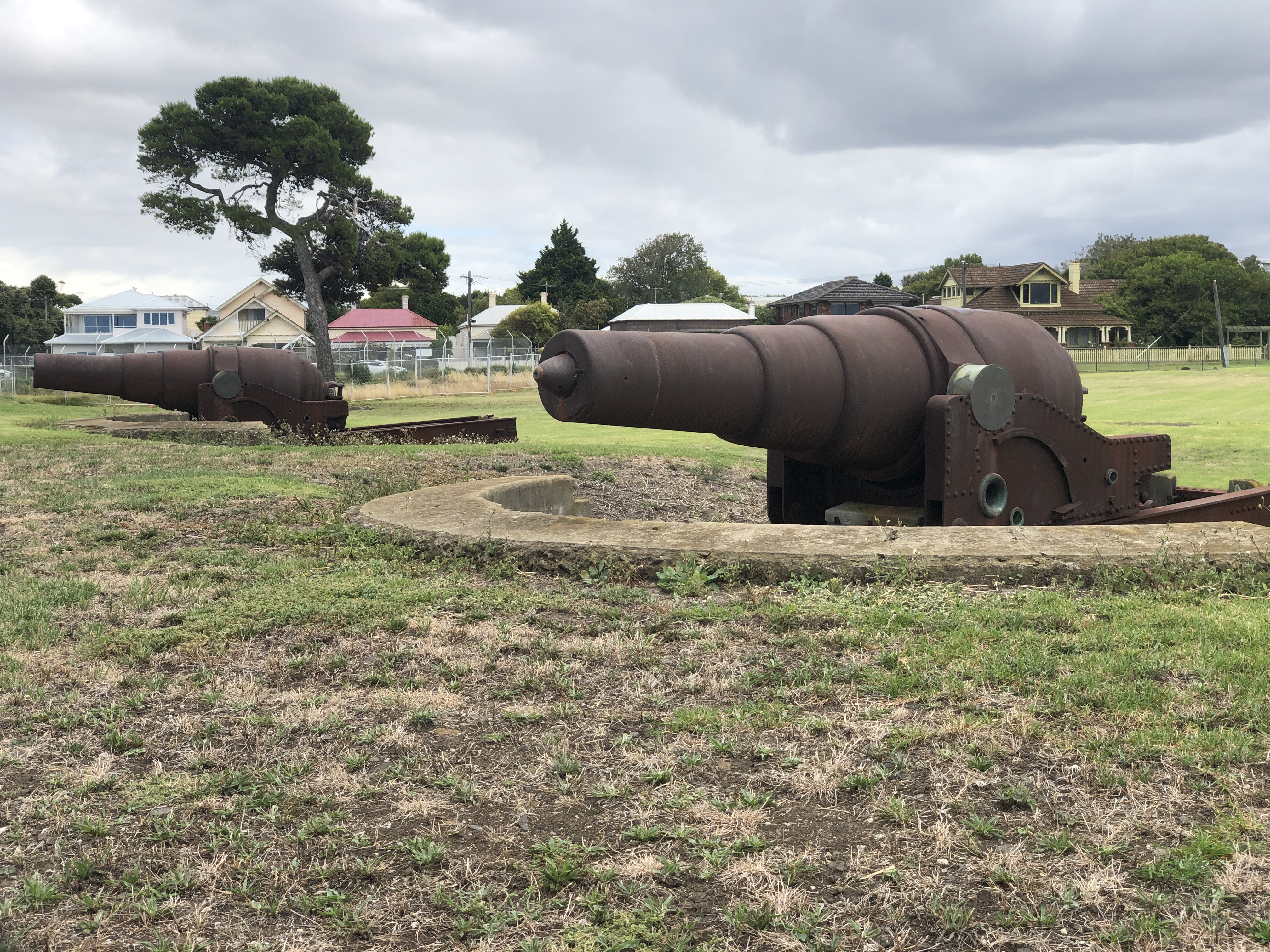
300pd Blackpowder Cannons at Williamstown

The cannon construction techniques which were pioneered by William Armstrong in the 1860’s led to more powerful and more accurate weapons. The 6.3″/160mm bore cannons which were shown in yesterday’s post, (and modelled by me,) were rapidly followed by larger cannons. The larger cannons were required to counter the iron clad steam ships which were replacing wooden warships. The colony of Victoria purchased 9″ muzzle loading black powder cannons for the defence of Melbourne, and yesterday I visited Williamstown to see 4 of them.

The 9″ rifled bore cannons fired projectiles weighing 300lbs! Cannons of this size were described according to the bore diameter, in preference to the weight of the projectile.

A fort was constructed at Williamstown (Fort Gelibrand), and 2 of the cannons are located inside a military establishment, unfortunately not accessible to the public.

As seen from about 20 meters, through the fence. Muzzle loading 9″ monsters. The projectile seen is said to be stuck there.

I was sure that I had seen some photographs of similar guns at Williamstown which were accessible so I asked some locals, and was directed to the foreshore.

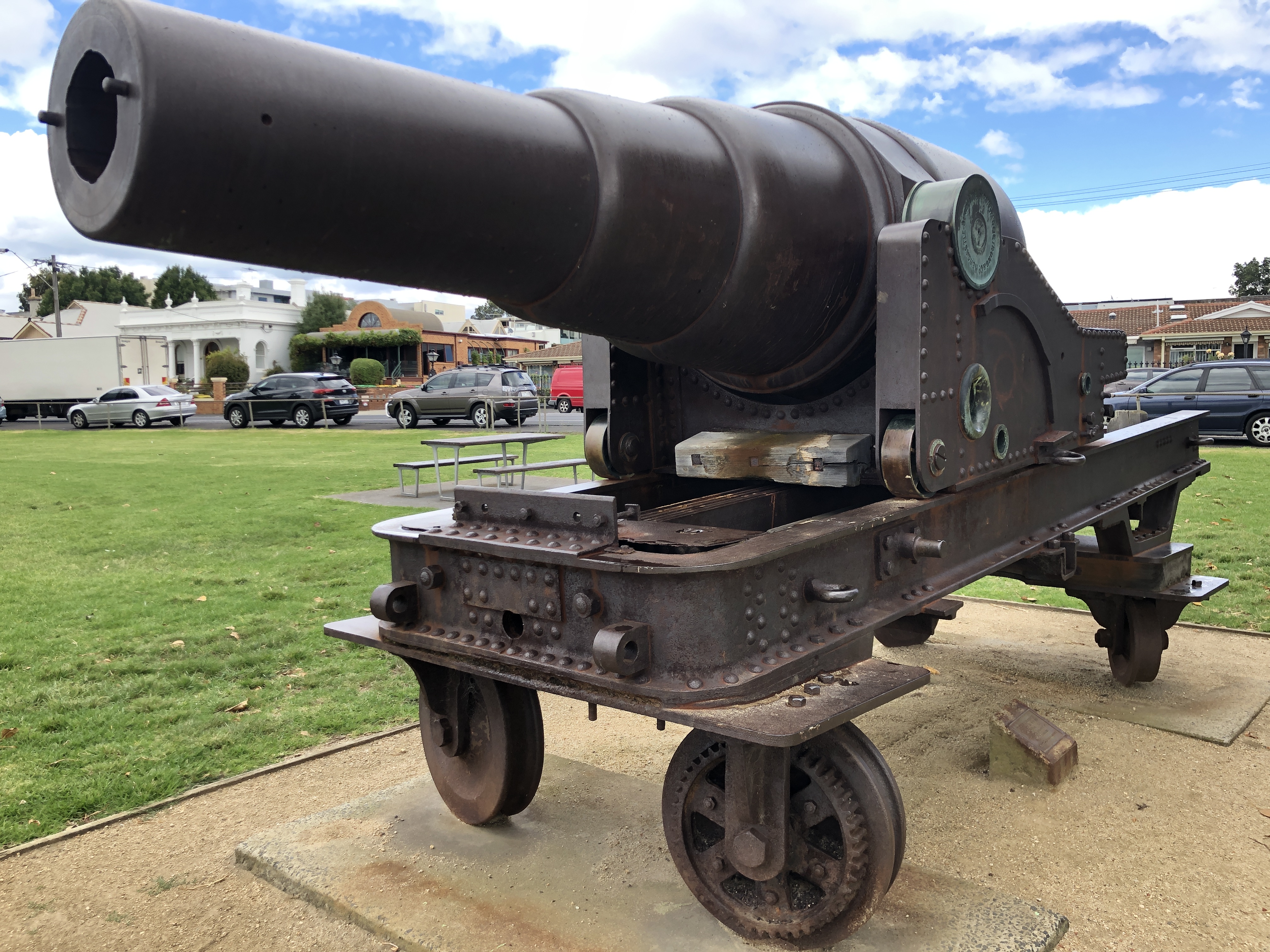
That is Melbourne CBD in the background.

These 9″ guns are rifled (6 grooves), made in 1867, and muzzle loading blackpowder. They are very similar to the 10″ guns which were mounted on the monitor HMVS Cerberus, but these are garrison mounts whereas the Cerberus guns were rotating naval mounts.

The 300lb projectiles were loaded using a gantry which was mounted on the end of the barrel. The gantry mounting point can be seen as the small holes in the side of the barrel.
The loading gantry can be seen in this old photograph of one of the 9″ Armstrongs when it was located at Fort Queenscliffe.
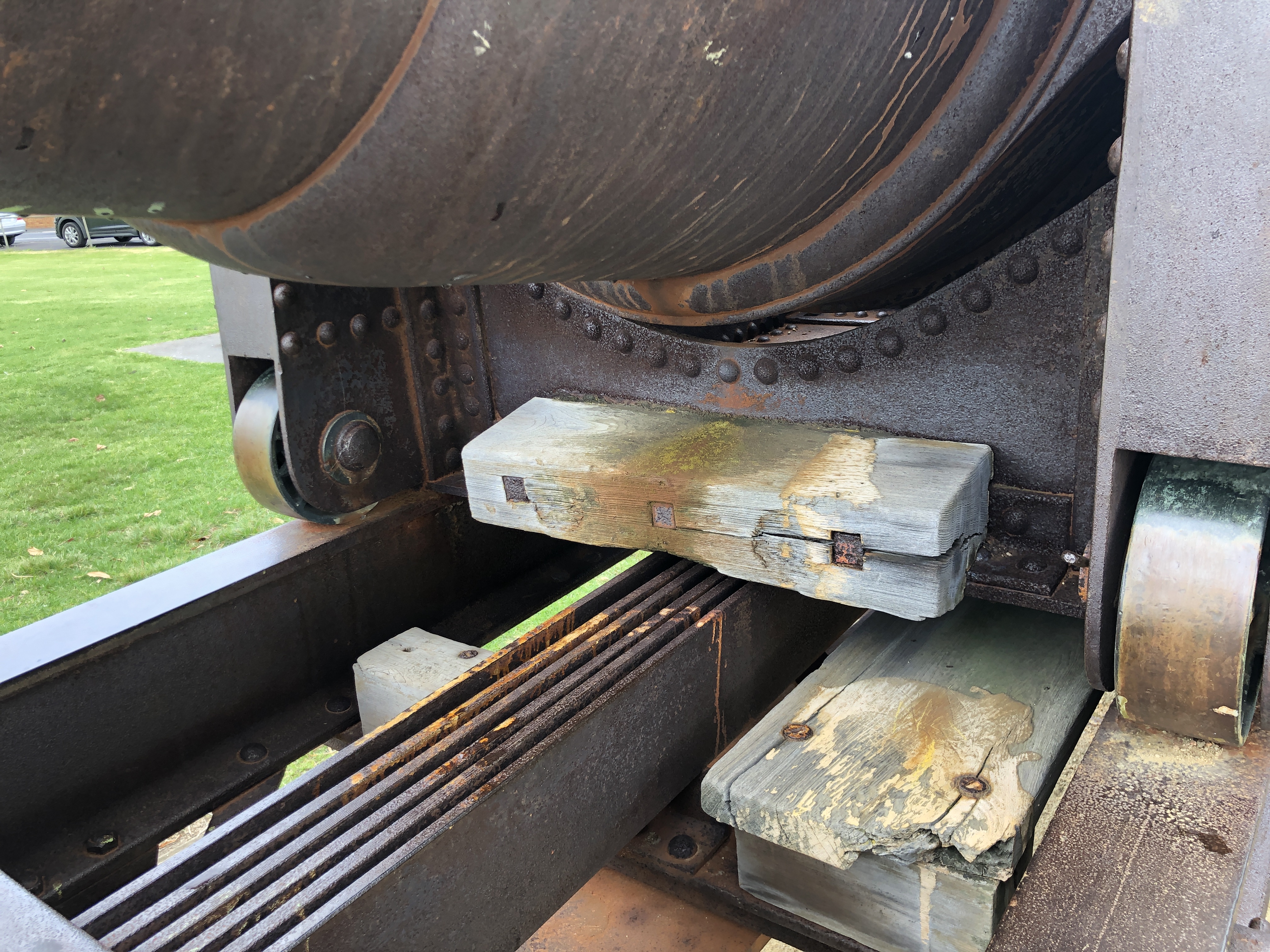
A feature of the 9″ cannons was the “Elswick” recoil control mechanism. These substantial strips of iron extended the length of the chassis, and shorter pieces of iron were hung from the carriage to provide friction control of the recoil. The degree of friction was controlled with levers which adjusted the spacing of the strips.

Unfortunately most of the elevation control mechanisms are missing. The small bracket top left was probably to hold the steel rod which was used to perforate the gun powder bag after it and the projectile were positioned.
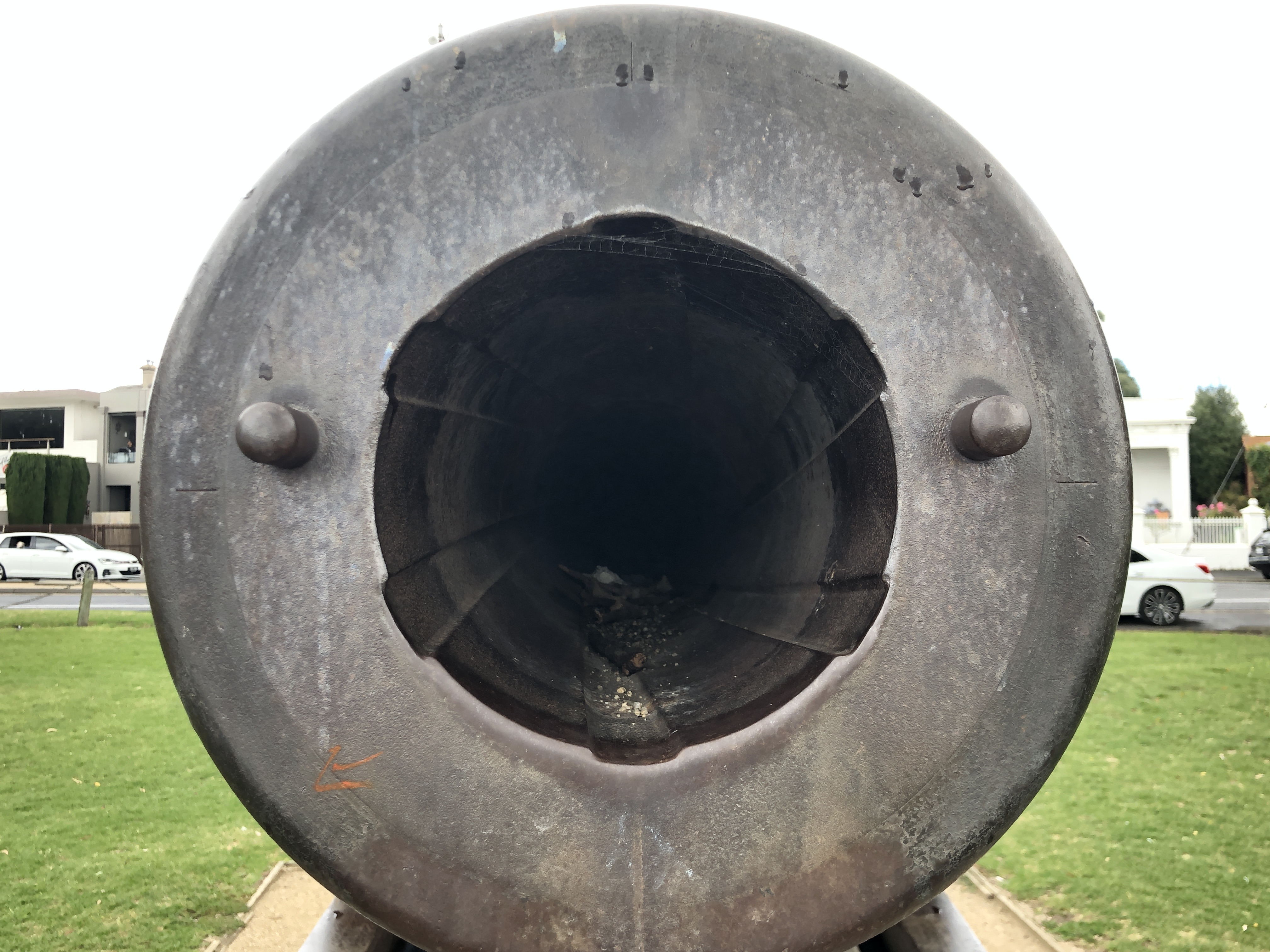
6 rifling grooves. The projectiles 1867 to 1877 would have had studs to match the rifling. After 1877 the projectiles would have used copper gas checks to engage with the rifling. The inner and outer coil layers of the chase of the barrel can be seen if you look closely.
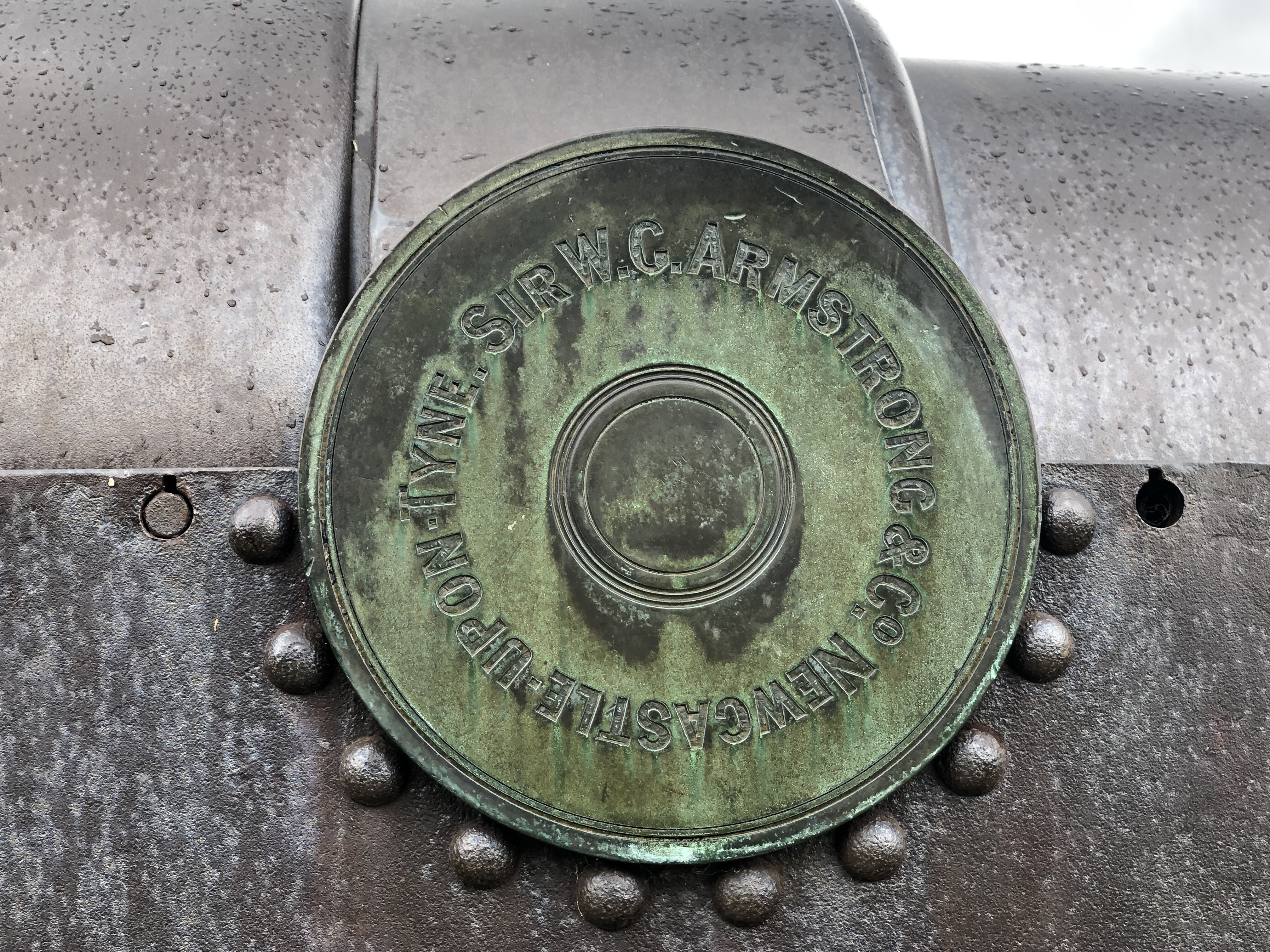
The 9″ guns were manufactured at the Elswick works, Newcastle, England. and the Royal Gun Factory Woolwich England. The gunmetal trunnion caps are original. If you look closely at the barrel surface you can make out the outlines of the strips of iron which formed the coils.

HMVS Cerberus is a topic for future posts. An excellent source of information is found at http://www.cerberus.com.au