
Bellerophon -6
by John
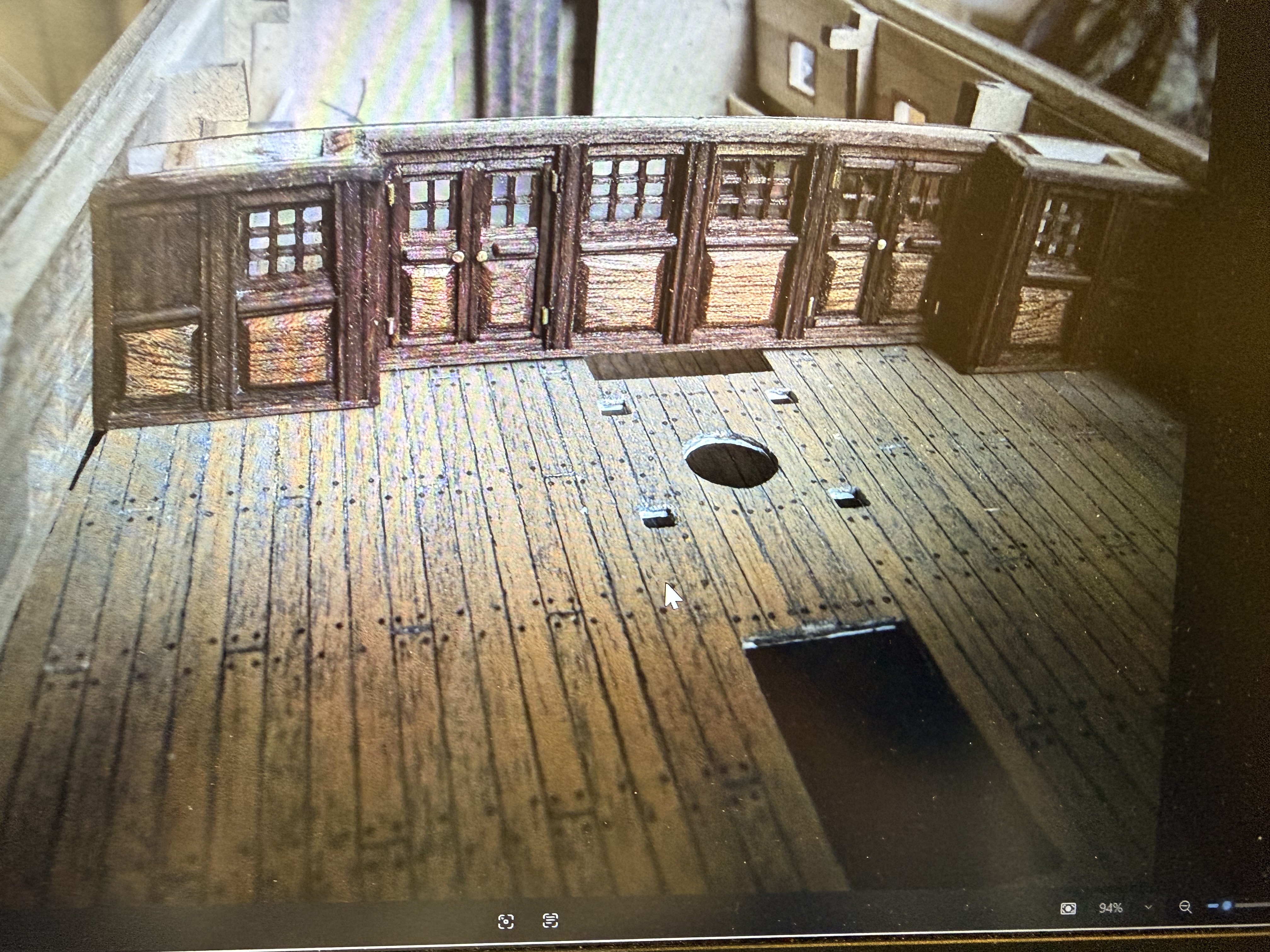
This, regrettably, is not my model Bellerophon. It is copied from Ships of Scale, to see how expert ship modellers manage the deck planking of model ships of the period. Those planks are 3 or 4mm wide, and the wood is appropriately very fine grained, and suitable for the scale.
On the original British 74 gun ships the planks were 4″/100mm thick, and the fasteners were made of wood! Called treenails or trenails. They were hammered into hand drilled holes, and were about 12″/300mm long. French 74’s of the period used iron nails, but I double checked. The trenails were tapered and approximately 25mm diameter at the deck surface. At my model’s 1:72 scale, that is about 0.3mm diameter, so the trenails in the above picture are a little bit oversized.
Some modellers actually drill tiny holes and hammer in sharp toothpicks to get this effect. (Yes Neil!) but being a bit on the lazy side I will just glue the planks to the underlying plywood, and make marks 0.3mm diameter to get what I hope will be the correct appearance.
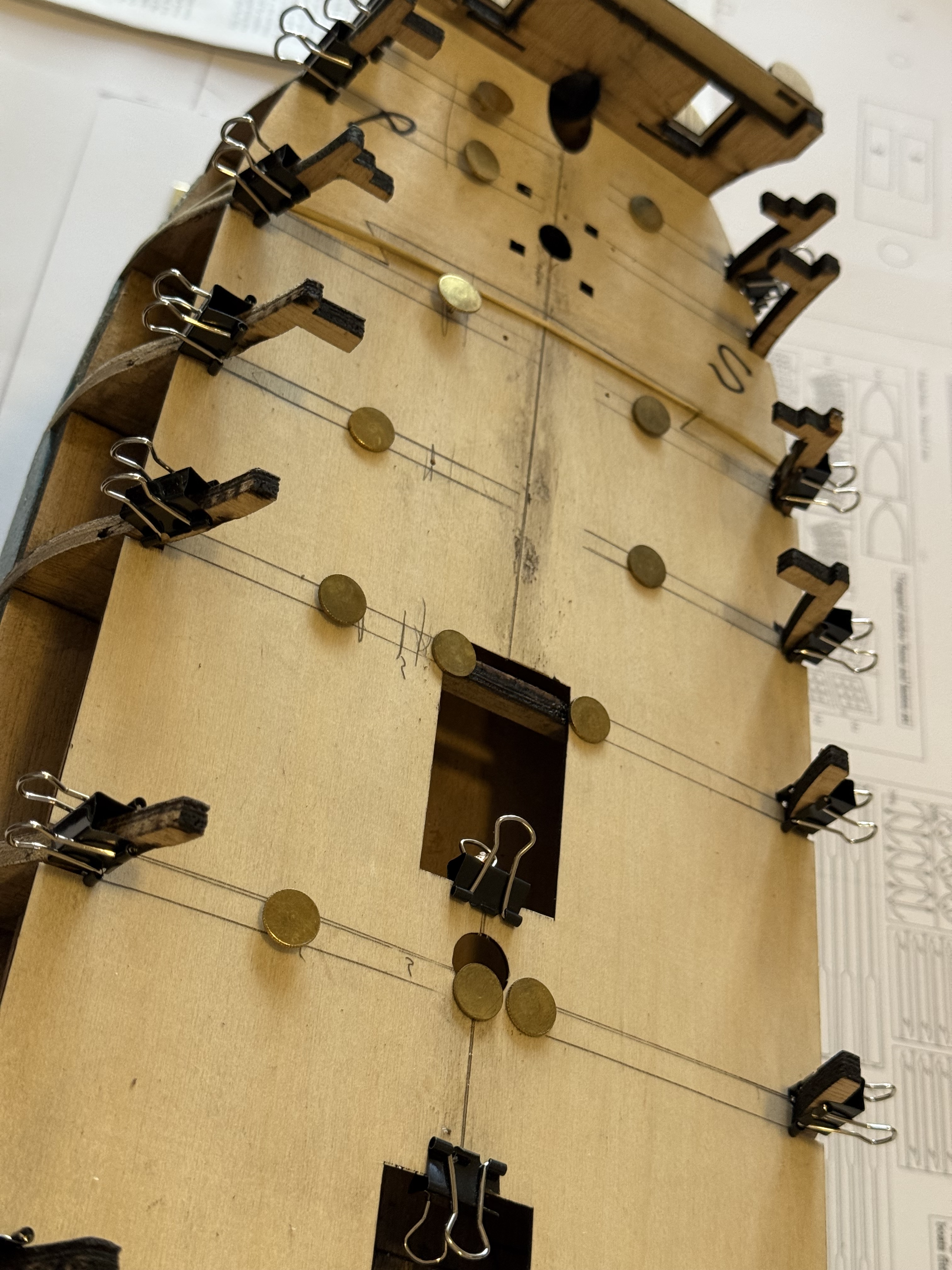
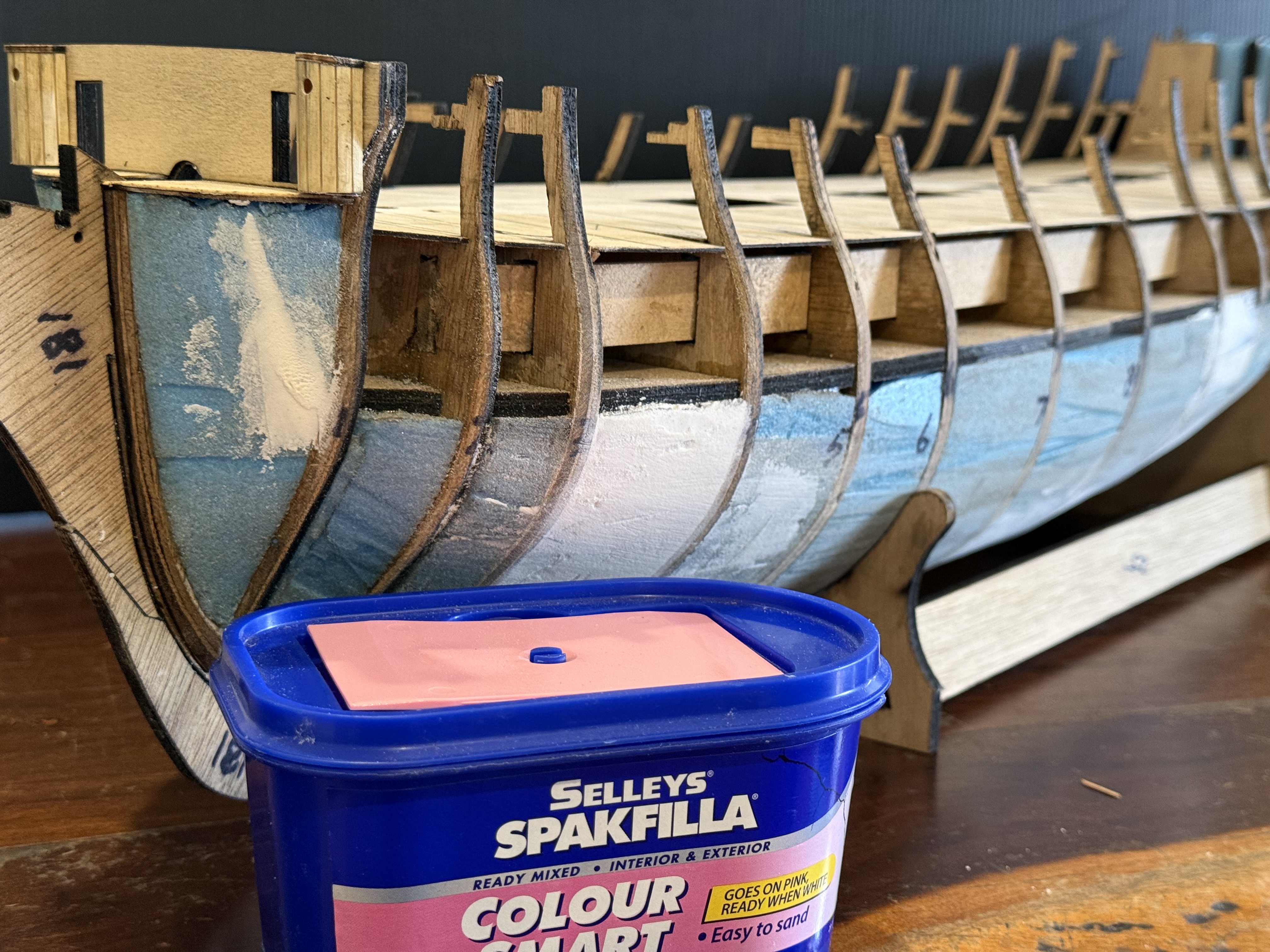
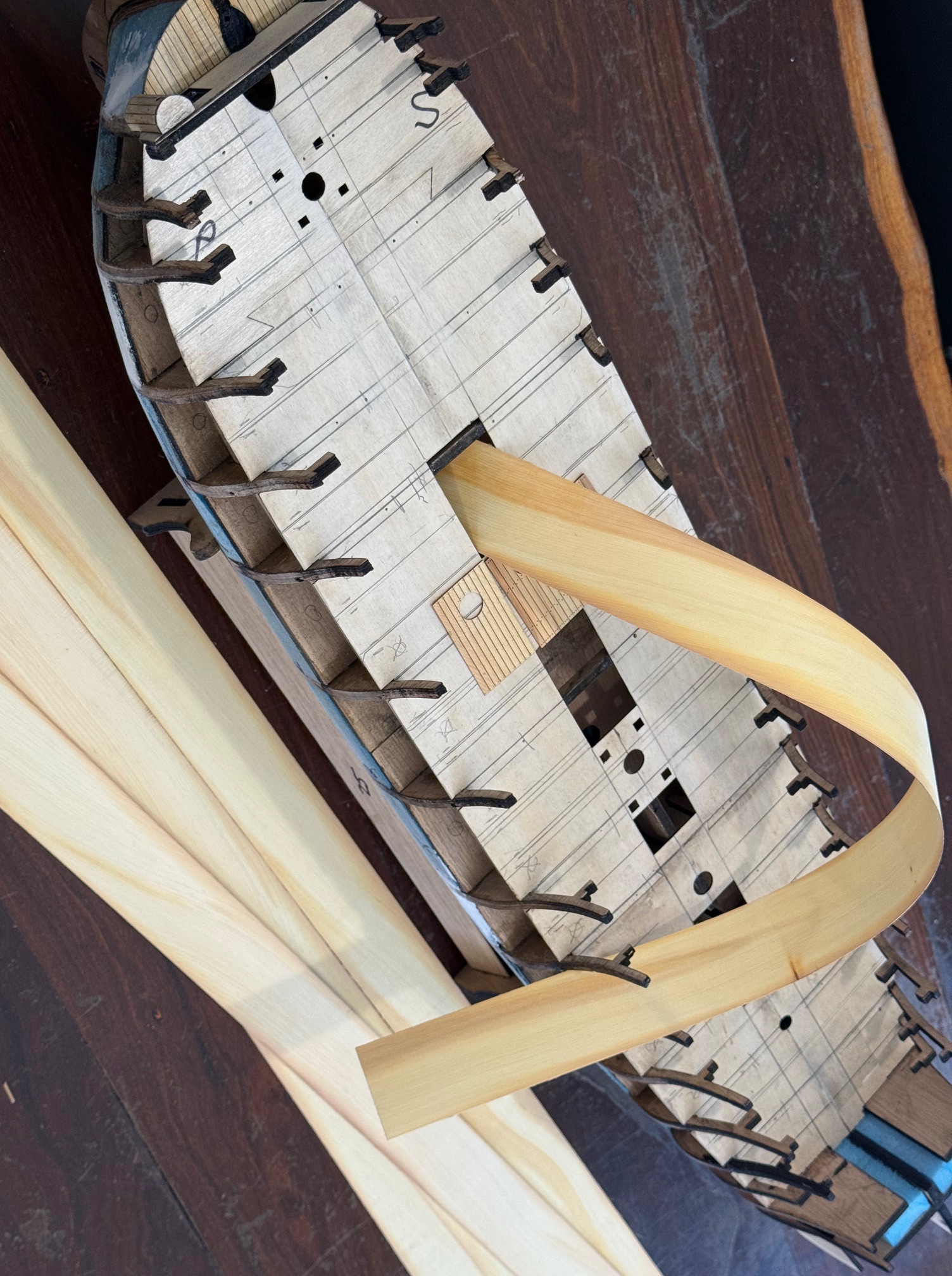
I paused the build while considering how to plank the decks. The kit instructions say to glue on individual planks of tanganyika wood, which I do not have. But a friend kindly donated a piece of huon pine, (thanks Neil M and Hamish L) which the AI said would be ideal…. very fine figuring, minimal tendency to warping and splitting, easily worked. And even used in full size ships which were made in Tasmania, but never on 74’s as far as I know.
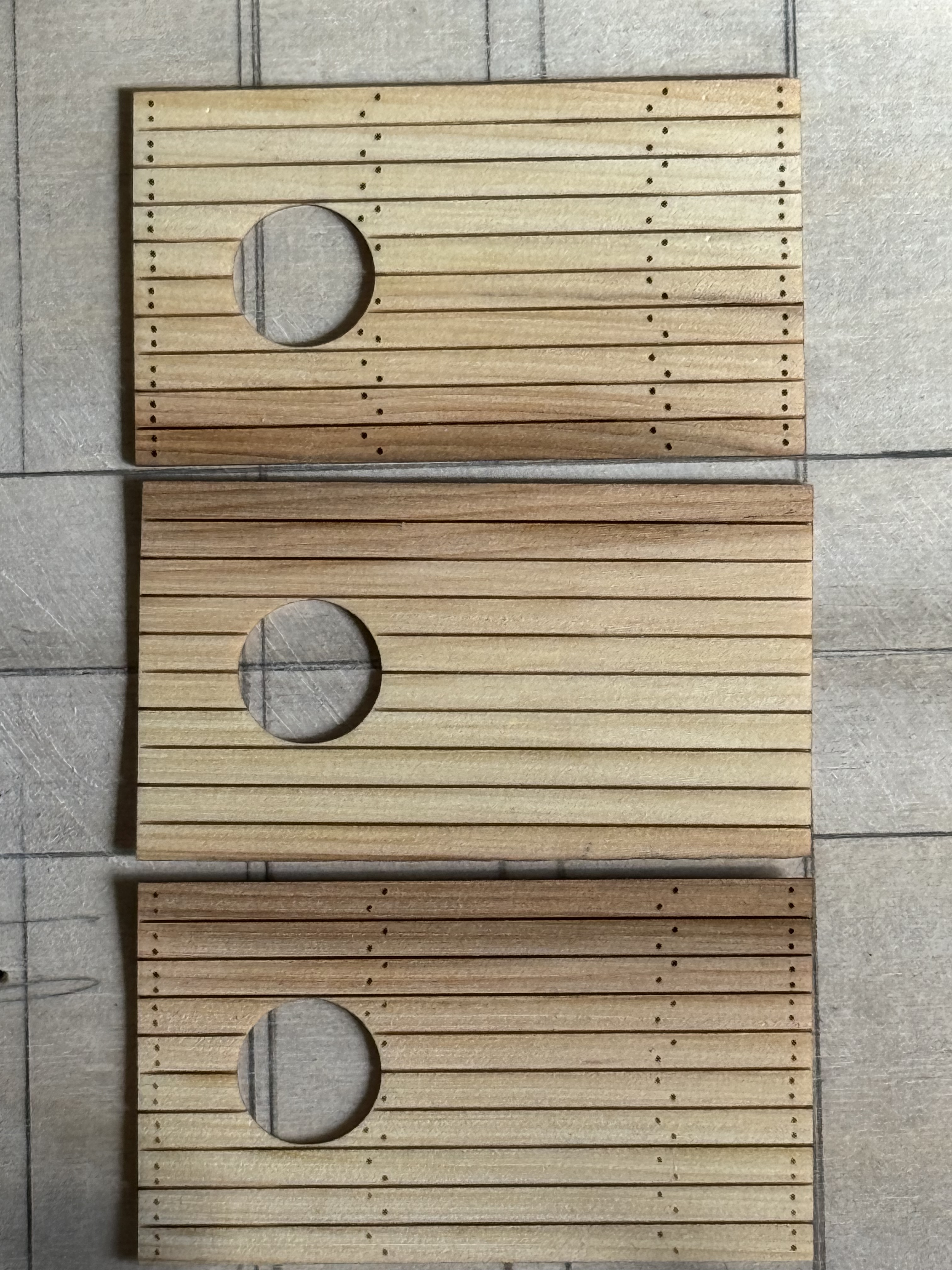
That was so successful that I am considering installing the planks in large sections rather than individual planks, but need to do some more testing because the model deck is almost 600mm long, and my laser machine has a maximum working length of 415mm. One of the above pieces to plank an area between hatches, so the trenail pattern is different at the ends compared with the central area. Also I need to add trenails around the capstan circle and mast penetrations. Note the slight irregularity of the trenail positioning. After all, the originals were hand measured.
Oh, and I used my home made drum sander to prepare some Huon pine…
 johnsmachines
Looking great ! I figured that you would use the laser to make the trenails, much easier.
cheers
Andrew
LikeLike
You work in tolerances that are beyond me; maybe it’s your surgery experience and obsessive attention to detail.
Looks like another masterpiece in the making!
LikeLike