
Nelson’s Checkers.
by John
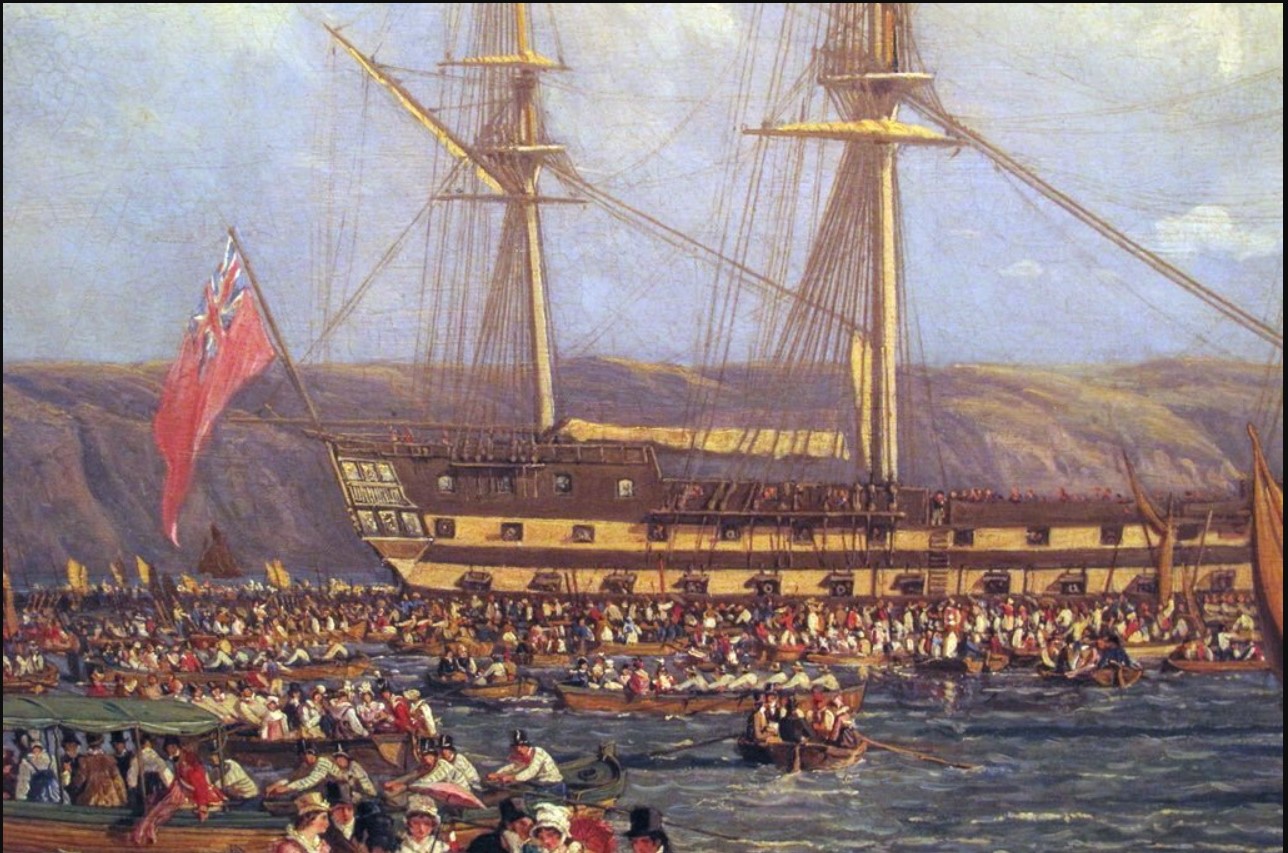
British battleships at the time of Trafalgar 1805 mostly had adopted a paint scheme consisting of yellow and black stripes on the hull. Yellow ochre, because that was cheap and visible, and lamp black because that was cheap and contrasted well with the yellow.
Lord Admiral Horatio Nelson, recommended that all ships under his command adopted the stripes, although the final decision was always up to the ship’s captain. The reason for the stripes was two-fold. First, it clearly identified British ships in the confusion and limited visibility of a naval battle battle, where there was a risk of friendly fire. Secondly, it clearly identified whether the gun ports were open or closed, an important consideration when entering a foreign port. When the gunports were open, the gunports looked quite different compared with when closed.
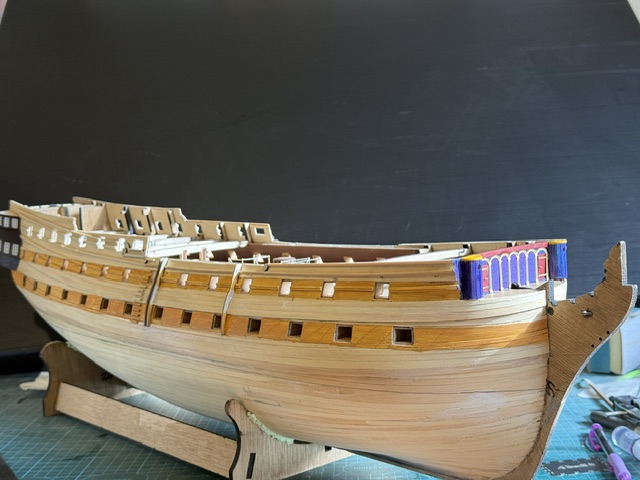
My model of Bellerophon is at the stage of painting the yellow ochre and mat black stripes. I have many skills, but regretably painting is not one of them. SWMBO has banned me from any painting jobs around the house, but then she is a talented artist and has different standards. With Bellerophon she is happy to give advice, but not volunteering to do the painting. So I have read some model ship building books, and asked the AI for advice.
Armed with that information I purchased some yellow ochre acrylic paint, and some brushes. Sanded the hull to 600 grit. Filled most of the defects. Then applied a coat of sealer. SWMBO had some “Peel Stop” which the AI said would be fine, but said not to use Bondcrete which was an alternative I had considered.
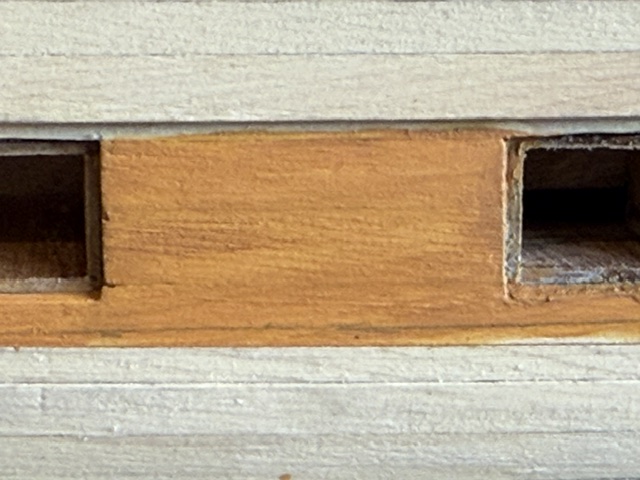
What no-one thought to say to me was “remove all pencil lines BEFORE applying the sealer”. In my ignorance I assumed that the paint would cover the pencil lines. So I painted on the sealer, and then 4 coats of diluted yellow ochre.
Then I had a another idea.
Not ideal, but worth a try. I painted a layer of undiluted yellow ochre on the pencilled side. I was hoping to avoid that thicker paint because I did not want to lose the planking details, but better that than those very obvious pencil marks.
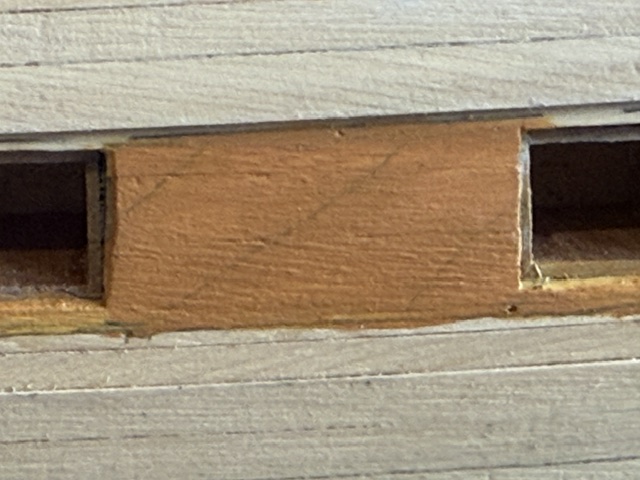
The black paint will neaten up the yellow-black junction. And I am pretty sure that pencil lines under the black paint will be invisible. Wont they?
We do learn from our mistakes, don’t we? I do. I try very hard not to repeat mistakes more than 3 times.
 johnsmachines
I think those pencil marks are very distracting, even inelegant. Can you do a little light sanding to get rid of them and then repaint lightly instead of trying to cover them with a thick coat of paint? Maybe an eraser would work on the lines that are not painted yet?
Good luck!
LikeLike
Well Someone, if you read the next post you will see a further comment about that problem. John.
LikeLike
Hi John, It’s me, Richard.
I sometimes have trouble responding on this platform. Haven’t made it to the next comment yet but must say I love the stripes black and ochre color scheme and its signification.
Aloha from Kaneohe!
LikeLiked by 1 person
Hi Richard, now that I know who the someone is, I can be as rude as I like. The colour scheme was invented by Horatio Nelson and I like it too. Like a bee. Next post Aust Eastern time 8:30am Tuesday. 😊
LikeLike